Burkhard Mangold: Pioneer of Swiss Poster ArtUntitled
Burkhard Mangold helped define early Swiss poster art with striking compositions, vivid color, and a modern approach to image and typography.
By Weston Deboer
May 21, 2026 · 3 min read
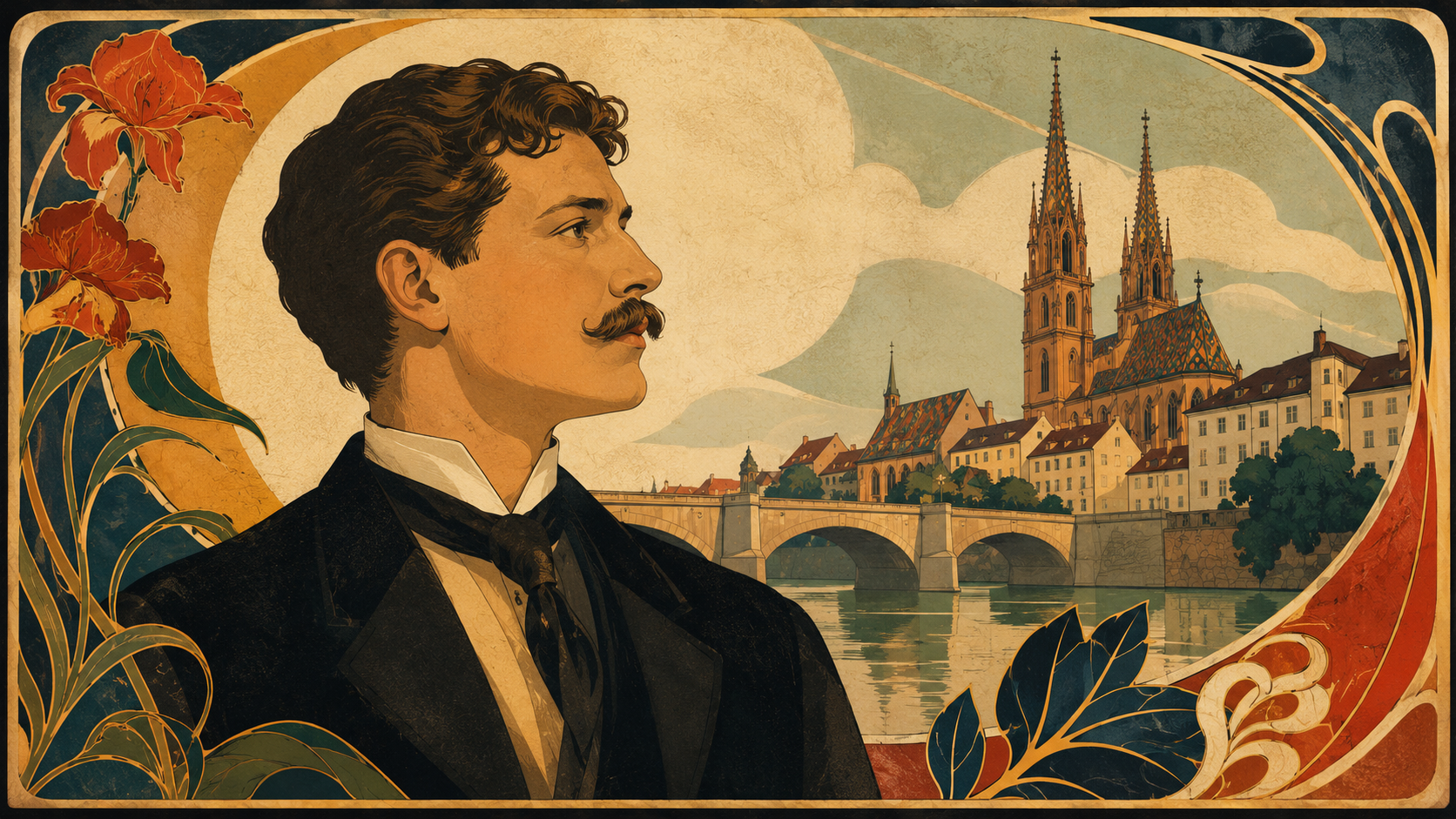
Before Swiss graphic design became known for its precision, grids, and modernist clarity, artists like Burkhard Mangold helped lay the foundation. Born in Basel in 1873, Mangold became one of the early figures who pushed Swiss poster art toward a bold new visual language, combining decorative elegance with direct public impact.
Mangold trained at the Basel General Trade School and apprenticed as a decorative painter before traveling to Paris in 1894. There, he encountered decorative and mural traditions that deepened his interest in ornament, composition, and large-scale visual storytelling.
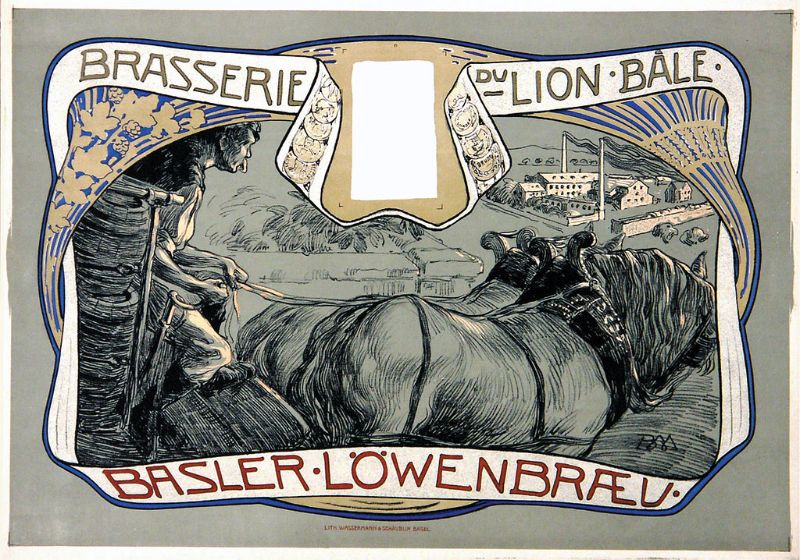
After Paris, Mangold spent several years in Munich, where he absorbed the influence of Jugendstil, the German branch of Art Nouveau. This period helped shape the flowing lines, stylized figures, and strong decorative structure that would later appear throughout his poster work.
What made Mangold’s posters stand out was their ability to simplify without becoming plain. His work often used flat color, monumental figures, layered perspectives, and a close relationship between image and text. Rather than treating lettering as an afterthought, Mangold integrated typography into the total composition, making the poster feel unified and immediate.
Mangold’s posters helped show that advertising could be more than promotion. It could be art in the street.
His subjects ranged from cultural events and exhibitions to travel, commerce, and public life. Many of his posters carried the energy of early modern advertising while still retaining a painterly, handmade quality. They were meant to be seen quickly on city streets, but they also rewarded closer looking through humor, dramatic framing, and inventive visual structure.
Selected Works
Poster Art by Burkhard Mangold
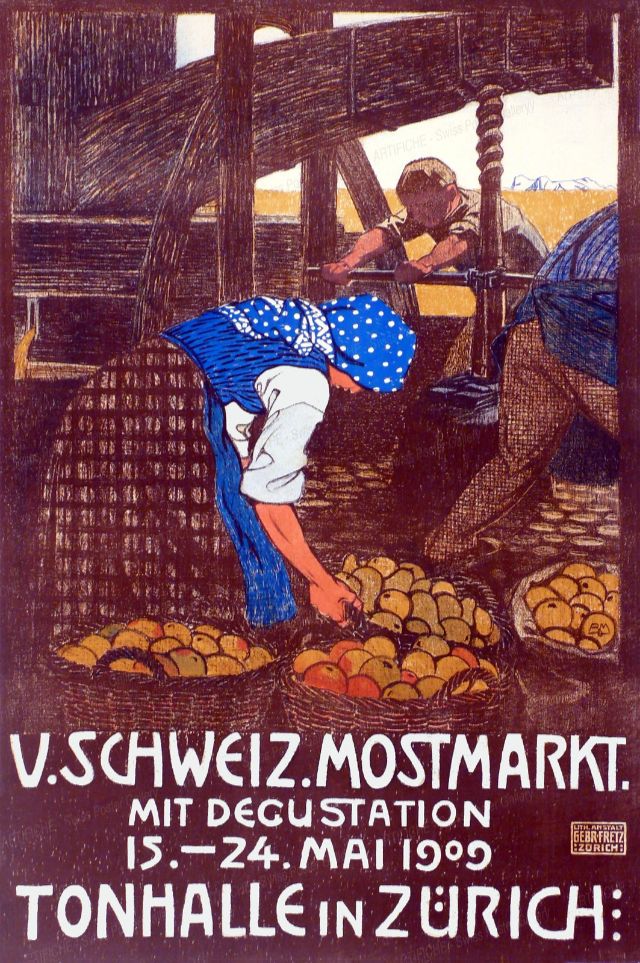
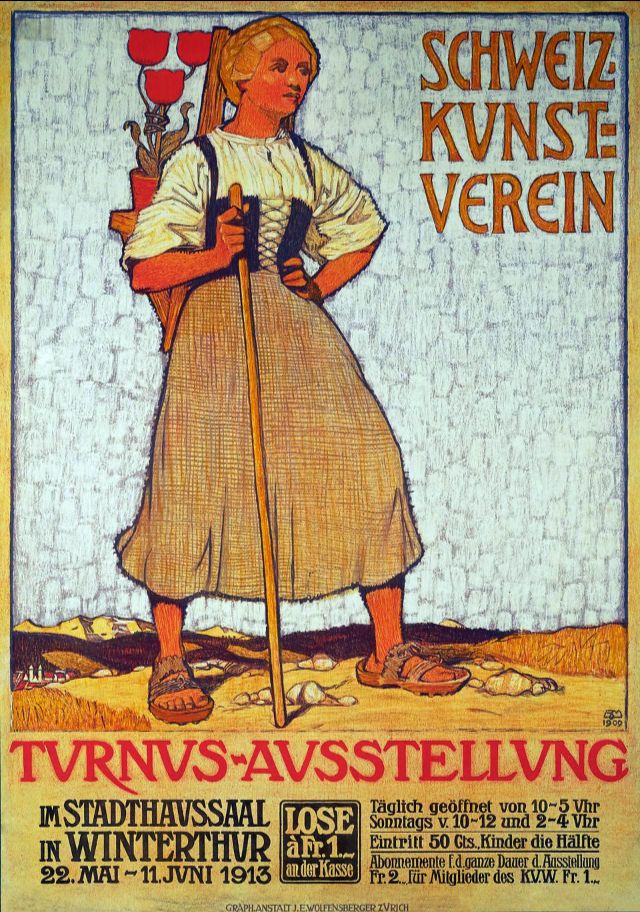
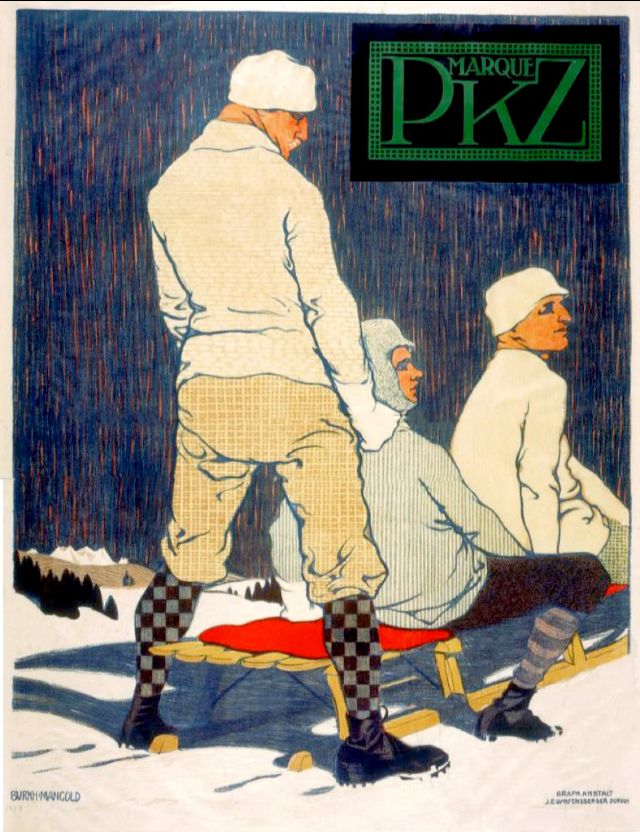
Mangold returned to Basel in 1900 and became an important part of the Swiss poster movement. In 1905, he won a poster competition for a Swiss singing festival, further establishing his reputation in the field.
Today, Mangold is remembered as one of the pioneers of modern Swiss poster art, alongside figures such as Otto Baumberger and Emil Cardinaux. His legacy sits at the intersection of fine art, commercial design, and public communication.

Featured Work
A Bold Language for the Street
Mangold’s poster work reflects the shift from decorative illustration toward modern visual communication. His use of strong silhouettes, expressive color, and integrated lettering helped make the poster a powerful public art form.
Why Burkhard Mangold Still Matters
Mangold’s work remains important because it captures a turning point in design history. His posters belong to a period when artists were redefining how images could function in public space. They needed to be beautiful, readable, memorable, and persuasive all at once.
For collectors and design historians, Mangold represents the early roots of Swiss visual culture before the later rise of the International Typographic Style. His posters show Swiss design before it became minimal and grid-based, when it was still deeply connected to painting, ornament, theater, humor, and the energy of the street.
More than a century later, Burkhard Mangold’s posters still feel fresh because they understand the central power of graphic art: one strong image can stop a viewer, tell a story, and stay in memory.