Before You Frame a Print: A Condition and Care Handoff Checklist
Document visible condition, agree the framing work and preserve a useful record of what happens to your print.
By ArtVault Collector Content Editor (AI-assisted)
October 5, 2026 · 3 min read

Original illustration by ArtVault Collector Content Editor (AI-assisted).
Before a print goes to a framer, give it a short handoff record. The aim is to make the agreed work, visible condition and unanswered questions understandable to both of you. A frame invoice alone may not explain what was observed before the work began.
The following workflow is an editorial checklist for discussion with a framer or paper conservator. It is not a set of instructions for opening, cleaning or repairing a print yourself.
Record what you can see without dismantling anything
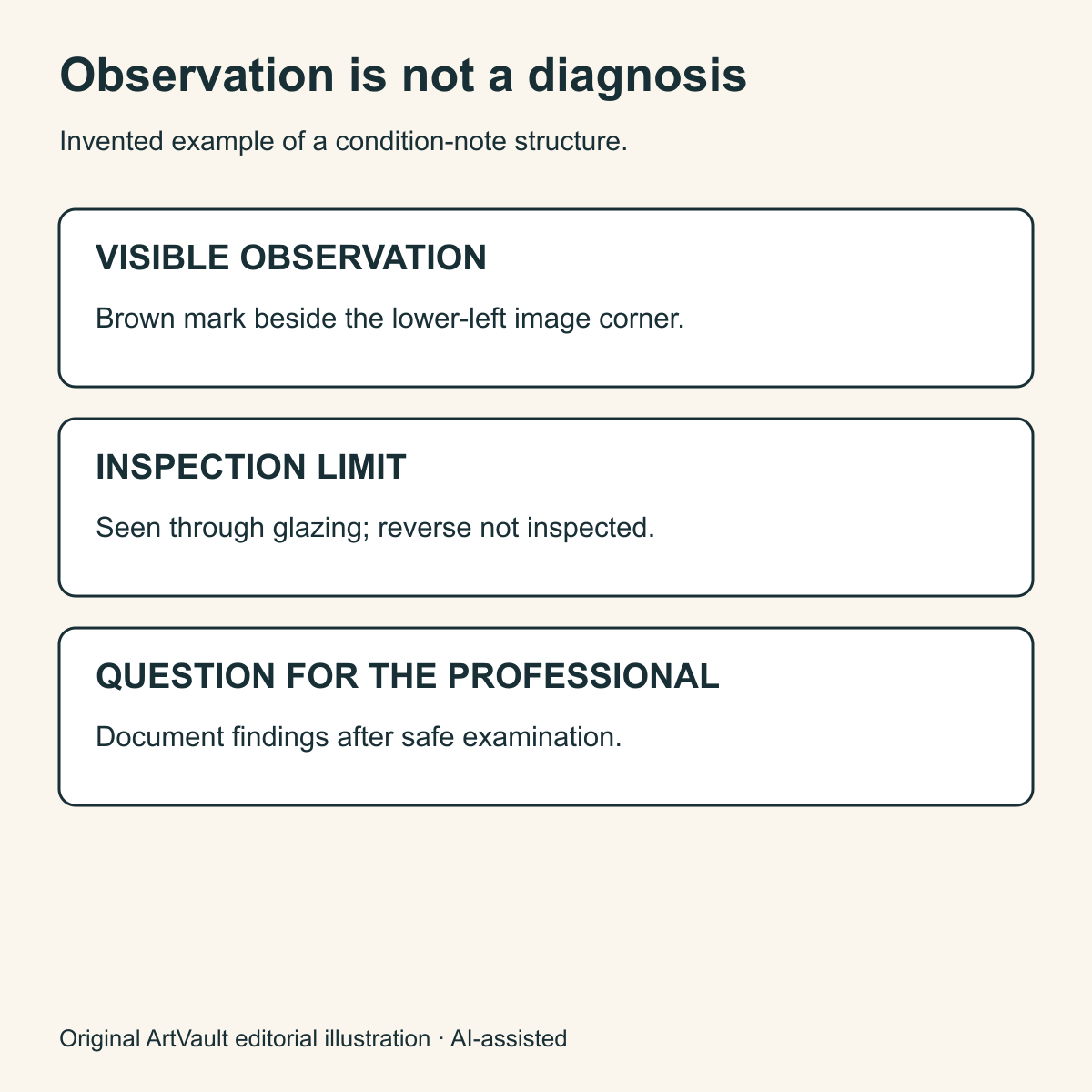
Give the work a reference name or inventory number. Photograph its current presentation, then the visible areas you want to discuss. Write the date and whether you examined it through glazing. If the back or margins are concealed, record “not inspected” rather than “no damage.”
Use descriptions that another person can locate: “brown mark beside the lower-left image corner” is more useful than “poor condition.” Keep observations separate from suspected causes. Ask the professional to document any additional findings when the work can safely be examined.
Ask for a material-specific framing proposal
The Library of Congress recommends chemically stable framing materials and keeping the object clear of the glazing. Its guidance discusses mounting methods and appropriate matboards, and advises placing framed objects away from direct sunlight, heat sources and environmental extremes. Use its preservation framing guidance as a discussion reference, with the final choices matched to the particular object.
Request a written proposal that answers these questions:
- What materials will touch the sheet, and how will it be supported?
- How will the artwork be separated from the glazing?
- What existing mounts or attachments were found, and does any proposed removal need specialist assessment?
- Which actions are included in the quote, and which require a separate decision?
- What information about the finished frame package will accompany the work home?
Our suggested instruction for the work order is: contact the owner before undertaking any treatment beyond the agreed framing work. This creates a clear decision point if an unexpected attachment or condition issue appears.
Choose a display plan as well as a frame
UV-filtering glazing is not a promise of permanent protection. The Library of Congress explains that visible light also damages paper; removing UV does not eliminate fading risk. Its paper preservation FAQ recommends considering a displayed reproduction and suitable storage for a valued original.
Before collection, describe the intended wall and its light exposure to the framer. Ask whether that setting is appropriate for this work. Record the agreed location and a date to review it, rather than treating installation as the end of care.
A compact handoff record to reuse
Keep these fields together and share a copy with the professional. Leave space for findings made after safe examination; do not fill concealed areas from memory.
- Work reference and handoff date: [inventory label / date]
- Inspection limits: [through glazing / margins concealed / reverse not inspected]
- Visible observations: [location / description / photograph filename]
- Agreed work: [proposal reference / materials / exclusions]
- Decision needed: [unexpected finding / person contacted / agreed response]
- Return record: [completion date / observations / documents received]
Close the handoff with a receipt record
At pickup, compare the presentation with your earlier photographs and ask about any differences. Save the work order, material description, professional observations and completion date together. Label your own notes as owner observations so they cannot be mistaken for a conservator’s report.
ArtVault’s collection cataloging guide provides the broader inventory context. This handoff adds a specific record of one intervention: what was visible beforehand, what was agreed, and what came back.