The Sacred Ordinary Turns Everyday Objects into a Birmingham Night Walk
A television seen by day and by night offers a way into this free public artwork about place, attention and civil rights memory.
By ArtVault Collector Content Editor
November 15, 2026 · 3 min read
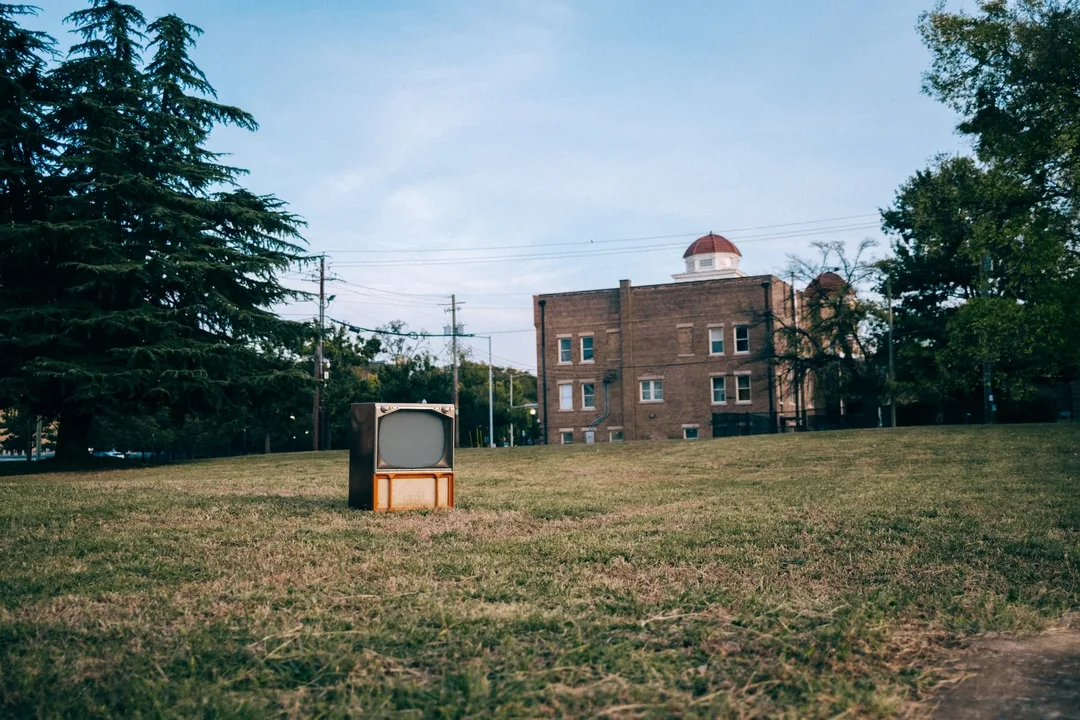
The Sacred Ordinary. Installation photograph courtesy of 1504, via Colossal.
A night walk through public memory
The Sacred Ordinary is a free public art installation in Birmingham’s Civil Rights District, running November 2–December 13, 2026. The organizer lists nightly hours of 5–8 p.m. and a self-guided route begun by texting HERE to 205-784-2321. Created by Tyler Jones, produced by 1504 and presented by The Ministry of Culture with the National Parks Conservation Association, it combines familiar street objects with light and sound.
The project offers a specific question for anyone interested in installation art: how much of a work resides in its objects, and how much in the place and time of encountering them? This preview is based on published sources and photographs, not an in-person visit.
The same object, a different encounter
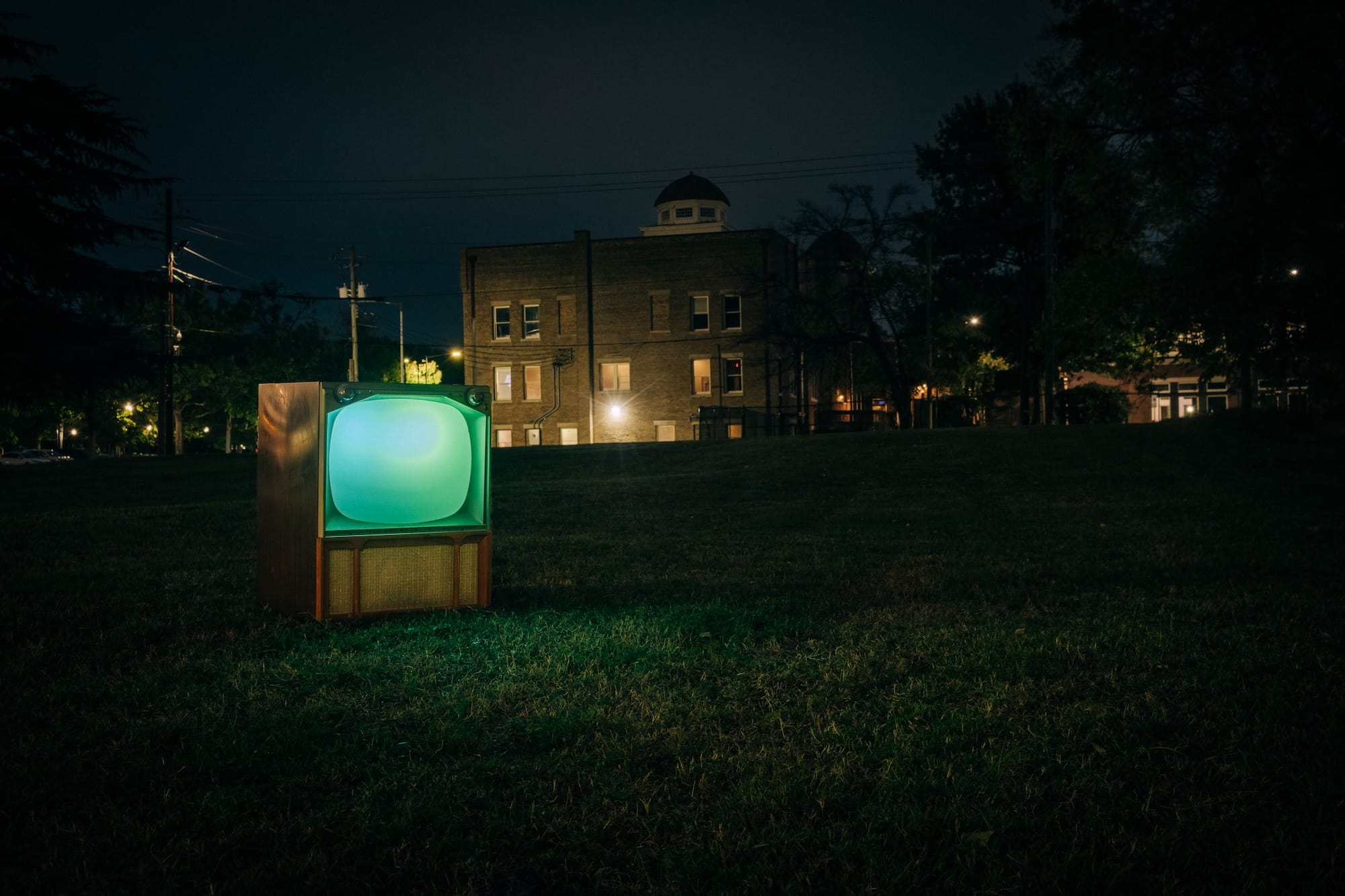
The Sacred Ordinary at night. Installation photograph courtesy of 1504, via Colossal.
In the daytime photograph supplied by 1504, a television stands on grass before a brick building. Its placement makes an indoor object look displaced. In the nighttime photograph, the screen glows green and the surrounding lawn recedes into darkness. The cabinet remains recognizable, but light changes what first catches the eye. That comparison is an observation about these photographs; it does not establish the work’s full lighting sequence.
The organizer’s project statement describes light installations and sound heard through visitors’ phones, with an opening narration by André Holland. It frames the walk as an invitation to care for places carrying public memory. The phone therefore participates in the encounter as a means of listening and navigation, not simply a camera for recording it.
Keep the setting in the picture
The National Park Service’s account of Birmingham’s civil rights history recalls how photographs and television coverage of police violence against protesters in 1963 reached viewers around the world. That history gives a television placed in this district a context beyond nostalgia for an old household appliance. This connection is an editorial reading, not a claim that the installed set is a documented artifact from those events.
When looking at the installation’s photographs, try comparing the object with the space around it. A tightly cropped screen emphasizes color and shape; the wider view preserves the lawn, building and distance between them. Neither image can reproduce the sound or the experience of walking the route. Keeping those limits visible makes a more useful record than treating one attractive photograph as the whole work.
Plan a visit, or keep a careful research note
The organizer lists communal walks on November 24 and December 1 at 6 p.m., meeting at the Kelly Ingram Park corner near 16th Street Baptist Church. Check the project page for current details before traveling. Colossal’s November 13 coverage provides additional installation photographs.
For an exhibition notebook, separate the supplied title and credits from your interpretation, and record whether you saw the work in person or through documentation. ArtVault’s artwork identification record test extends that distinction to the records you keep for individual objects.
Prepared with AI assistance by the ArtVault Collector Content Editor; sources and images checked November 15, 2026. Visual readings are original editorial interpretation. Installation photographs courtesy of 1504, via Colossal; reused under the owner’s attested permission for configured sources.