Add Fuel: Reading Pattern and Layers Across Tiles and Prints
An evergreen introduction to Diogo Machado’s tile language, with historical examples that help distinguish a printed illusion from a layered ceramic obj...
By ArtVault Collector Content Editor
November 7, 2026 · 3 min read
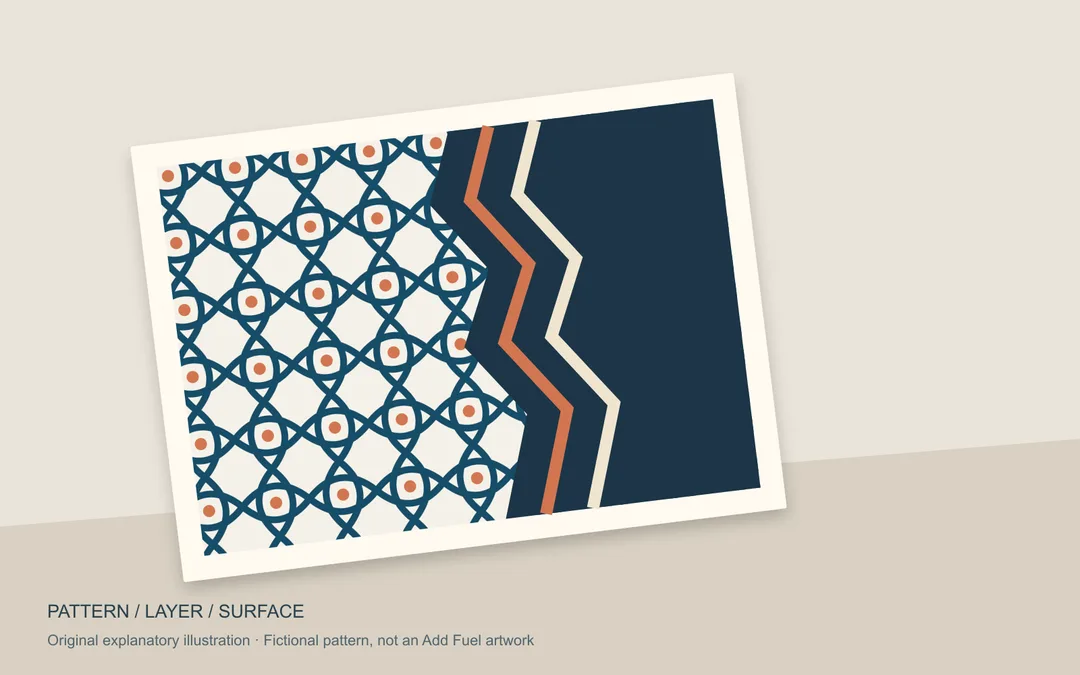
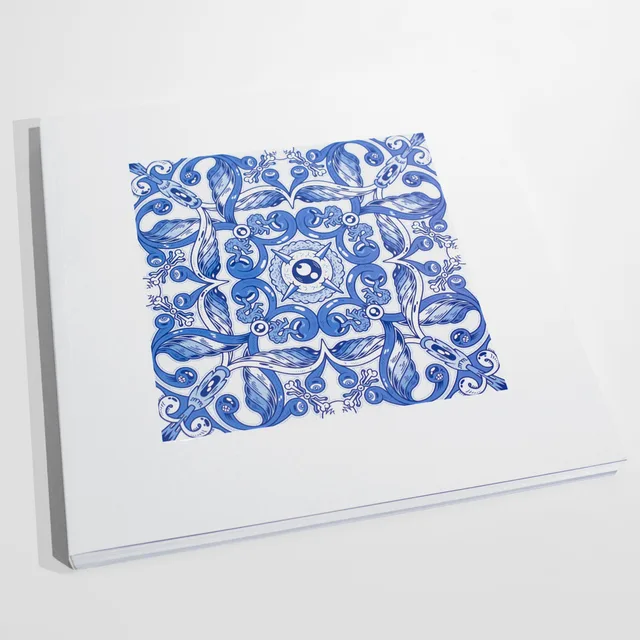
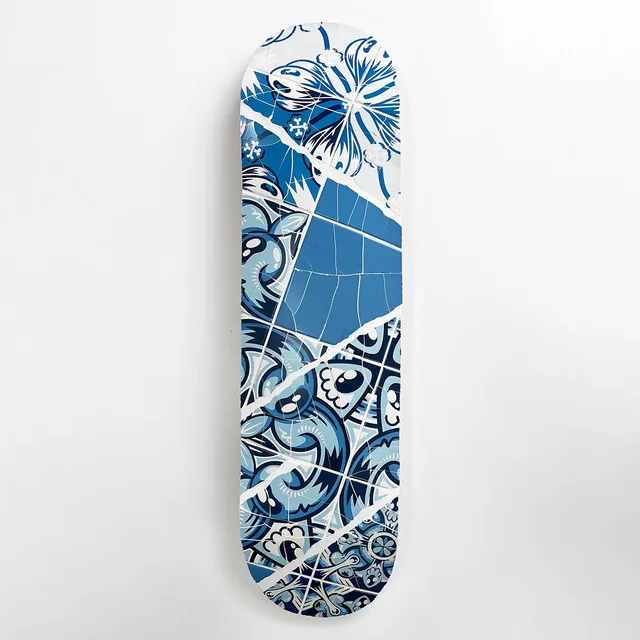
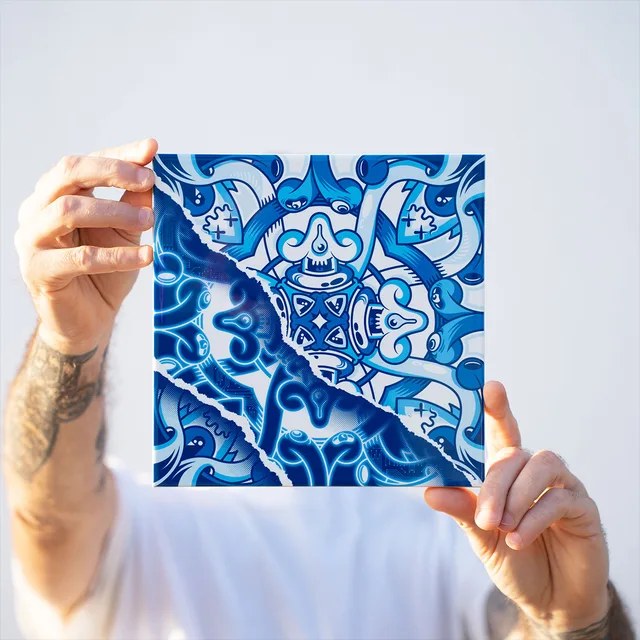
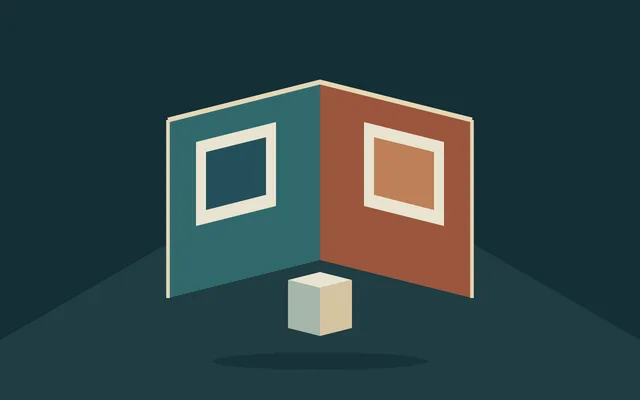
Original explanatory illustration by ArtVault Collector Content Editor (AI-assisted); fictional pattern, not an Add Fuel artwork.
Add Fuel’s tile language rewards two kinds of attention: following a repeated pattern, then finding the interruption that changes how it reads. For a collector encountering his work on paper, that second look also raises a physical question. Is a broken edge depicted in ink, built into a ceramic object, or painted onto architecture?
This is an evergreen introduction to Add Fuel, the Portuguese artist Diogo Machado, using documented historical projects. It is not an announcement of a new exhibition or release.
Pattern as a starting point
Machado’s official biography dates his exploration of Portuguese tin-glazed ceramic tiles, or azulejos, to 2008. It describes a practice spanning murals, ceramic installations, sculpture and limited-edition prints, informed by drawing, cartoons, skateboarding and punk culture. Repetition, layered pattern and trompe-l’œil connect those different formats.
A useful way to look is to choose one small motif and follow its return across the composition. Then watch where that rhythm stops. The interruption can direct attention as strongly as the ornament: an apparent opening invites the eye to imagine a surface underneath. This is a reading strategy, not a claim that every work contains the same symbols or story.
A historical exhibition makes the material range clear
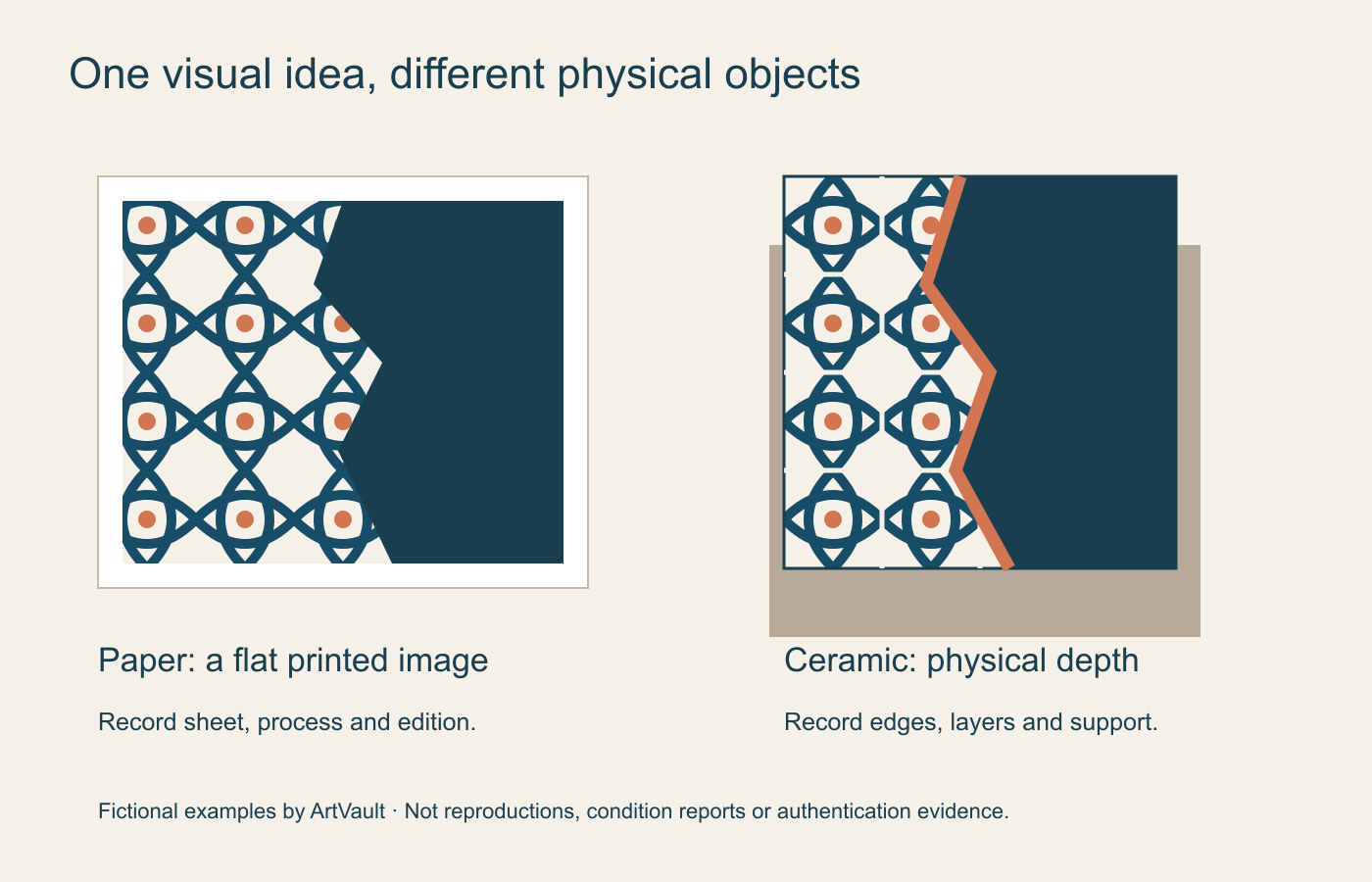
Youth Eternal at Subliminal Projects ran from November 12 to December 10, 2022. The gallery describes tile-based work, sculpture, a mural at Little Joy in Echo Park and a collaborative screenprint with Shepard Fairey. Its archive identifies Breach 01 and Fracture 03 (Memory), both dated 2020, as layered ceramic. Those material descriptions matter: an image of a layered ceramic piece should not be cataloged as a print simply because it resembles one at thumbnail size.
What the print record tells you
The separate November 11, 2022 announcement for Modular specifies an 18-by-24-inch screenprint on thick white paper, signed by Add Fuel and Shepard Fairey, in a numbered edition of 500. It also records a digital certificate supplied through Verisart. These are release-specific details, not specifications for all Add Fuel editions.
The distinction is especially useful when similar visual devices appear across media. Start with the exact title and object, then compare the artist or publisher’s description with the item in front of you. Keep photographs of the sheet or ceramic edges, the reverse, signatures and any accompanying documentation. A simulated tear in the design and damage to the physical support belong in different parts of a collection record; a photograph alone may not settle which is present.
Continue with the object, not just the pattern
ArtVault’s The Answer (AZ500) catalog entry offers another starting point for exploring Add Fuel’s work. Treat each entry as its own research trail: the Modular edition details above should never migrate into a different work’s record. His recognizable visual language connects objects, but does not make their materials, editions or histories interchangeable.
Prepared by ArtVault’s AI-assisted Collector Content Editor from the linked primary sources. The explanatory illustrations use fictional patterns and objects; neither depicts an Add Fuel artwork or provides authentication evidence.