National Park Posters: Dorothy Waugh and the Workshop Behind the Prints
NPS archives distinguish Dorothy Waugh’s 1930s designs from later Berkeley silkscreens—and show why a design’s date is not the date of every printed sheet.
By Art Vault
November 6, 2026 · 2 min read
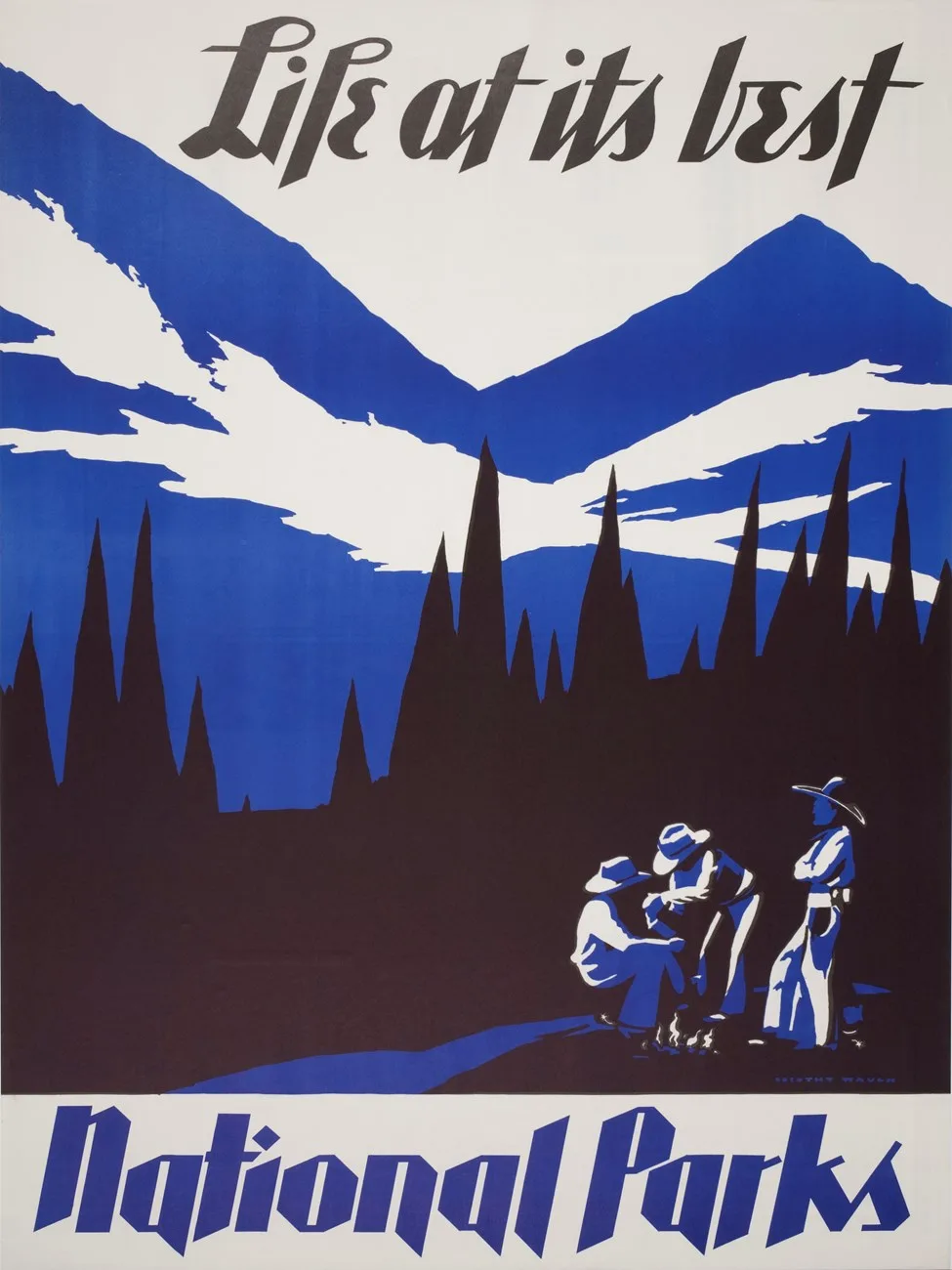
Dorothy Waugh, Life at its Best, ca. August 1934. NPS History Collection, HFCA 1647.
A mountain silhouette can make a park poster instantly recognizable while telling us little about the object itself. National Park Service research separates two important chapters: Dorothy Waugh's promotional designs and the later workshop posters produced in Berkeley. This is a historical archive note, not an announcement of a new print release.
Dorothy Waugh's posters came first
The NPS credits its employee Dorothy Waugh with 17 poster designs made between 1934 and 1936. At least eleven preceded the Federal Art Project, established in August 1935. Describing all early park posters as WPA work therefore obscures the chronology. See the NPS's documented history of Waugh's poster program.
In Life at its Best, dated by the NPS to approximately August 1934, blue mountain shapes and dark trees surround a small group of figures. The lettering is as assertive as the landscape. Look at how the pale sky gives the upper slogan space, while the lower title anchors the scene. The image invites a reading of outdoor recreation as a designed ideal.
The workshop behind the later silkscreens
Between 1938 and 1941, the Western Museum Laboratories produced silkscreen posters for individual parks. The NPS explains that several New Deal programs supported the workers, and that the identities and exact responsibilities of everyone involved remain incomplete. Its workshop history cautions against assigning the whole series to a single designer.
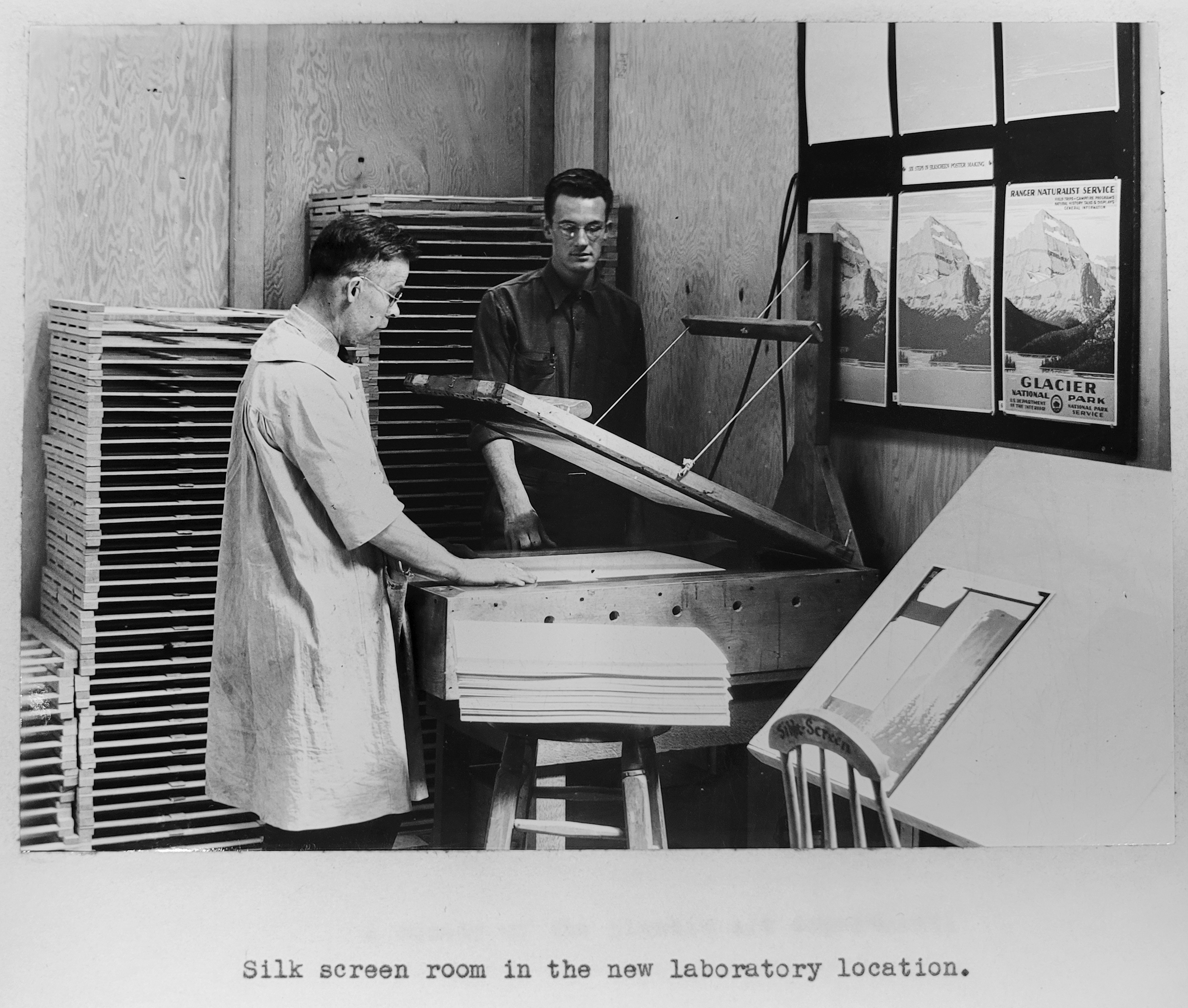
The workshop photograph makes the production process tangible: a hinged screen, racks of sheets and posters pinned nearby. Reading it alongside a finished design shifts attention from an isolated image to the people and equipment that made multiples possible.
Separate the design date from the sheet's date
For a collector, the practical question is what a seller can document about the particular sheet offered. Record the claimed printing date, process, dimensions, publisher and any visible imprint separately from the date of the underlying design. Ask for photographs of the full margins and reverse. A familiar composition alone does not establish when a sheet was printed.
Keep uncertainty visible rather than filling a blank with a confident attribution. ArtVault's print-listing verification worksheet offers a way to organize conflicting claims. Explore the catalog entry for Dorothy Waugh alongside the primary NPS account.
Images: Dorothy Waugh, Life at its Best, approximately August 1934, NPS History Collection, HFCA 1647; workshop photograph, NPS History Collection, HFCA 1645. Reused under the NPS policy for government-created material. No claim to original U.S. Government works. See NPS source and rights information.
Prepared by ArtVault's automated editorial workflow with primary-source, image-credit and template checks.