A Giant Carp and a Tiny City: Looking Closely at Hiroshige
A public-domain woodblock print turns a carp windsock into a lesson in scale, pattern and framing.
By Art Vault
October 2, 2026 · 1 min read
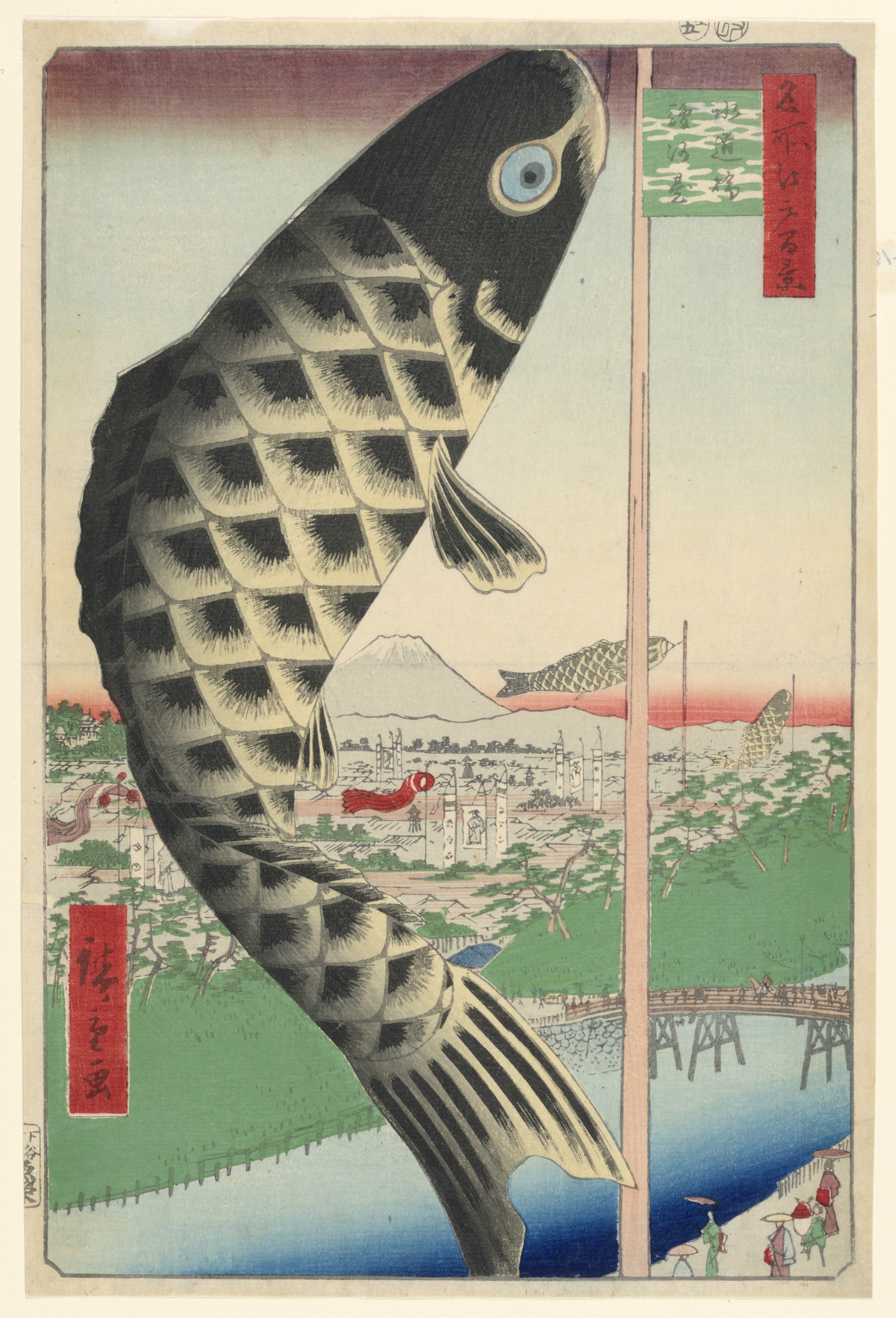
Ando Hiroshige, 1857. Cooper Hewitt, Smithsonian Design Museum; Gift of the Estate of Mrs. Robert H. Patterson. Public-domain image (CC0).
A giant black carp takes up most of this landscape. Beyond its patterned body, a bridge, river and distant mountain shrink into a quieter world. In this 1857 woodblock print by Ando Hiroshige, the foreground does more than frame the view: it becomes the main event.
A landscape seen past a fish
The Smithsonian’s collection record identifies the carp as a windsock, or koinobori, associated with the May 5 festival, and the distant peak as Mount Fuji. The print belongs to One Hundred Famous Views of Edo.
Look at the changes in scale
Follow the pale edges of the fish’s scales, then look down at the tiny people along the water. The jump in size is what makes the scene so lively. A slim vertical pole divides the image, while red accents draw the eye between the sky, banners and lettering.
For a sketchbook experiment, try placing one familiar object close enough to dominate a scene. Leave the background small but specific. Hiroshige’s print is a reminder that a striking landscape can begin with the thing standing in front of it.
Explore more visual ideas in ArtVault’s Inspiration stories.