The Huntington’s “This Land Is …” Treats America as Unfinished Ground
Rare documents, Woody Guthrie’s guitar, contemporary artworks, and a living meadow turn American land into an open question at The Huntington.
By Weston Deboer
October 21, 2026 · 3 min read
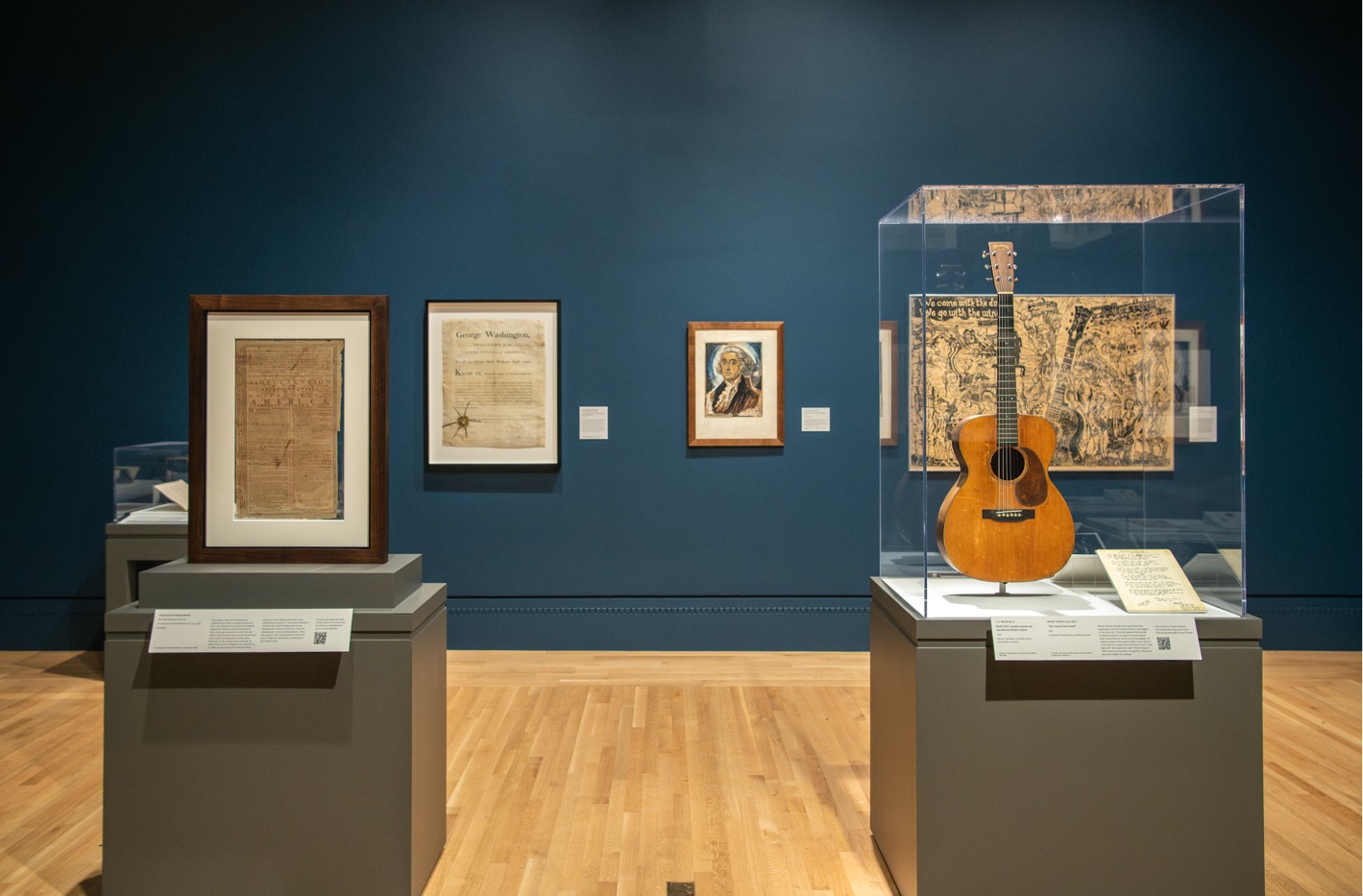
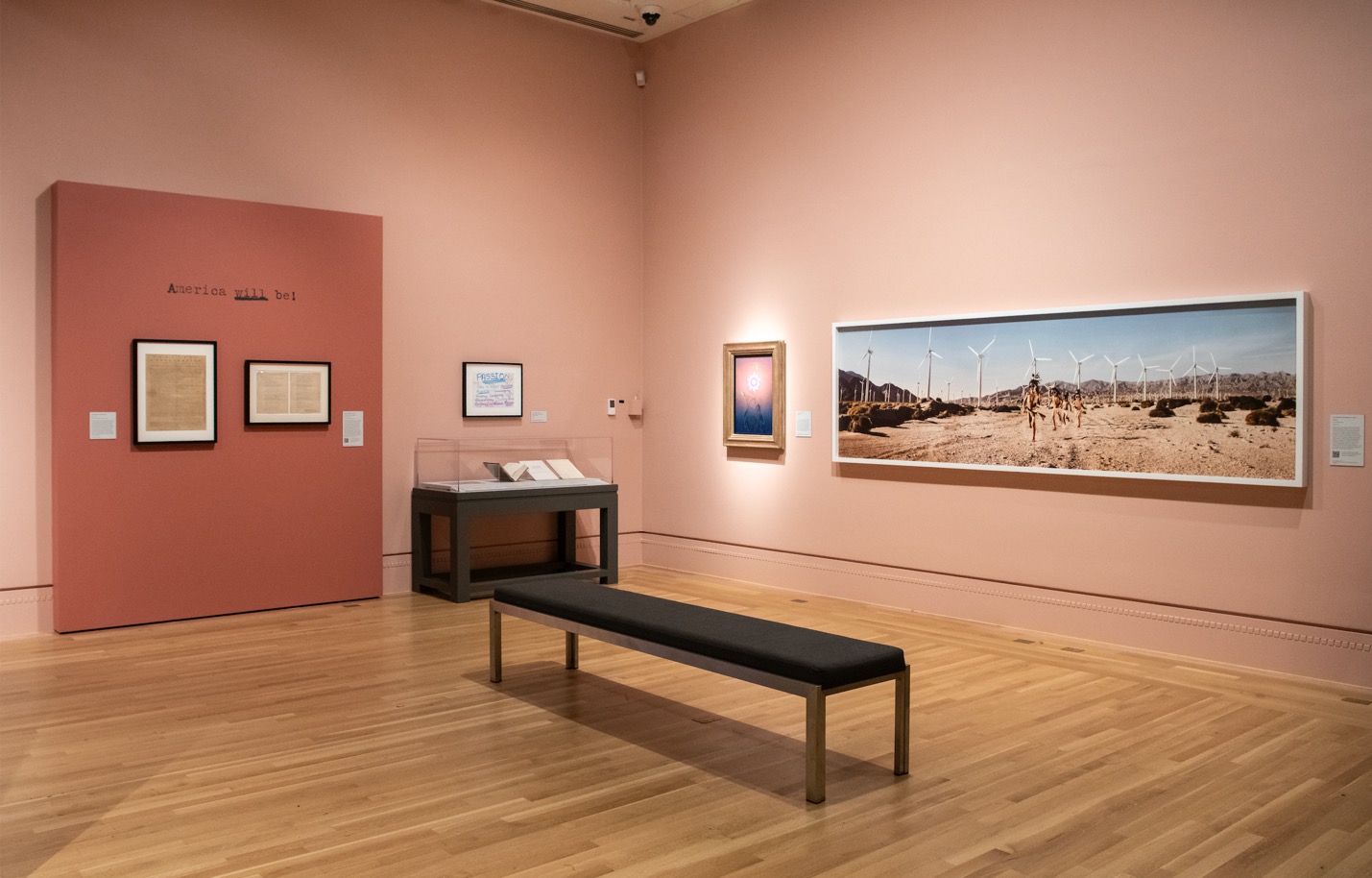
A Declaration of Independence copy displayed beside Woody Guthrie’s inscribed 1936 guitar in “This Land Is …” at The Huntington. Photo courtesy of The Huntington.
A rare July 1776 printing of the Declaration of Independence faces Woody Guthrie’s 1936 guitar, the instrument he marked with the words “This Machine Kills Fascists.” That pairing sets the tone for This Land Is …, an exhibition at The Huntington that treats the American landscape as an unfinished argument rather than a settled inheritance.
Co-curated by Josh Garrett-Davis and Linde B. Lehtinen, the exhibition borrows its title from Guthrie’s “This Land Is Your Land.” The ellipsis matters. It leaves room for promise and belonging, but also for dispossession, exclusion, and the many ways a place can carry incompatible histories at once.
A landscape made from competing records
The display moves through maps, surveys, manuscripts, and artworks that describe who has been permitted to claim, cross, cultivate, or imagine American land. Hand-drawn surveys associated with George Washington and Thomas Jefferson appear alongside material concerning the Walking Purchase and the displacement of Lenape people. Manuscripts by Walt Whitman, Langston Hughes, and Octavia E. Butler widen the record from property lines into poetry, speculation, and dissent.
Contemporary artists keep those questions in the present tense. Cara Romero’s panoramic photograph sets Indigenous youth against the wind turbines of the Coachella Valley. Works by William Camargo and Noni Olabisi join pieces by Agnes Pelton, Mary Lee Bendolph, and quiltmaker Rosie Lee Tompkins, making the gallery less a timeline than a set of overlapping claims about home, memory, labor, and power.
The argument continues outdoors
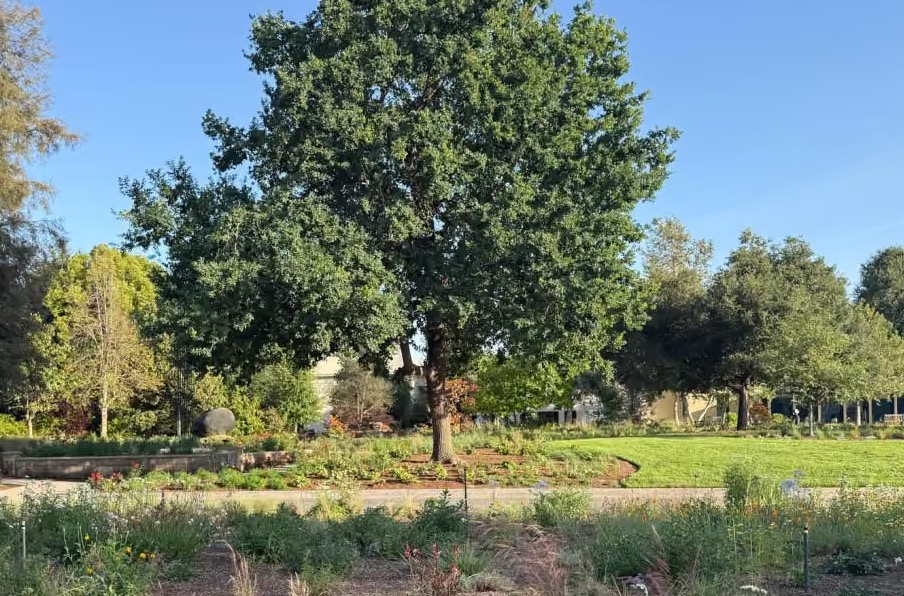
The approach to the galleries extends through Oak Meadow, a newly planted landscape organized around 15 oak species and more than 5,000 plants. Native toyon, purple needle grass, and manzanita make the grounds part of the exhibition’s thinking: land is not simply an image or a legal description, but a living system shaped by stewardship and time.
Inside, visitors can complete the phrase “This land is …” on response cards. It is a modest device, but an apt conclusion. The show’s historical objects have authority without supplying a single answer; its title remains open enough for beauty, conflict, grief, and responsibility to occupy the same sentence.
This Land Is … is on view in the MaryLou and George Boone Gallery through January 11, 2027, and forms part of The Huntington’s wider initiative reflecting on the United States at 250. Visit the official exhibition page and read L.A. TACO’s sponsored walkthrough for more.
Featured image: A Declaration of Independence copy displayed beside Woody Guthrie’s inscribed 1936 guitar in “This Land Is …” at The Huntington. Photo courtesy of The Huntington.