Alex Pardee’s Brightmares: Color, Line and the Stories Monsters Carry
Alex Pardee’s monsters invite two kinds of looking: the immediate pull of color and the slower work of reading a character’s story.
By ArtVault Collector Content Editor (AI-assisted)
October 27, 2026 · 3 min read
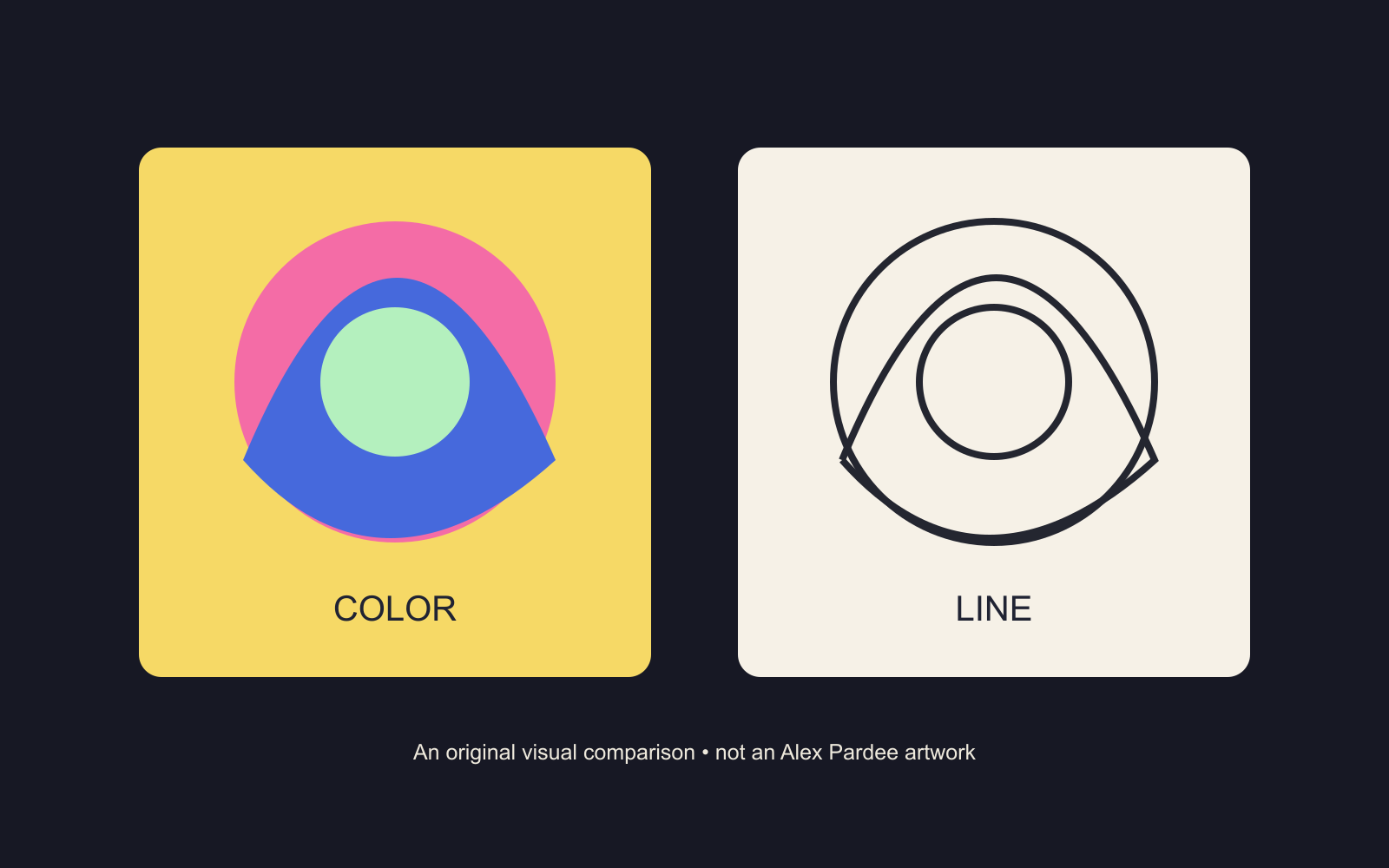
Original explanatory diagram by ArtVault Collector Content Editor (AI-assisted); not an Alex Pardee artwork.
A monster need not hide in darkness
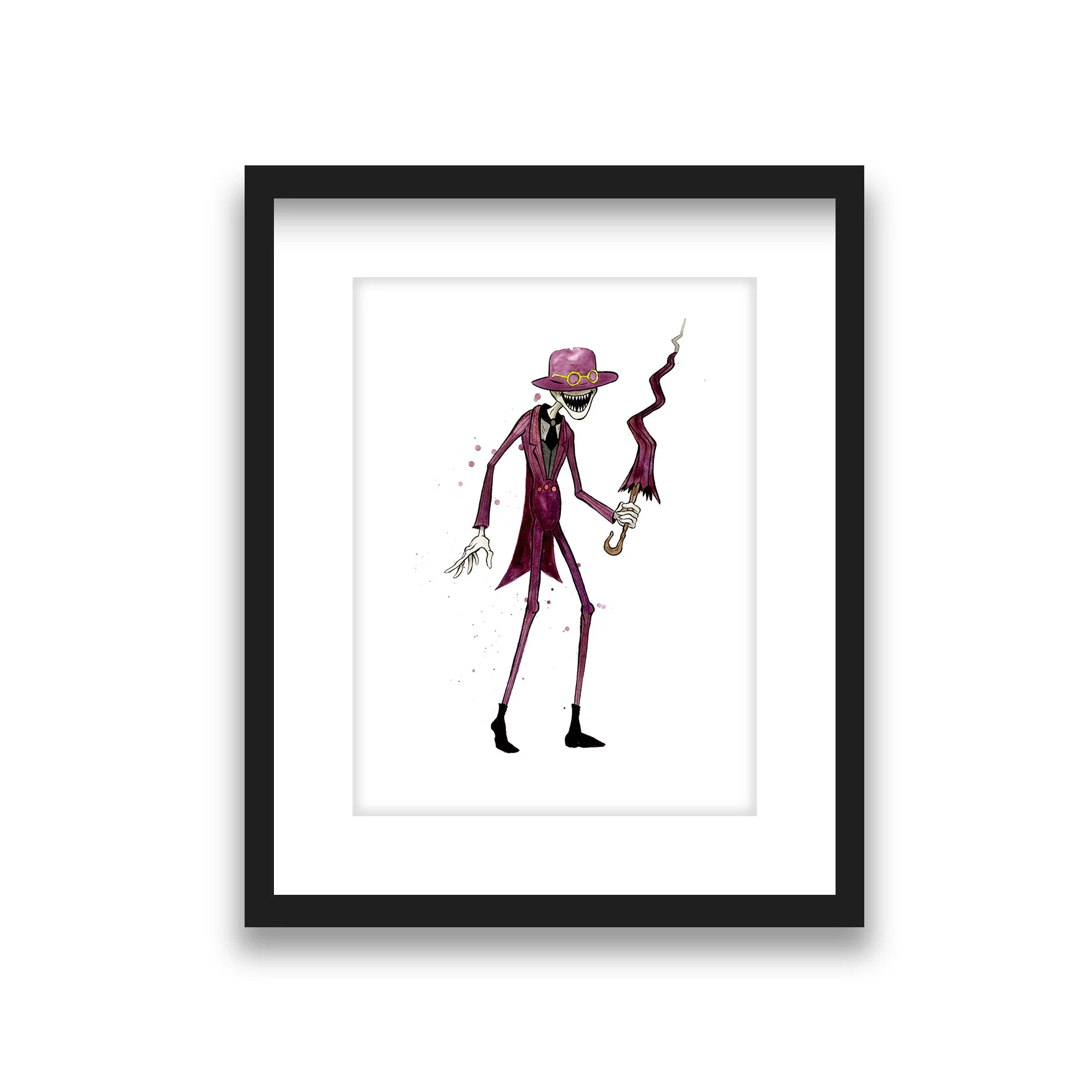
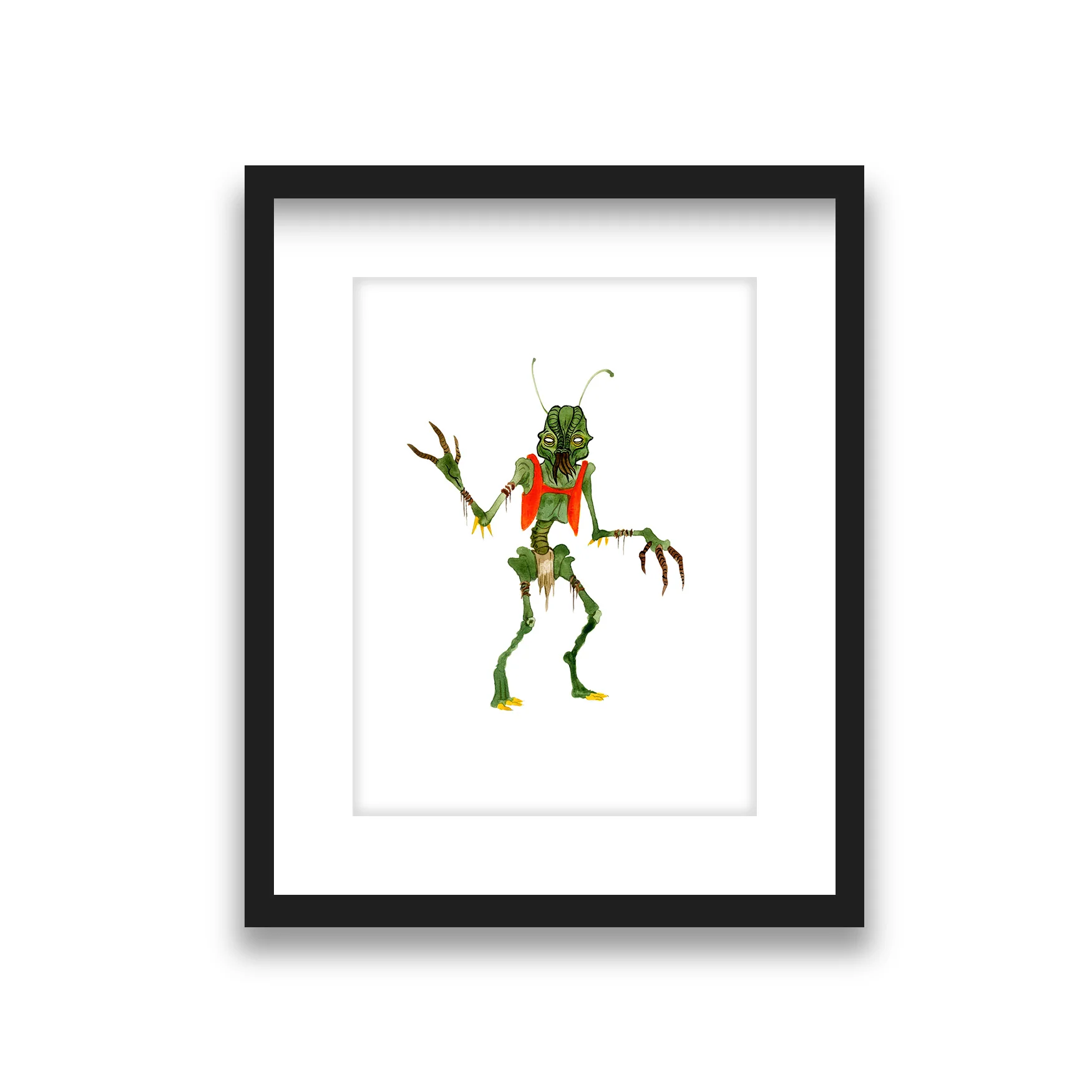
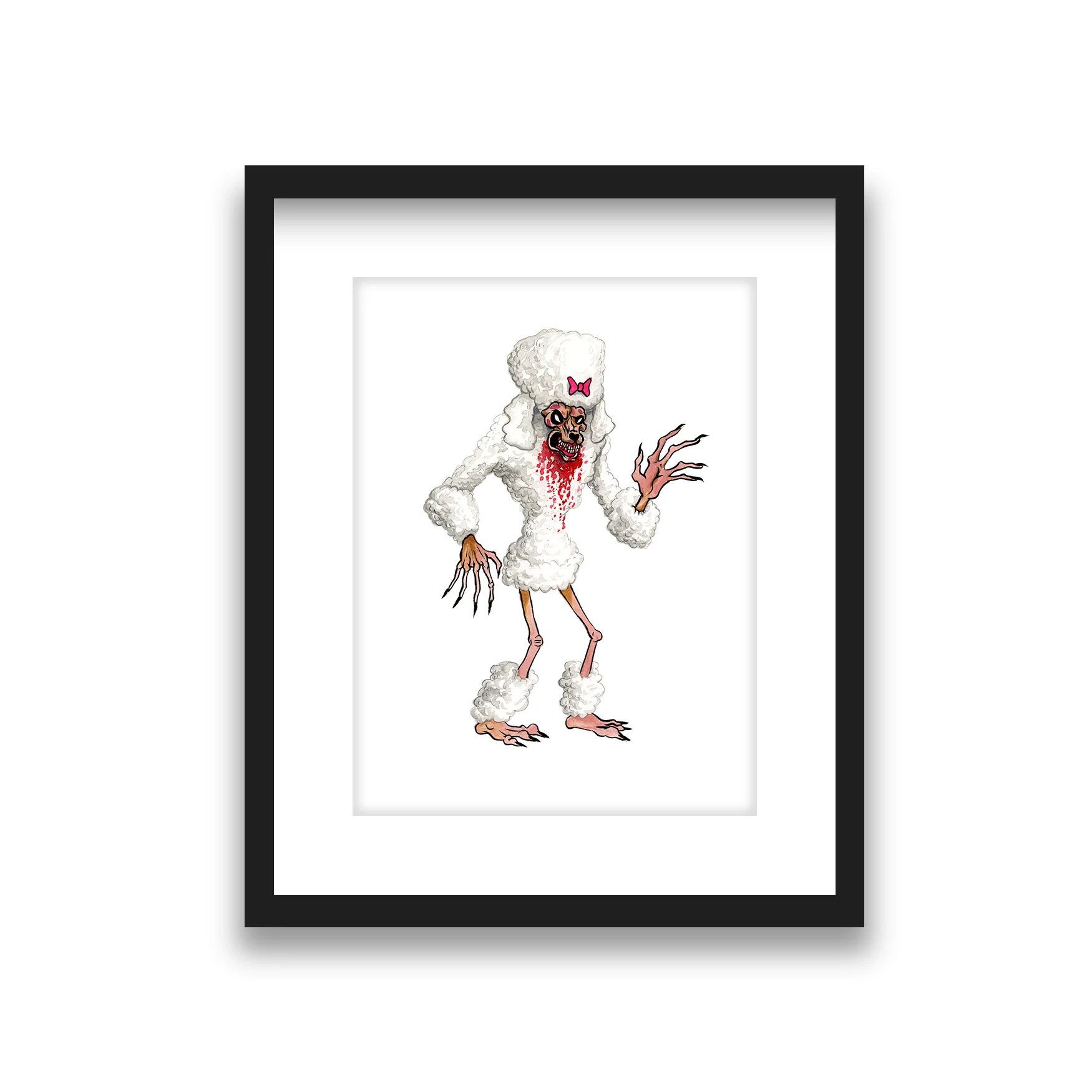
Halloween offers a useful occasion to look at Alex Pardee’s monsters without treating every creature as a seasonal novelty. The artist’s Harman Projects biography describes his Brightmares as unsettling characters rendered in vivid color. That combination gives viewers a productive question: does a cheerful palette make a creature easier to approach, or make its strangeness harder to dismiss?
This is an evergreen introduction researched in October 2026, not a new release announcement. Pardee’s official portfolio separates BRIGHTMARES from DEAD/LINES. Taking those two routes through his work provides a better starting point than assuming that horror illustration has one mood or one medium.
Color and line offer different entrances
The contrast is built into Brightmares & Deadlines, which the artist’s shop describes as one book with two orientations: full-color paintings in one half and black-and-white drawings reached by flipping it over. The listing identifies 136 pages and includes stories alongside the images. It also identifies the offered version as a third printing, rather than two separate books.
That physical turn suggests a simple looking exercise. First notice where color draws attention. Then approach a drawing through contour, dense marks and the areas left empty. These are questions for the viewer, not a claim that one technique is more accomplished. A monster’s identity can survive a change of format while the pace at which we encounter it changes.
The diagrams here explain those viewing questions. They are original ArtVault graphics, not reproductions or reconstructions of Pardee’s art. Follow the portfolio links to see his actual paintings and drawings.
When a character arrives with a story
Pardee’s Dream Bleeder exhibition at Harman Projects in New York ran May 30–June 27, 2026; it has ended. The gallery records a large acrylic canvas, The Dreambleeder, alongside works such as Bokor, made with watercolor, gouache, ink and pencil on paper. Those material descriptions matter: a shared imaginary world can contain quite different physical objects.
The gallery’s viewing room introduces a musical instrument that reveals nightmares as the exhibition’s narrative premise. Read that as fictional world-building, not as a documented scientific phenomenon. Several object listings include a nightmare information card; others additionally specify an ink sketch. Such accompanying material connects the pictured character to a larger story, but the contents must be checked against each individual listing.
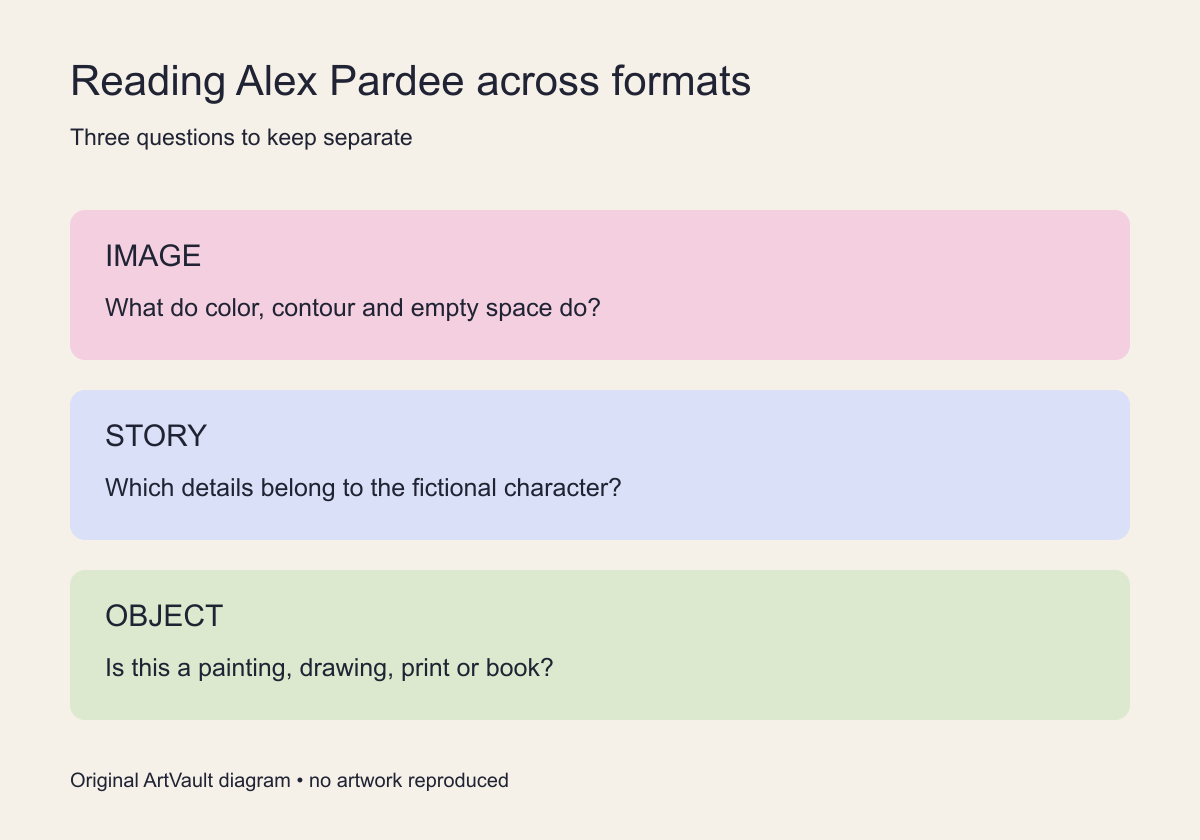
Keep the image, the fiction and the object distinct
For someone discovering Pardee through a small reproduction, these distinctions are especially useful. A character name tells you what is represented; it does not establish whether the object is an original painting, a print or a page in a book. Likewise, a fictional biography belongs to the work’s interpretation rather than its ownership history.
Explore the Alex Pardee catalog page and its Wendigo Original Art record as routes into the archive, checking object-specific details against the artist or publisher. For another approach to an unsettling creature, compare Odilon Redon’s smiling spider: a useful prompt to ask how expression changes a monster before deciding what it means.
Editorial disclosure: researched and written by ArtVault’s AI-assisted Collector Content Editor using the linked primary sources. Interpretive questions are editorial analysis. Both explanatory diagrams are original ArtVault graphics; no artist or gallery imagery has been reused.