Odilon Redon’s Spider: A Smile That Unsettles the Halloween Monster
A close look at Redon’s 1887 lithograph reveals how a human smile and an ordinary floor make an impossible creature feel strangely present.
By Art Vault
October 24, 2026 · 2 min read
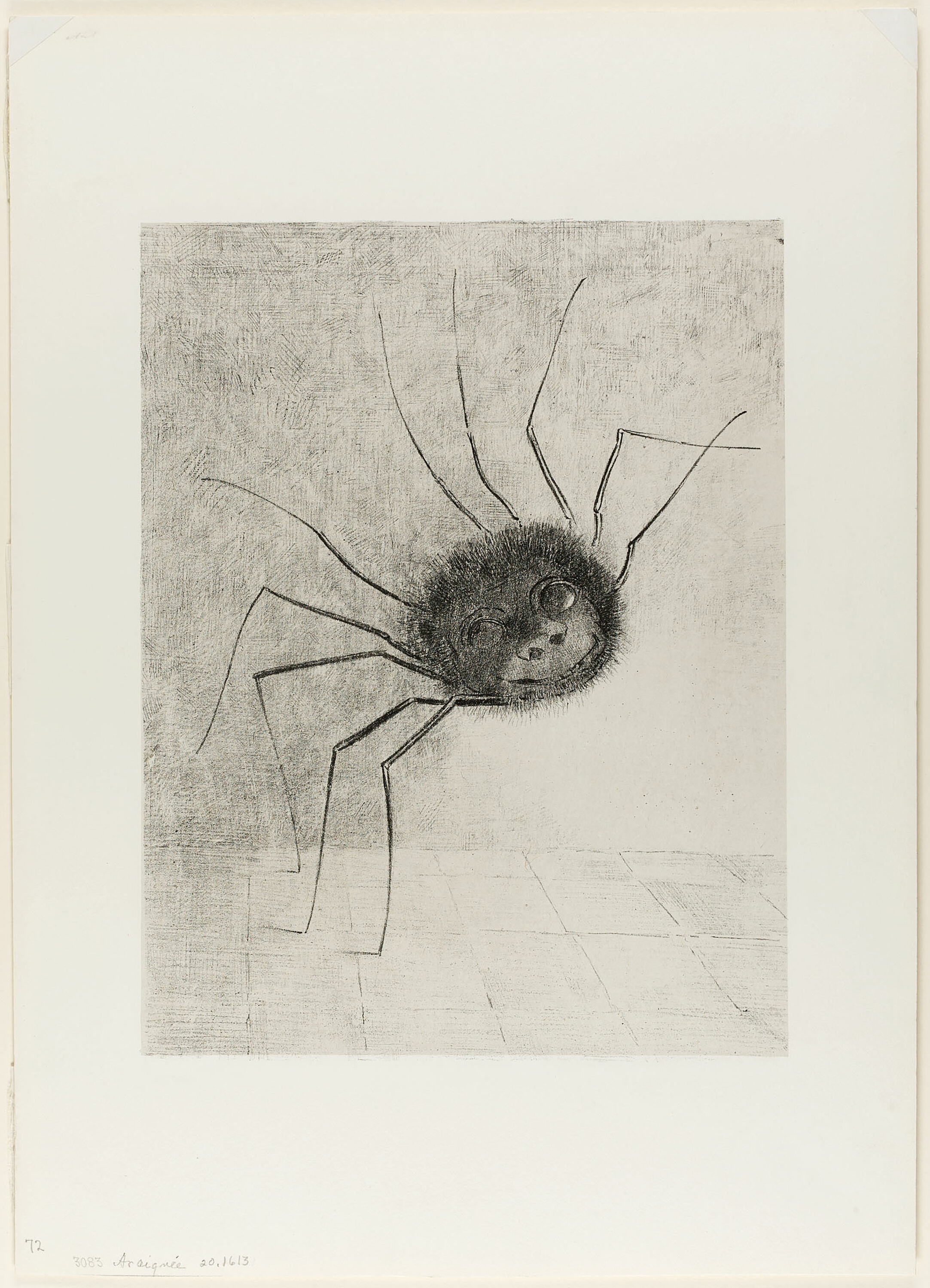
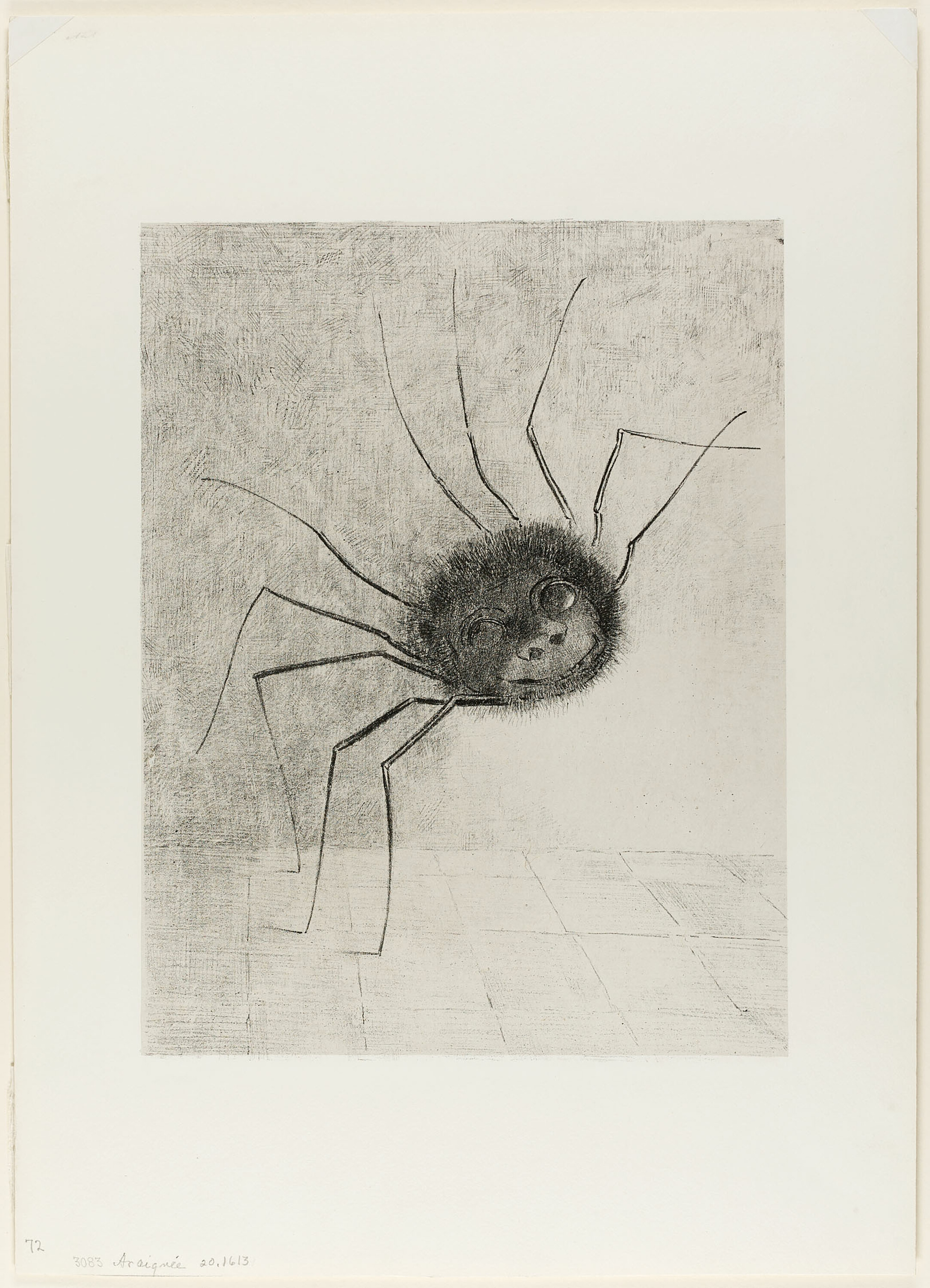
Odilon Redon / Art Institute of Chicago, via Wikimedia Commons. Public domain.
A face that interrupts the monster
A spider ought to be an easy Halloween image to read. Odilon Redon’s Spider makes that first reaction unreliable: the bristling body has a human face, and the mouth seems to smile. The creature is unsettling because its expression invites attention even as its long, angled legs suggest we should keep our distance.
This is a seasonal close look at a historic print, not a new exhibition announcement. MoMA’s Redon exhibition brochure dates Spider to 1887 and identifies the work as a lithograph. Its museum impression is a separate object from the Art Institute of Chicago sheet reproduced here.
Look at the floor before the face
Try looking at the lower part of the image first. The lightly drawn floor gives the creature something like an ordinary room to inhabit. Its thin legs cross that space at awkward angles; above them, a dense fringe of marks makes the body feel almost touchable. The face then disrupts that physical logic. Rounded eyes and a small mouth belong to a different register from the spindly limbs.
One reading is that the smile makes the encounter more ambiguous, not less eerie. It is possible to read the creature as welcoming, ridiculous or threatening without changing a single mark. That instability is the useful Halloween connection: the print turns recognition itself into the surprise, rather than relying on a familiar costume or a dramatic scene of danger.
An imagined creature, a specific printed object
MoMA’s archived exhibition account places Redon’s hybrid beings alongside his charcoal drawings, pastels, paintings and lithographs. The range matters here: a dark, softly textured image is not automatically a charcoal drawing. The work’s medium should come from its catalog record, not its appearance on a screen.
Likewise, a museum’s measurements, paper description or proof designation describe its own sheet. They should not be transferred to another impression merely because the composition matches. Our print-listing verification worksheet offers a way to keep those observations and documentary claims separate.
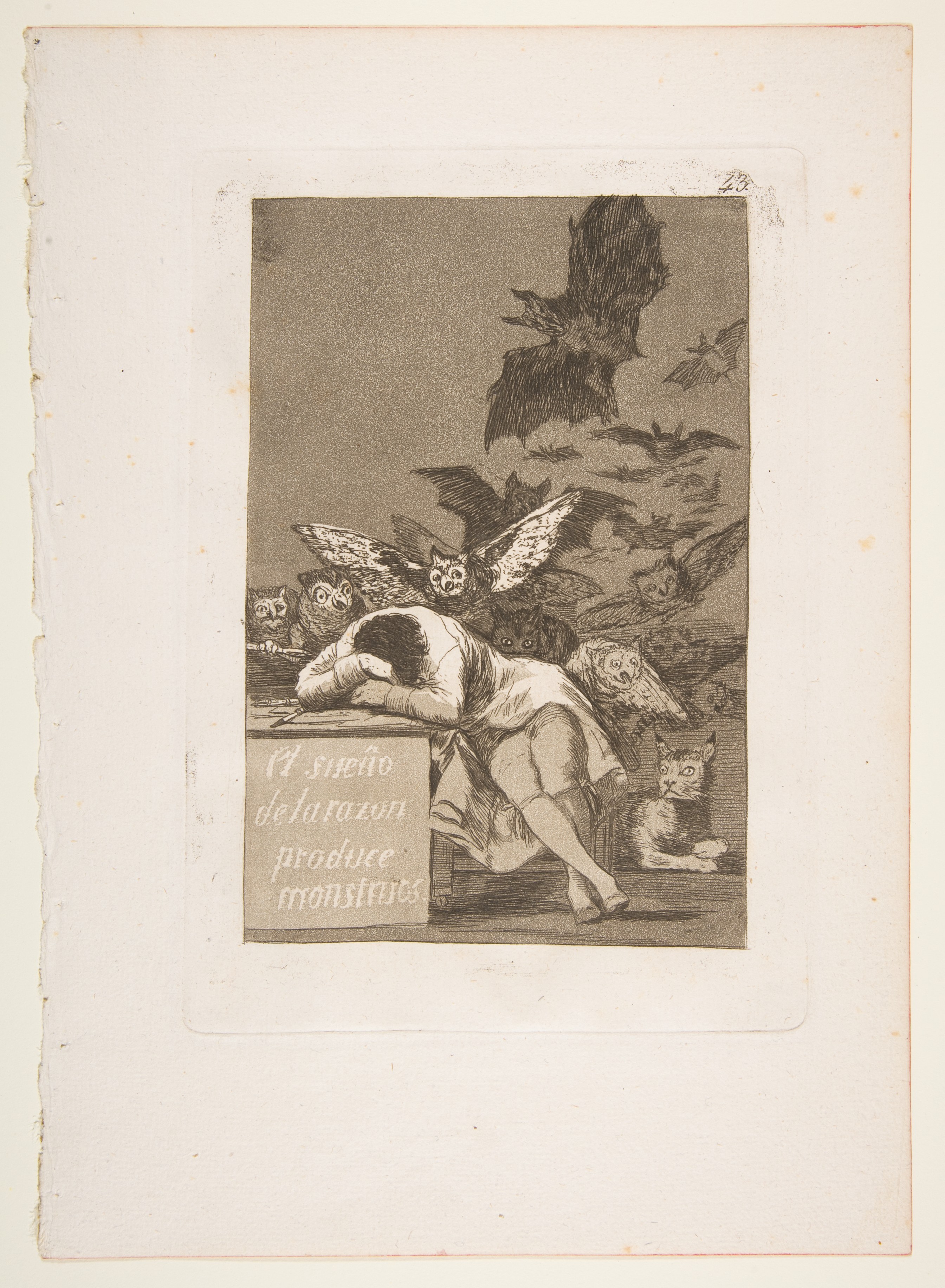
For another seasonal encounter with a very different use of nocturnal creatures, see Goya’s Sleep of Reason. Here, stay with the spider a moment longer: does its expression change when you look away from the face and back again?