Kunle “Earsnot” Martins Carries Graffiti’s Urgency Into Portraiture
Phantasy Violence traces how Kunle “Earsnot” Martins carried the immediacy and social record of graffiti into his gallery portraiture.
By Weston Deboer
October 24, 2026 · 2 min read
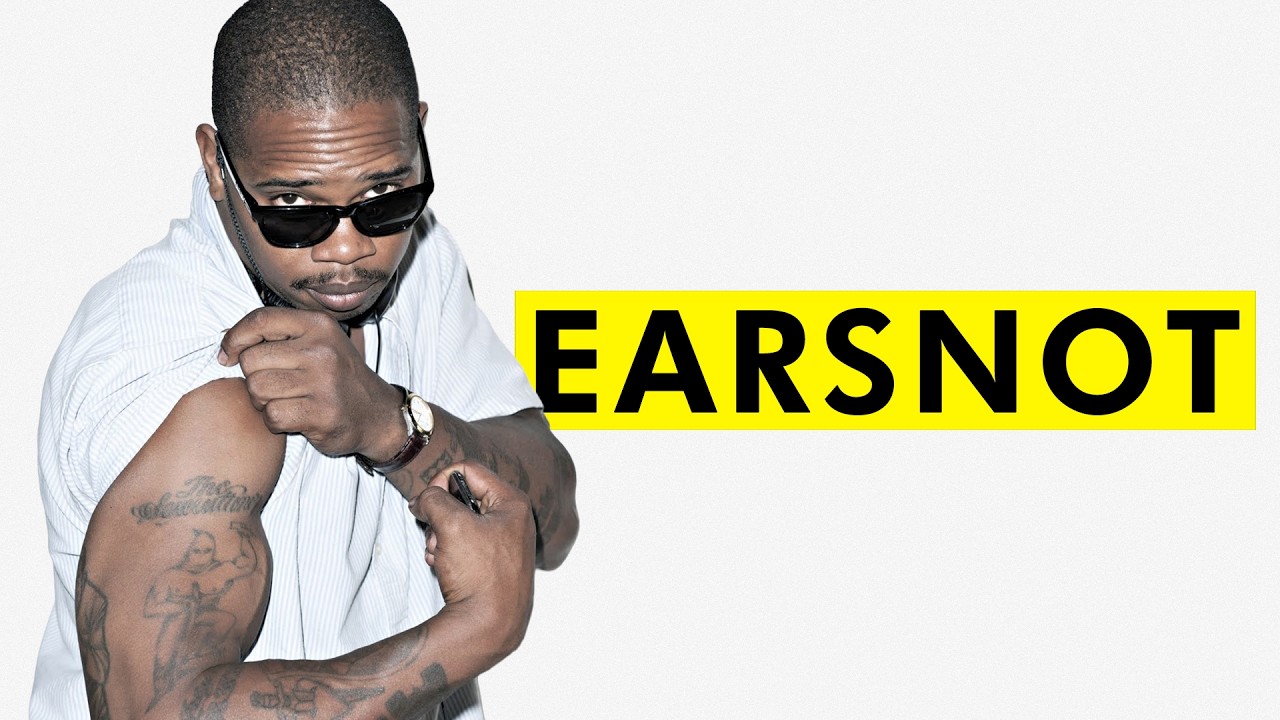
Video still courtesy Phantasy Violence / YouTube.
Kunle “Earsnot” Martins has spent decades making his presence legible across New York. A new five-minute profile from Phantasy Violence follows the artist from his emergence in the city’s late-1990s graffiti culture to the intimate graphite portraits that now anchor his studio practice.
The film presents that movement as a continuation rather than a clean break. Martins’s tags asserted identity in public space; his drawings preserve the people and relationships that give an identity its shape.
From Earsnot to IRAK
Martins became known as Earsnot while developing a highly visible hand across rooftops, tunnels, and storefronts. He went on to found IRAK, the influential downtown crew whose orbit connected graffiti, photography, fashion, and art. The group’s circle included Dash Snow, and its cultural reach extended well beyond the surfaces its members wrote on.
What mattered was not only repetition but recognition: a name could travel through the city, signal membership, and record that a person had occupied a particular place and time. That understanding of visibility still sits beneath Martins’s portraiture.
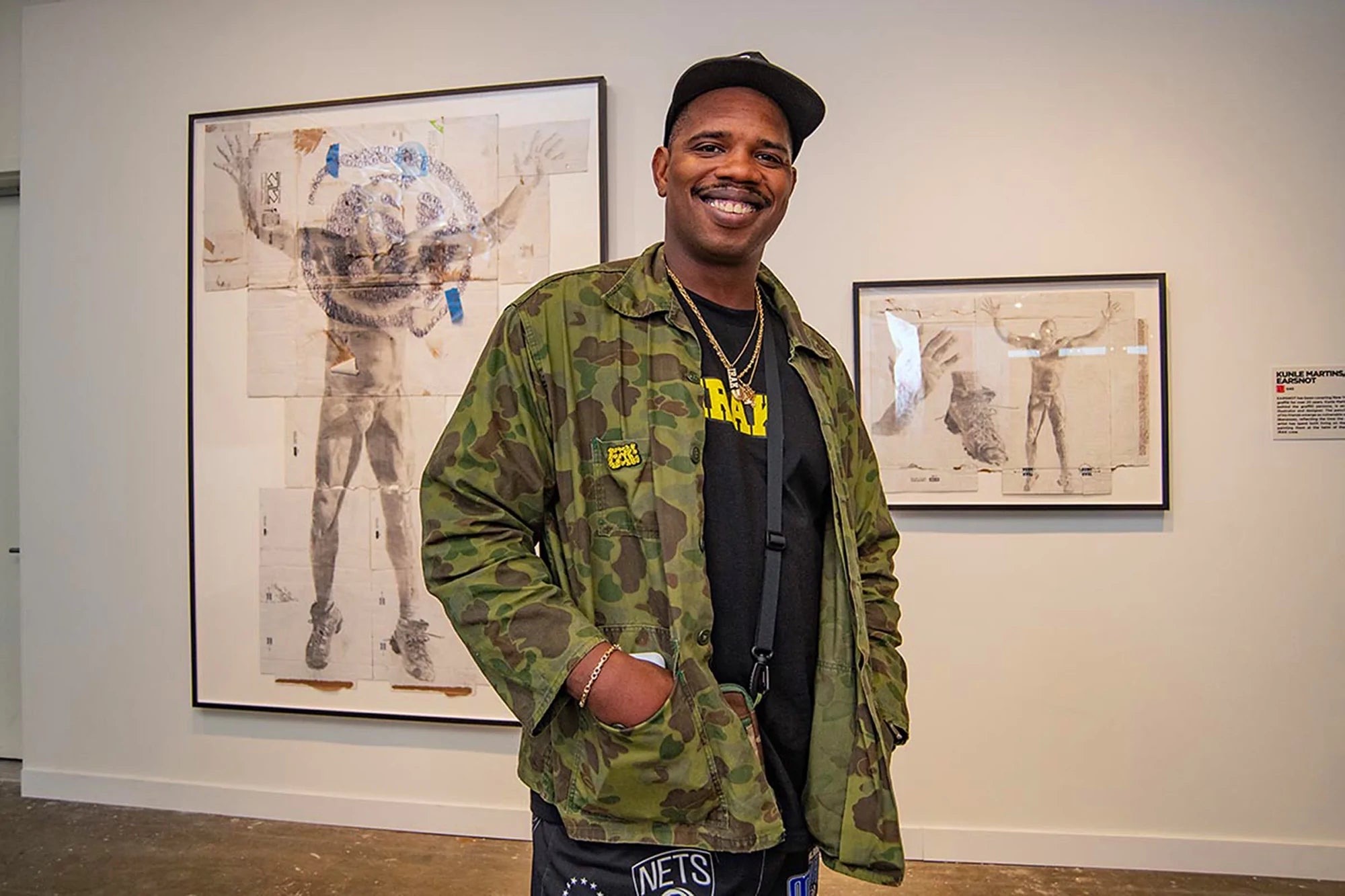
Portraits as a social record
Martins often builds his drawings from the compressed formality of driver’s-license and passport photographs. Working in graphite on found white cardboard, he enlarges small identification images into sensitive studies of friends, relatives, and chosen family. The official 56 Henry artist biography describes portraiture as the foundation of his practice.
In a 2023 interview with Complex, Martins explained that drawing preceded graffiti in his life and that his parents encouraged him to see himself as an artist. His portraits, he said, help preserve people who matter to him while clarifying his own place among them.
A bridge, not a departure
That continuity is visible across exhibitions including Portraits: Looking Like a Snack at Shoot the Lobster in 2019, What’s Up Fam? at 56 Henry in 2020, and S3ND NUD3S at Bortolami in 2021. Each project moved the work into a gallery while retaining graffiti’s directness, economy, and insistence on naming a community.
The Phantasy Violence profile is concise, but its central idea is expansive: moving indoors did not erase Martins’s earlier language. It gave him another surface on which to register presence, memory, and kinship.
Watch “How Kunle ‘Earsnot’ Martins Went From Graffiti To Galleries” on YouTube. Additional biographical and image information was verified through 56 Henry and Beyond the Streets.