A New Study Links Van Gogh’s Starry Night to a July Dawn
Researchers propose that the sky in The Starry Night reflects a specific July 1889 dawn, while museum experts and astronomers question the revised chron...
By Weston Deboer
October 23, 2026 · 3 min read
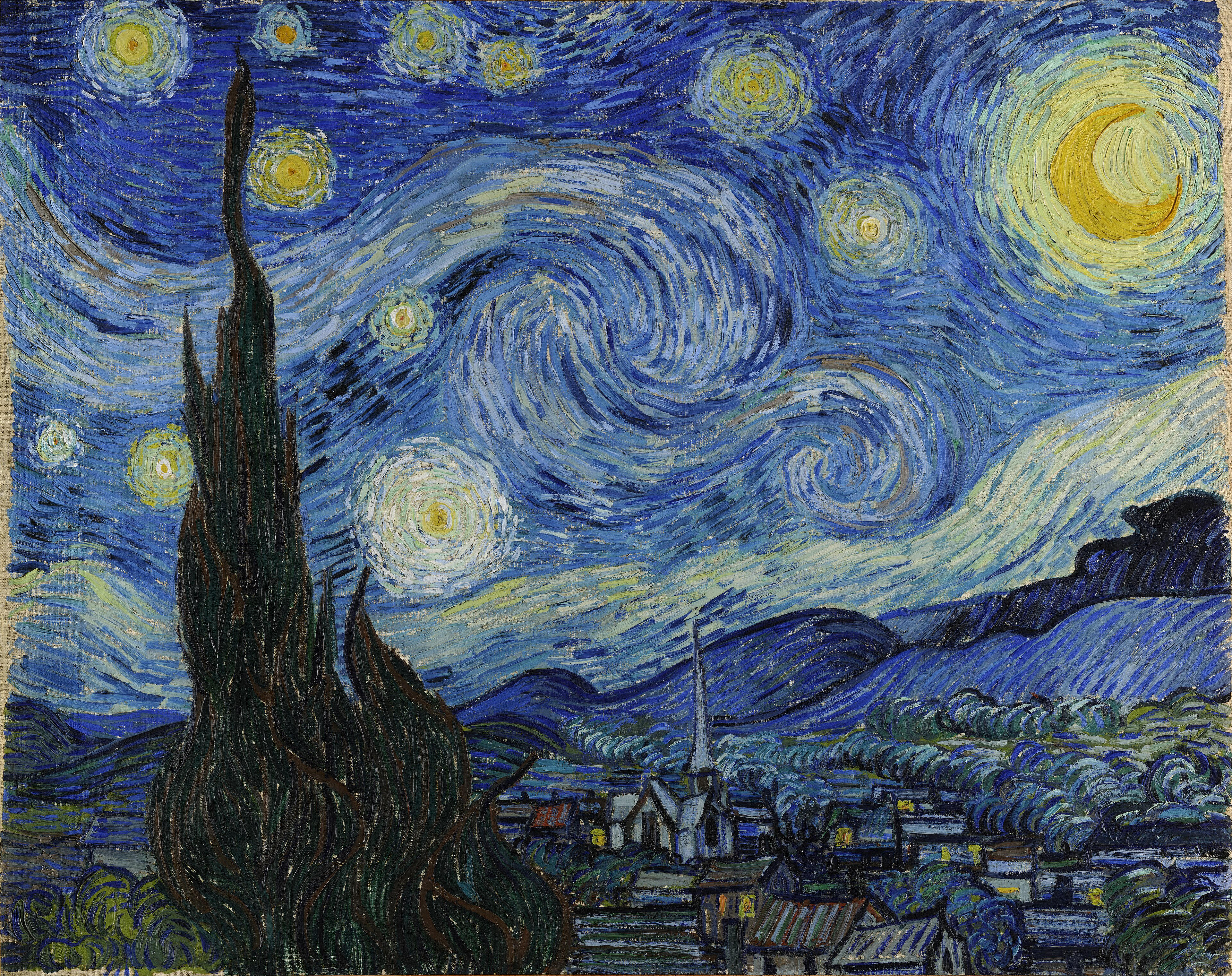
Vincent van Gogh, The Starry Night (1889), MoMA. Public domain via Wikimedia Commons.
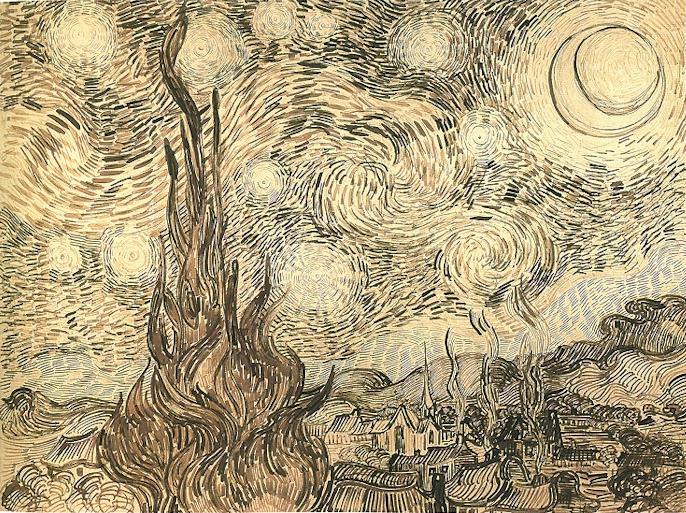
A new study proposes that the sky in Vincent van Gogh’s The Starry Night was grounded in a real celestial arrangement visible shortly before dawn around July 22, 1889. The date is unusually precise, but it is also a hypothesis that challenges the painting’s established June chronology.
Published in Scientific Reports, the research identifies the large bright object near the horizon as Venus and the central V-shaped group of stars as the Hyades cluster. A waning crescent Moon, Venus, and the Hyades would have occupied the same narrow section of sky over Saint-Rémy-de-Provence on the proposed July morning.
Reconstructing a painted sky
The team combined astronomy software, nineteenth-century weather records, Van Gogh’s letters, field surveys, and geometric shape analysis. An earlier drawing of the local terrain was used to estimate a narrow field of view; the researchers then tested which simulated skies could place the Moon and Venus inside that frame.
July 22 produced the closest match. It also resolves a problem with the customary mid-June date: the Moon was then waxing gibbous, unlike the thin crescent painted at the upper right. Statistical comparison suggested that five prominent painted stars preserve the shape of the Hyades despite Van Gogh’s expressive enlargement and swirling brushwork.
The date is not settled
The paper does not establish that Van Gogh began or finished the canvas on July 22. Its authors allow that he may have combined observations made across several nights, or begun the composition in June and revised it later.
There is substantial evidence for the traditional dating. In a letter from about June 18, Van Gogh told his brother Theo about a new study of a starry sky. The Van Gogh Museum has also pointed to the roll of canvas he received in early June and a drawing of the painting sent by July 2. The museum maintains that his celestial forms were not intended as exact likenesses.
Astronomer Donald Olson has raised a separate objection: the narrow field of view needed for the Hyades identification may not fit the wider terrestrial landscape in the painting. He also questions whether the brightest real star in the cluster maps convincingly onto the painted stars. These criticisms are summarized in Science News.
Observation and invention
The most durable part of the study may be its argument that observation and imagination are not opposites. Even if July 22 does not replace June 1889 on the museum label, the analysis adds evidence that Van Gogh watched the changing predawn sky closely and transformed remembered relationships rather than inventing every celestial position from scratch.
The Starry Night is in the collection of the Museum of Modern Art in New York. This post was prompted by Gizmodo’s report; the scientific claims were checked against the original paper and independent coverage.