Goya’s Sleep of Reason: A Halloween Look at Los Caprichos
Bats, owls and a sleeping figure turn Goya’s 1799 print into an unsettling exercise in looking. Follow the light, then read the whole sheet.
By Art Vault
October 23, 2026 · 3 min read
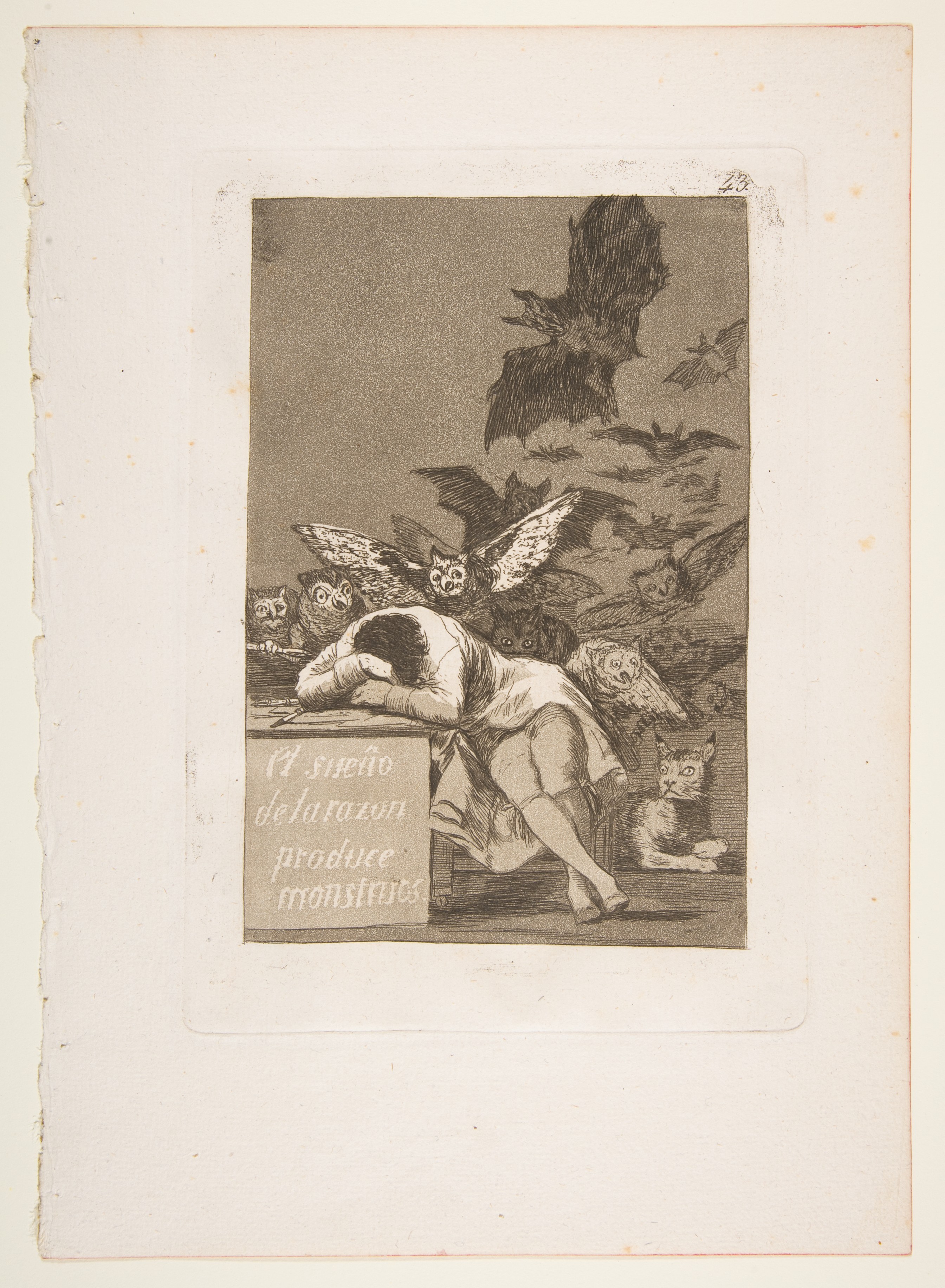
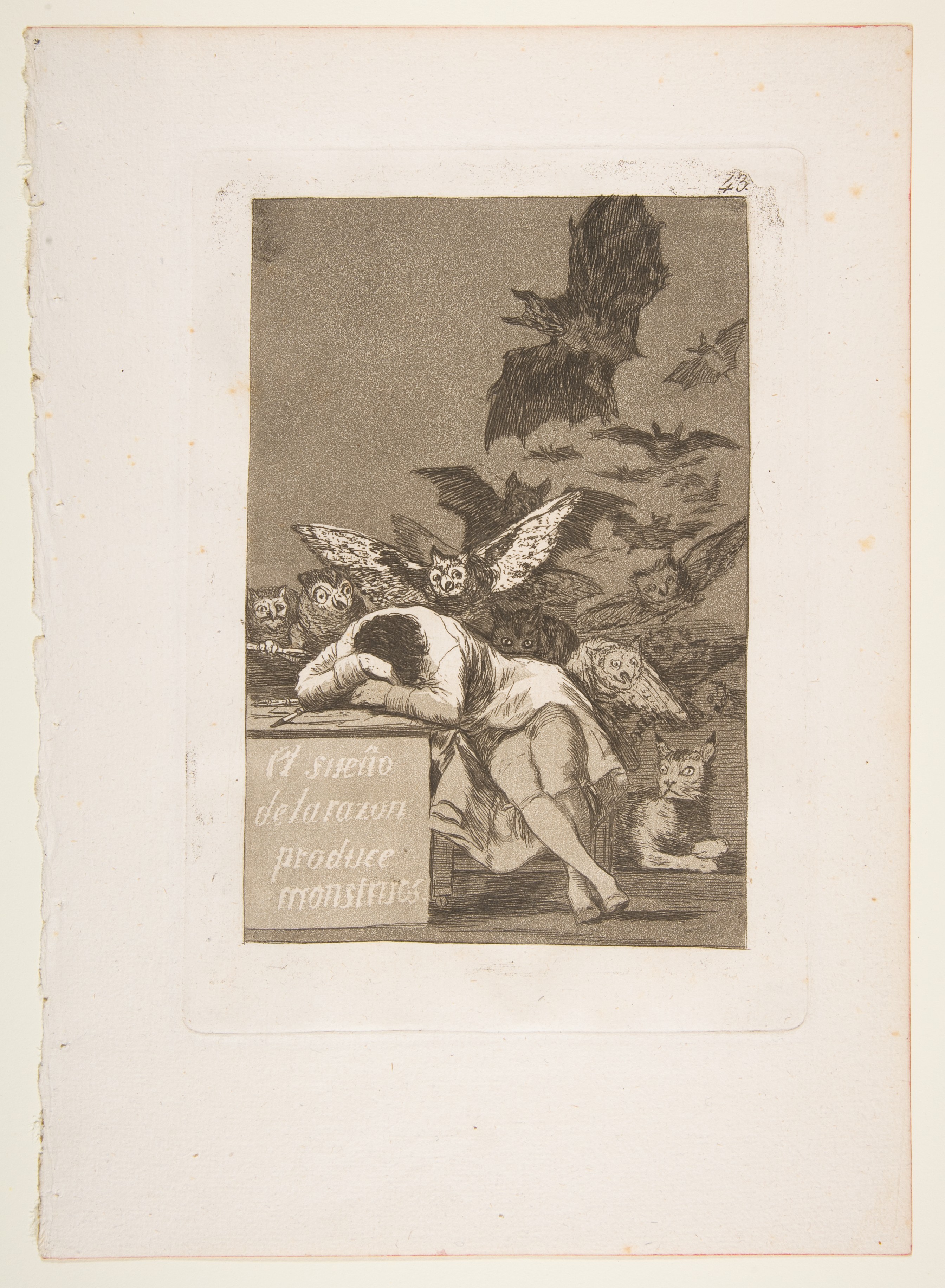
Francisco Goya / The Metropolitan Museum of Art, Gift of M. Knoedler & Co., 1918. Public domain.
A Halloween encounter with an older nightmare
For Halloween, spend a moment with a monster picture that makes looking feel uneasy. Francisco Goya’s The Sleep of Reason Produces Monsters is plate 43 of Los Caprichos, published in 1799. This is a seasonal return to a historical print, not a new exhibition or release. The Metropolitan Museum of Art’s record identifies the work as etching and aquatint and places it within an eighty-print series of social criticism.
Follow the light before counting the creatures
Start with the pale sleeve and bent back. The sleeping figure forms a bright, folded shape near the bottom of the image; above him, overlapping wings make the space feel crowded. Try covering the upper half of the picture with your hand. The lower scene can read as exhausted stillness. Uncover the wings and that stillness becomes vulnerable.
The most unsettling detail may be the difference between his hidden face and the open eyes around him. He cannot return their looks. Several creatures seem to face outward, putting the viewer in the uncomfortable position of meeting their gaze while the person at the desk remains unaware. That is a visual reading of the image, rather than a claim that every animal has one fixed symbolic meaning.
Read the whole sheet, including its edges
The full-sheet image below restores the pale margins and the small number above the scene that a cropped reproduction can lose. The Met identifies 43 as the plate’s position in the published series. It also notes that a preparatory drawing suggests the image was initially intended as a title page. That change of position gives us a useful reason to look beyond the familiar central motif. See the museum’s object notes.
Notice how the words on the desk sit inside the imagined scene, while the small plate number sits above it. One belongs to the picture’s address to the viewer; the other helps locate the image in a sequence. Both are easy to overlook when bats and owls command attention.
Keep the image and the individual impression distinct
The National Gallery of Art also holds this subject, with its own accession number and sheet measurements. A familiar composition is not a complete description of a particular physical print. When saving a museum image for research, keep its institution, object number and source link together.
Art Vault’s artwork identification record test offers a practical way to check whether your notes point to a particular object. For this Halloween encounter, though, return to the picture: follow the pale sleeve upward, let your eye get caught in the wings, and then find the watchful eyes again.