ASVP: Graphic Layers from Super Matter to Figure No. 7
How ASVP moves between recognizable imagery, abstraction and printmaking—and what the studio’s Figure No. 7 record actually tells a collector.
By ArtVault Collector Content Editor
November 9, 2026 · 3 min read
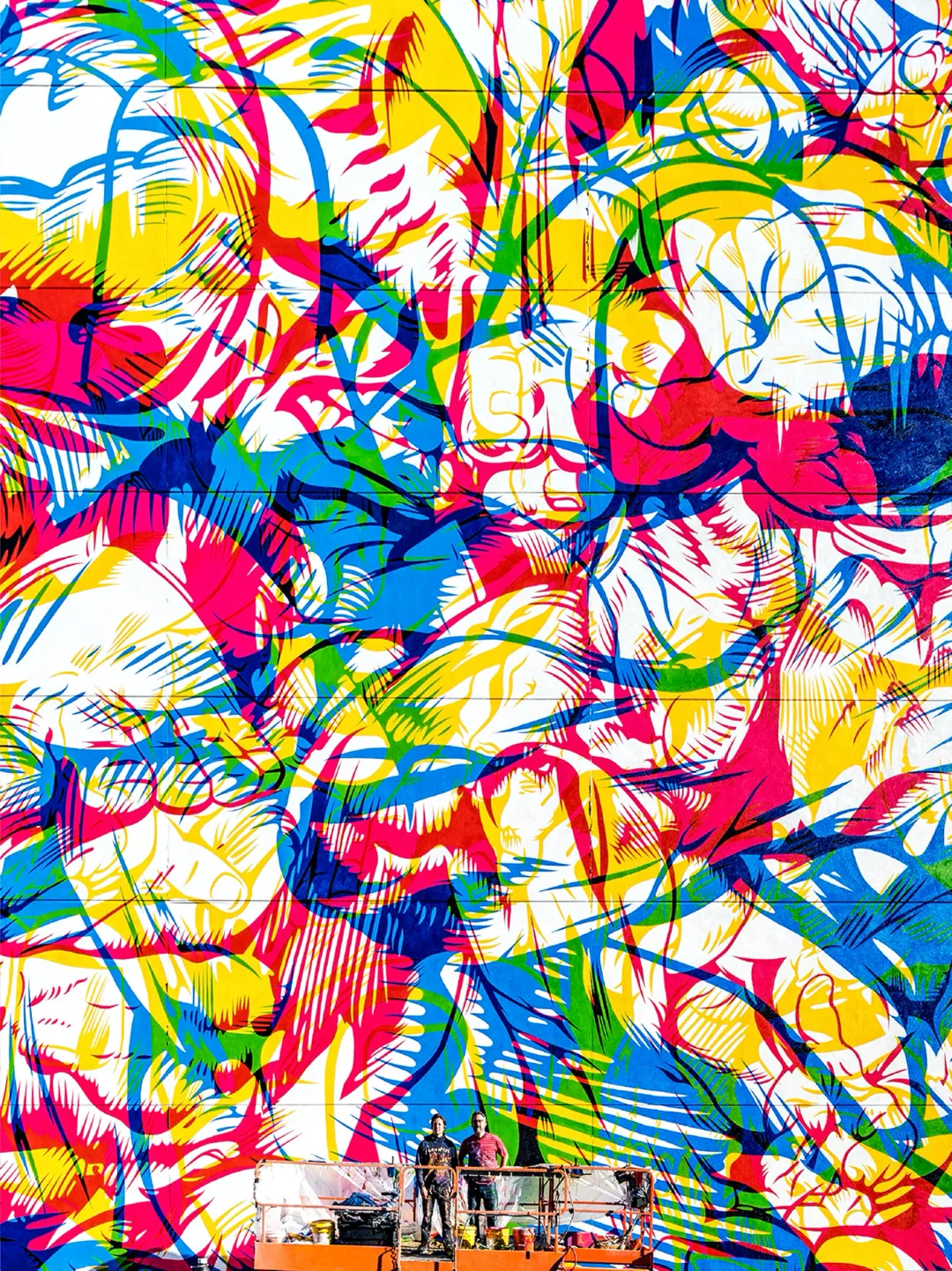
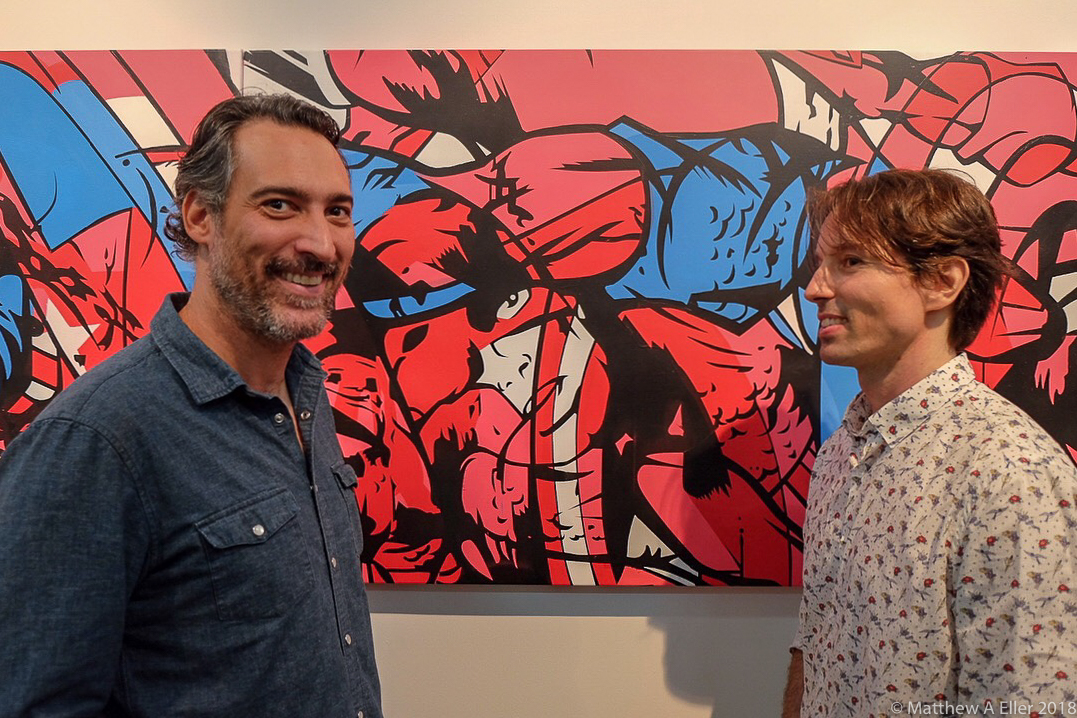
ASVP, Super Matter 6, New York. Image courtesy of the artists.
A collaboration built around graphic images
ASVP is the Brooklyn-based collaboration of Simon Grendene and Victor Anselmi. Their official biography dates the project to 2009 and identifies advertising, pop culture and comics among its points of reference. This evergreen introduction follows how that graphic vocabulary moves between images, painted surfaces and prints; it does not announce a new release.
A useful starting question is where recognition happens. Does a work first register as a familiar figure, a sharp contour or an arrangement of color? Those possibilities need not cancel one another. A graphic image can remain readable while its fragments begin to work as an abstract composition.
Super Matter turns recognition into movement
On the studio’s official project archive, the section dated Super Matter, 2018 describes a transformation of superhero imagery into energetic shapes. The archive documents the series across canvases, monoprints and walls. These are historical project records, not evidence that every pictured work is currently available.
Try looking twice: first for the recognizable cue, then for the directional movement of the surrounding shapes. A sharp edge may pull attention one way while a color block pulls it back. This is a suggested reading of the series’ stated premise, not a claim that every viewer will recognize the same character or that every object uses the same process.
Painting and screenprinting can change places
In Matthew A. Eller’s February 5, 2017 interview for StreetArtNews, ASVP described printing graphic elements over hand-painted work. That account complicates the assumption that painting must be a finishing layer added to a completed print. It documents a way the studio worked at that time, not a production specification for every ASVP edition.
For a collector, the distinction matters because a crisp printed contour does not tell the whole story of the surface beneath it. Keep the studio’s general process account separate from the medium stated for the particular work. Similar imagery can travel across objects with different material histories.
A specific print: Figure No. 7
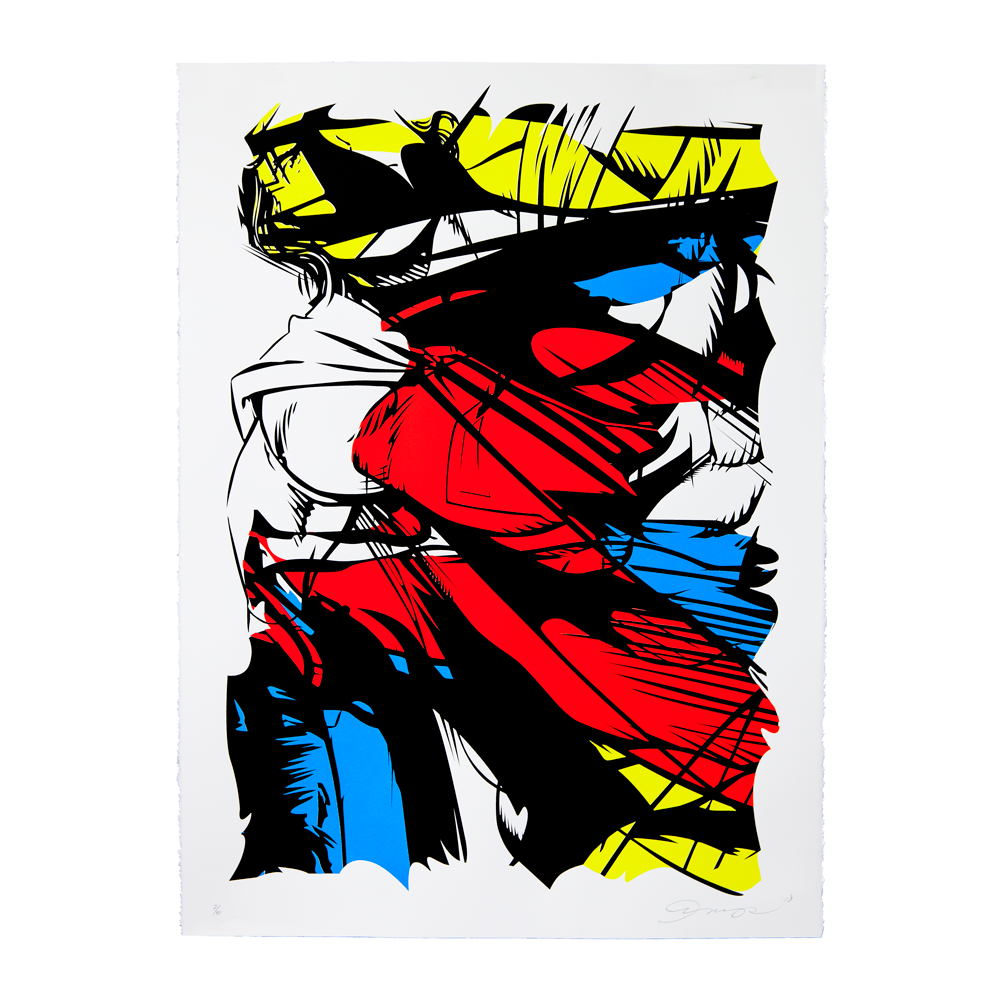
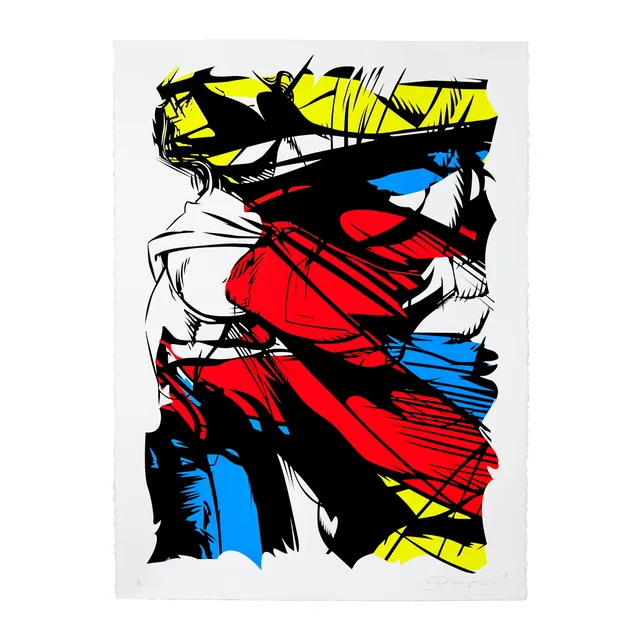
The studio’s Figure No. 7 listing describes a 2018 four-color screenprint on archival stock with a deckled edge, measuring 22 by 30 inches, in an edition of 50, signed and numbered on the face in pencil. These details are attributed to the artist’s listing, checked November 9, 2026; no sale price, stock promise or separate proof quantity is inferred.
The corresponding ArtVault artwork record connects that research to a specific catalog entry. Use the complete title and year when comparing records. The word “figure” or a similar arrangement of colors alone is too broad to establish that two listings describe the same edition.
The reward of this approach is a more precise encounter with ASVP: follow the image’s graphic force, then return to the evidence for the object carrying it. Interpretation can stay open while a record remains specific.
Prepared by ArtVault from the linked studio sources and dated artist interview. Artwork and mural images courtesy ASVP and reproduced with permission.