Bill Rebholz Turns Throwaway Graphics Into Vernacular Art
Bill Rebholz explains how street art, sign painting, found materials, and throwaway commercial graphics shape his tactile paintings and objects.
By ArtVault Collector Content Editor
October 29, 2026 · 2 min read
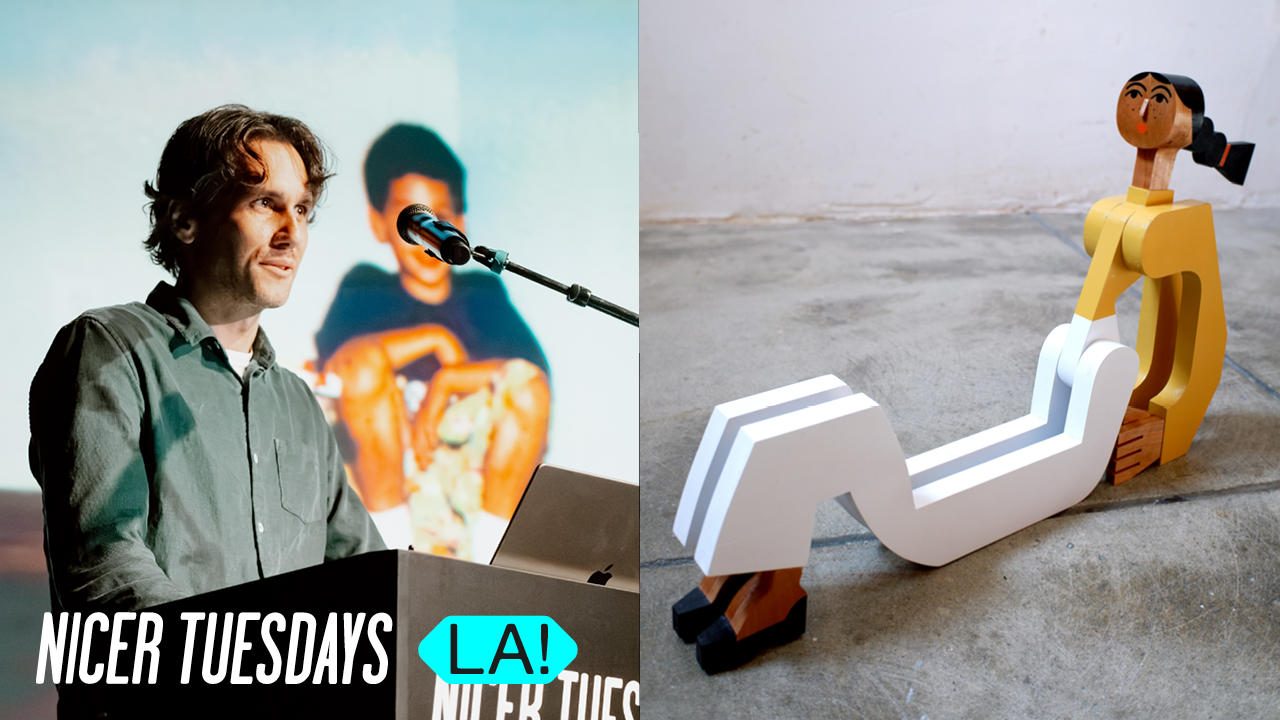
Bill Rebholz and his work. Image: Nicer Tuesdays / It’s Nice That.
A new talk about everyday visual language
Bill Rebholz’s Nicer Tuesdays talk, given in Los Angeles on September 22, 2026, was featured by It’s Nice That on October 28. The artist describes a practice shaped by graffiti, sign painting and the graphics encountered while moving through a city. The dated release and official talk and transcript distinguish the recording’s release from the event itself.
The useful idea for looking at this work is that a picture’s support is part of its language. A sign must occupy a particular space. Its outline, edge and size direct attention before anyone has finished reading it. Bringing that logic into an artwork makes the container worth examining alongside the image.
The edge does some of the work
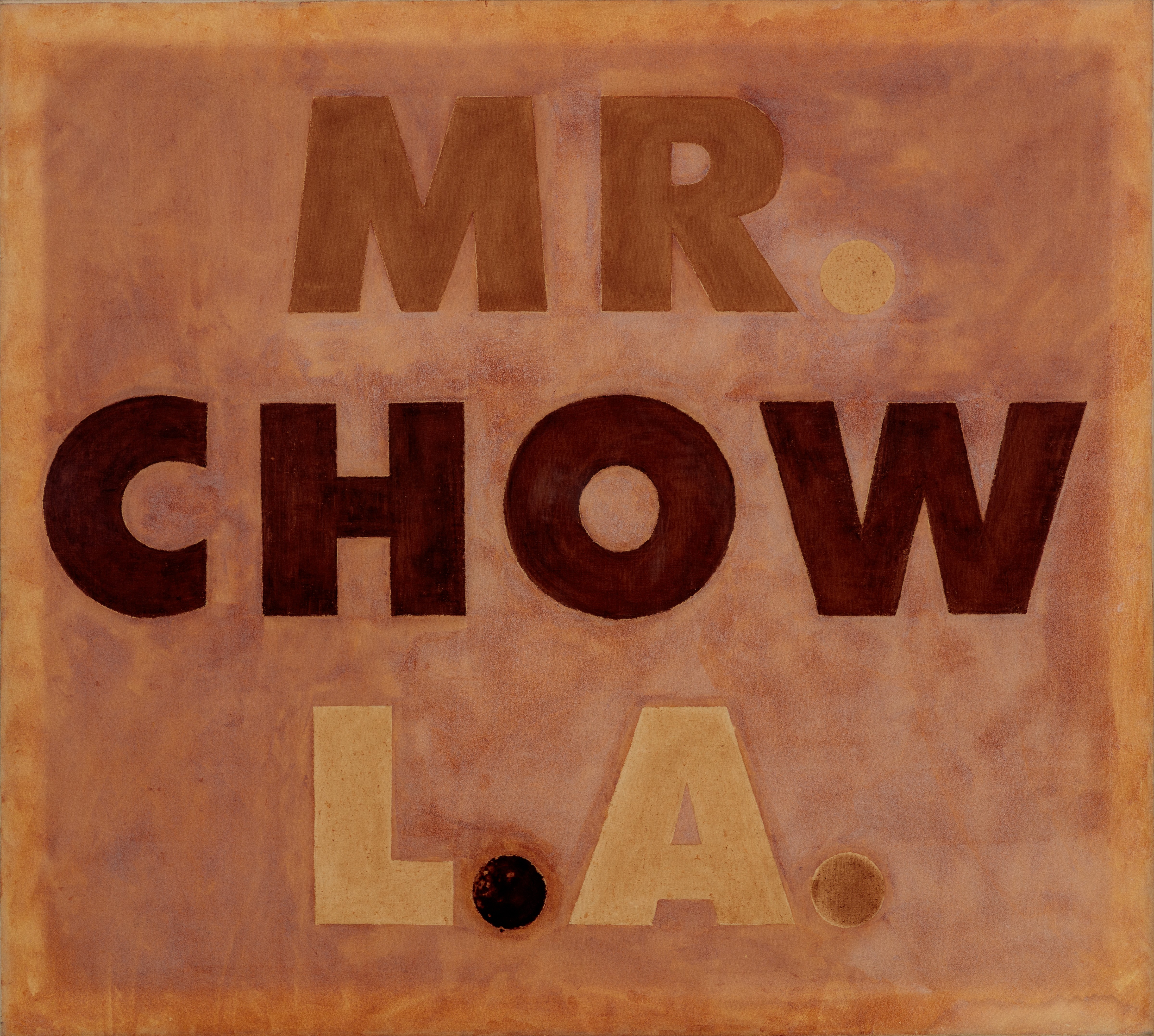
In the talk, Rebholz traces a move from small gouache collages to constructed panels. He also describes using painting, framing, sewing and found materials to assemble compositions. The account suggests a useful viewing sequence: first follow the outer boundary, then the joins, and only then the motifs inside. See the discussion around 5:09 and 8:20.
A seam can interrupt an image; a frame can give an ordinary symbol the weight of a separate object. Looking for those decisions helps distinguish the work’s physical construction from its flat graphic vocabulary. A photograph may make both appear equally smooth, so an installation view or a side view can answer a different question from a frontal image.
What changes when disposable graphics get bigger?
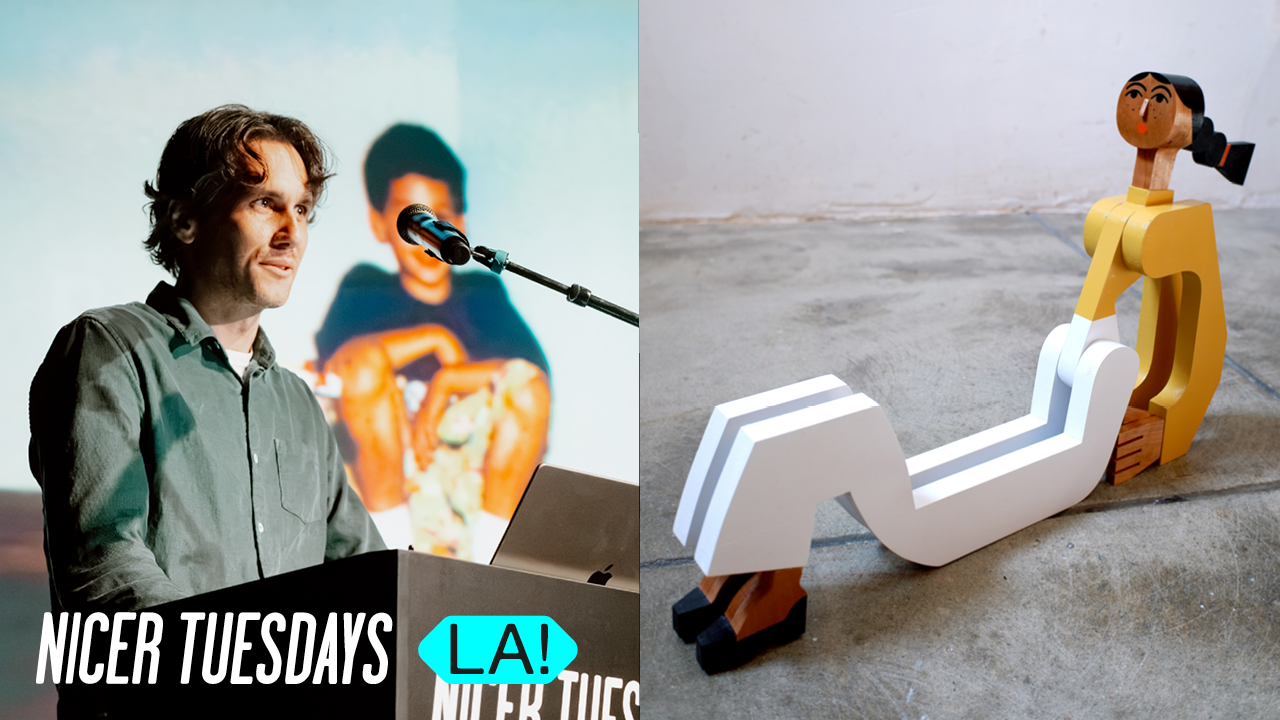
Image: Bill Rebholz and his work. Source: Nicer Tuesdays / It’s Nice That, official talk thumbnail.
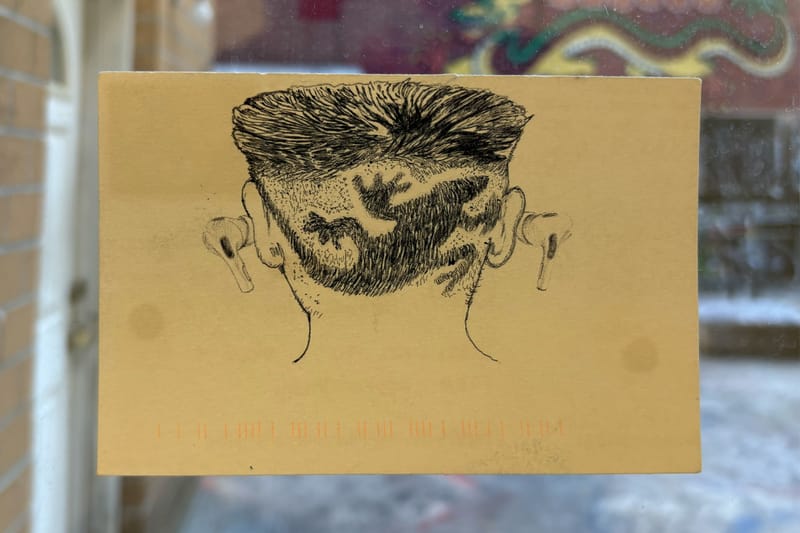
Rebholz discusses enlarging grocery mailers and junk-car cards into substantial objects. His interest lies partly in the mismatch between their fleeting everyday use and the attention a large artwork demands. This is his account of his process, not a claim that every discarded object becomes art. The examples begin around 7:00.
Try separating recognition from scale. What do you recognize immediately? What makes you pause? A familiar graphic can be understood quickly while the object carrying it takes longer to grasp. That gap gives a viewer something to do beyond identifying the source material.
The publisher’s composite image above places Rebholz at the lectern beside a constructed seated figure. Its flat, brightly painted parts make the distinction between an illustrated figure and a physical object especially easy to see.
Keep the source visible
Watch the complete talk for the artist’s examples. For a complementary look at how graphics compete in public space, read our story on New York’s sticker layer. Rebholz’s discussion brings that attention indoors, asking us to notice the surfaces and structures that allow a graphic to become an object.