New York’s Sticker Layer Is a Battle Over Who Shapes the Street
Artists, cleaners, and city crews compete over New York’s sticker-covered surfaces, turning maintenance into another chapter of the work.
By Weston Deboer
October 22, 2026 · 3 min read
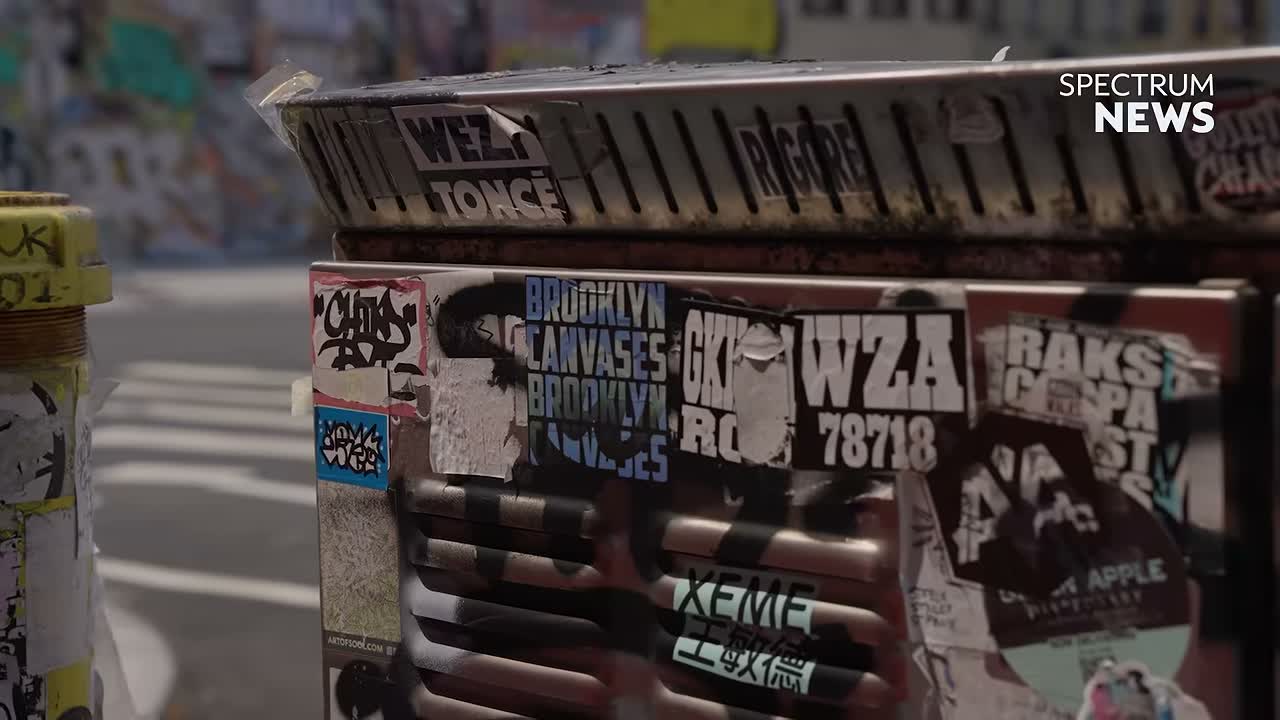
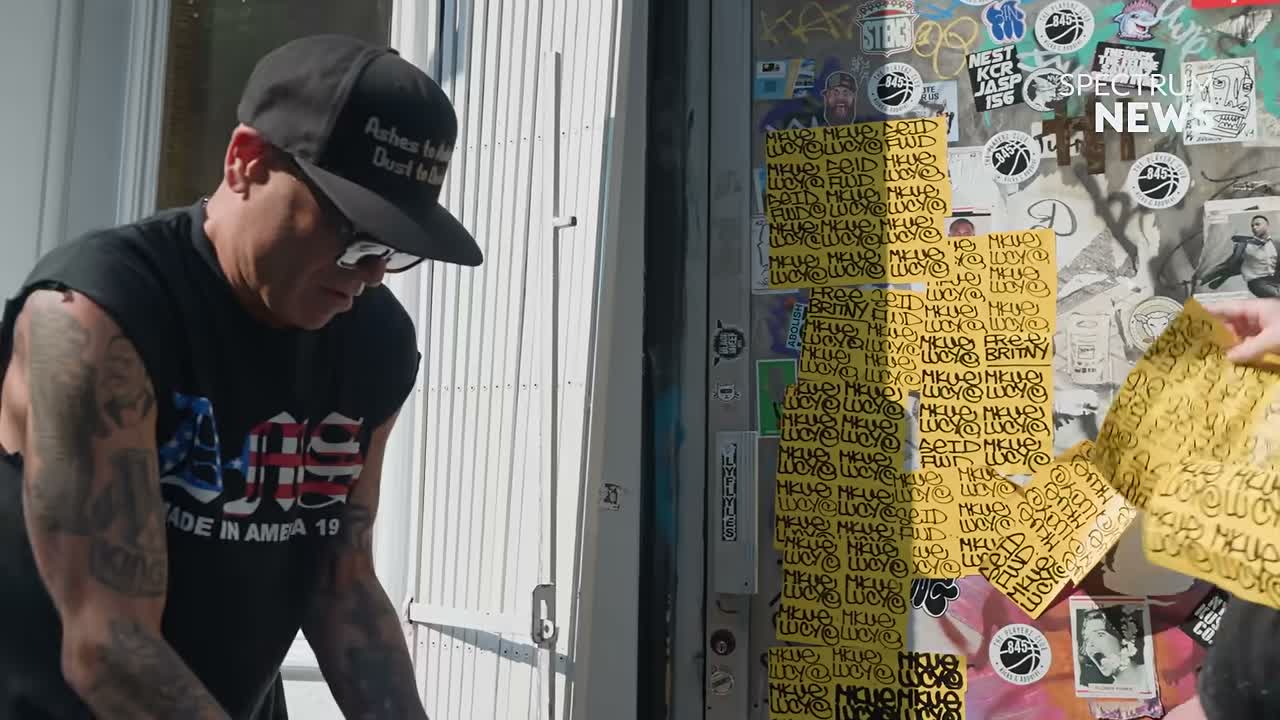
Stickers layered across a New York street fixture. Still from Roger Clark’s report for Spectrum News NY1.
New York’s sticker-covered lampposts, mailboxes, hydrants, and storefronts form an unofficial publishing network. Every label competes for a few square inches of attention, then waits for weather, another artist, a property owner, or a city crew to decide how long it will remain.
That cycle drives Roger Clark’s new report for Spectrum News NY1. Filmed in the Lower East Side and Bushwick, the piece looks beyond the accumulated surfaces to the people who keep adding to them and those who methodically scrape, wash, or paint them away.
A fast route into the visual record
Several artists appear anonymously because putting stickers on property without permission can lead to arrest. Others are identified by their public names, including MQ, whose repeated handstyle has traveled far beyond New York. The medium’s appeal is immediate: stickers can be produced in batches, carried without much equipment, and installed in seconds. Repetition turns a small drawing or name into a character in the city’s daily visual life.
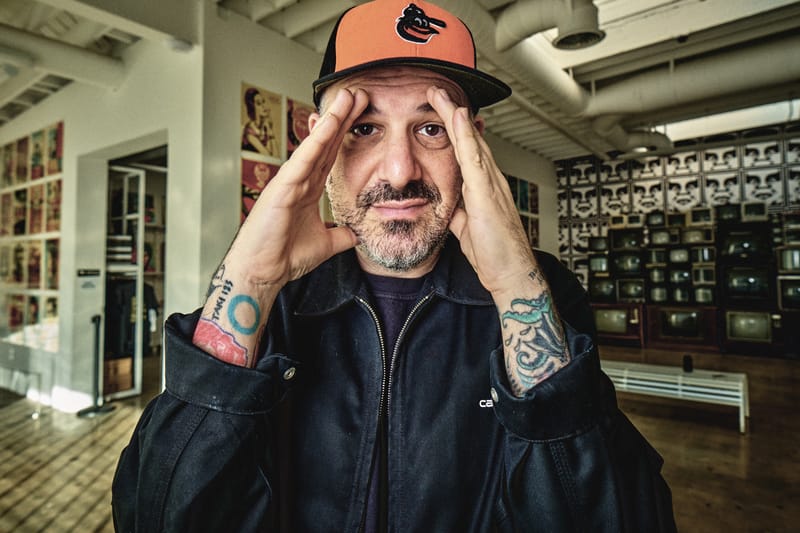
Bucky Turco, founder of the street-culture publication ANIMAL New York, connects the practice to graffiti, punk flyers, commercial labels, and the dedicated sticker campaigns of earlier writers. He also gives the humble locksmith label its due. Long before artists described the city as a distributed gallery, tradespeople were already sending workers across neighborhoods to place thousands of small adhesive marks.
Maintenance becomes part of the image
The report’s sharpest encounter occurs at a public mailbox. Patrick, known online as SweetP, removes its layered stickers and repaints the surface green. A passerby challenges him, arguing that the cleanup erases culture; Patrick calls his intervention maintenance. The conversation never produces a clean winner because both positions depend on the same object. One person sees a public canvas, another sees public infrastructure worth preserving.
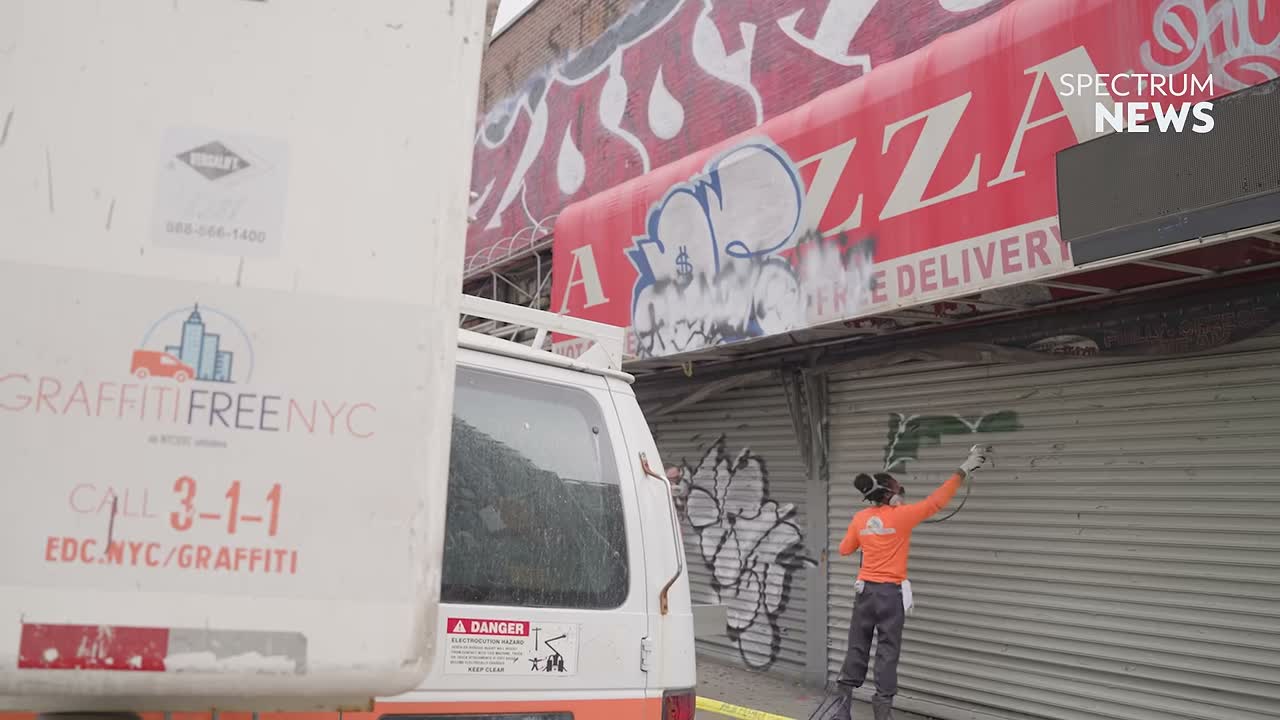
The city’s response adds a third position. Frank Lera, an assistant chief with the Department of Sanitation, says the removal program receives more than 1,500 new requests each month. Crews distinguish commissioned murals from unauthorized markings and use washing or paint where property owners request help. The official Graffiti-Free NYC program offers removal at no charge, while acknowledging a practical reality visible throughout the report: many cleaned surfaces will be marked again.
That return is part of what makes sticker art revealing. It records who feels entitled to alter a shared surface, who has the authority to restore it, and which version of the street a neighborhood is willing to defend. The layers are temporary, but the argument underneath them is not.
Watch the complete NY1 report and read the original post at FRANK151.
Featured image: Stickers layered across a New York street fixture. Still from Roger Clark’s report for Spectrum News NY1.