Chase Hall Paints Black Appalachian History in Coffee
In The Affrilachian Mountains, Chase Hall combines coffee, acrylic, antique tools, and found tins in a monumental group portrait examining Black Appalac...
By Weston Deboer
October 18, 2026 · 3 min read
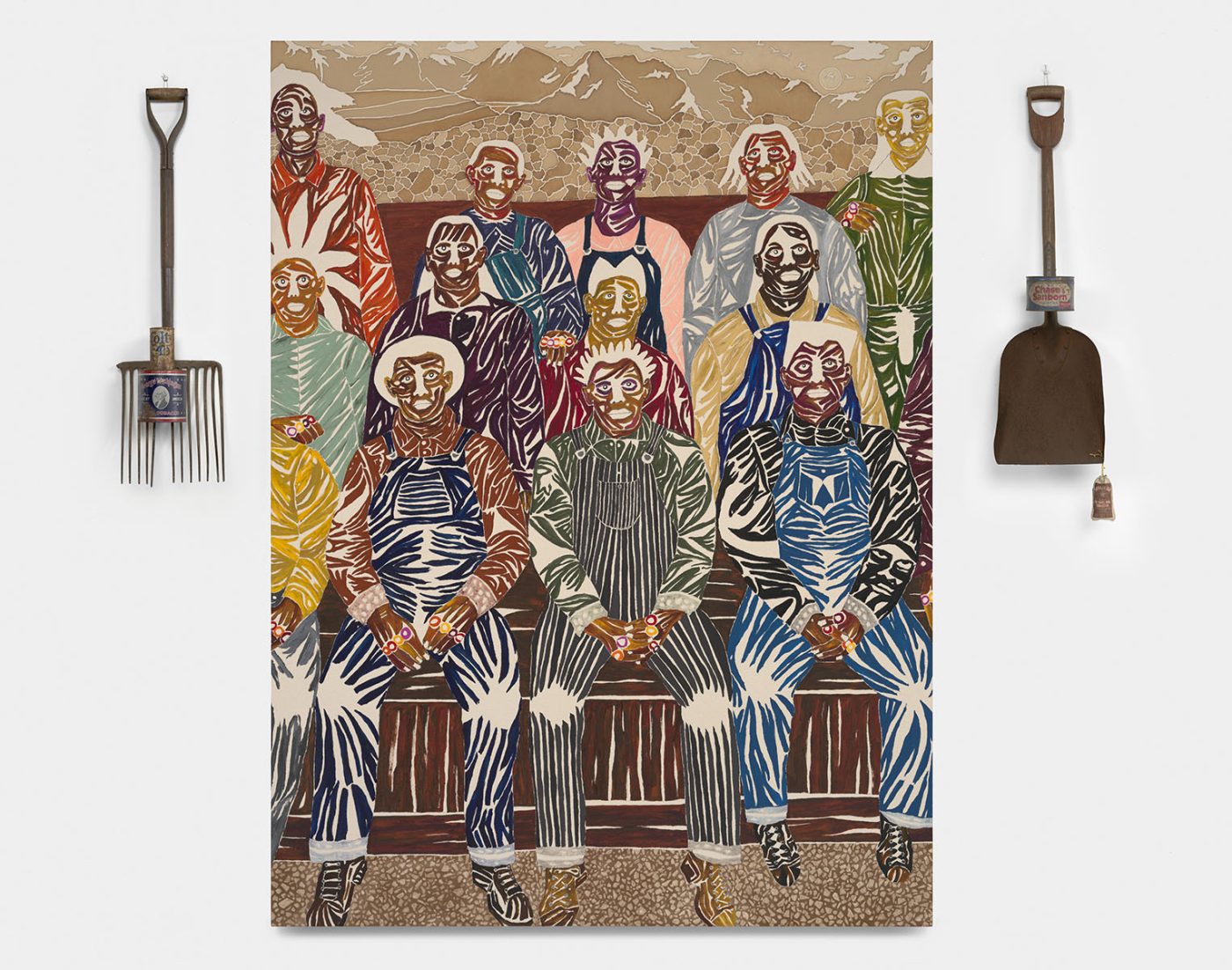
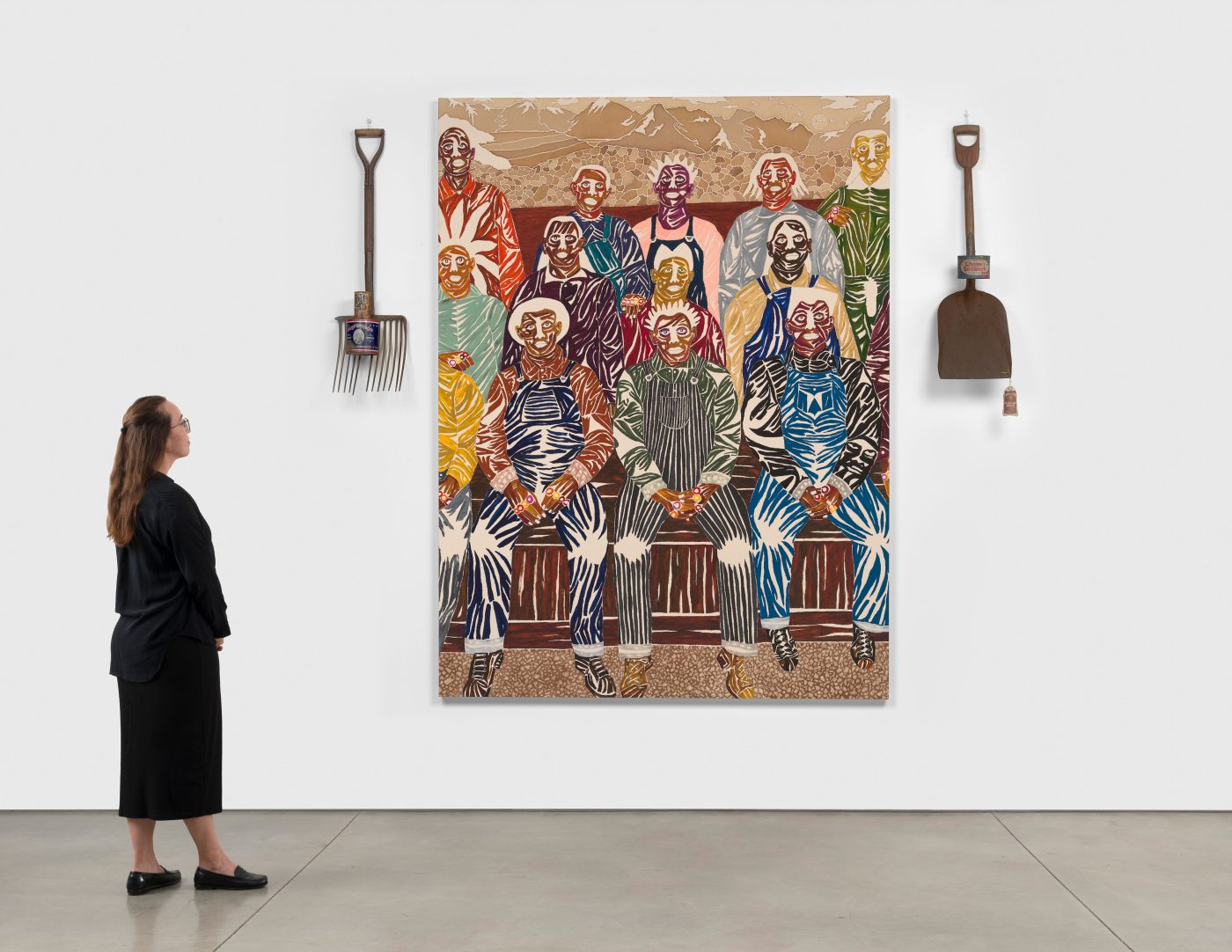
Chase Hall, The Affrilachian Mountains, 2026. Courtesy of the artist and David Kordansky Gallery. Photography by Christopher Stach.
Chase Hall has long treated coffee as both pigment and historical material. In The Affrilachian Mountains (2026), his latest painting brings that approach to a monumental group portrait of miners, surrounding a 96-inch-tall canvas with antique tools and rusted containers that once held coffee, tobacco, and malt liquor.
The work anchors the eighth edition of FRESH PAINT, the Parrish Art Museum’s rotating single-work exhibition series organized with The FLAG Art Foundation. On view in Water Mill, New York, from October 1, 2026 through January 25, 2027, the presentation places a newly made work into public view on a deliberately compressed timetable.
A collective portrait
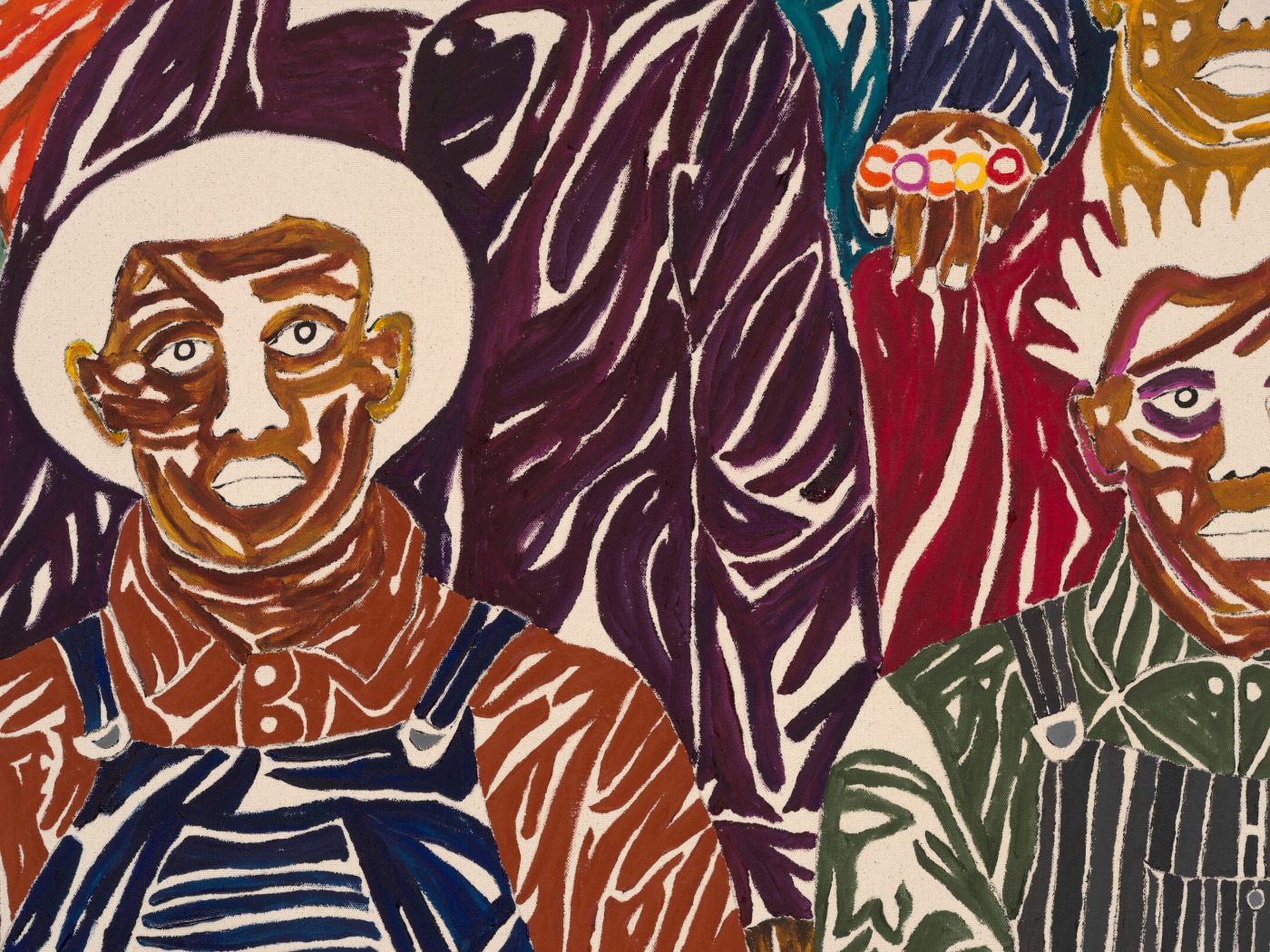
Hall’s assembled figures look back to the decades following abolition, when thousands of African Americans moved into Appalachia seeking work in the region’s coal fields. Rather than illustrating a single documented photograph, the artist builds an imagined collective portrait. The format reflects his sustained interest in the way group photographs preserve shared histories, work, and achievement.
That history extends beyond the figures. A pitchfork and shovel hang alongside cans and packages tied to agricultural and consumer trades. Their weathered surfaces move the work out from the flat picture plane, turning tools of labor and containers of commodities into evidence. Mining, farming, coffee, tobacco, and alcohol meet inside one visual economy shaped by extraction.
Coffee as color and history
Hall developed his coffee technique while working as a teenage barista, first drawing with the drink on receipt paper. He now varies bean, grind, strength, and heat to produce a broad spectrum of browns. Applied to raw cotton, the liquid behaves less predictably than conventional paint: it runs, stains, and forces quick decisions. Acrylic supplies the work’s sharper greens, reds, blues, and whites, while coffee gives the faces and landscape their translucent amber structure.
The material also carries a political charge. Coffee’s movement from Africa into colonial economies in the Americas parallels histories of forced displacement, plantation labor, trade, and wealth production. By moving it from cup to canvas, Hall redirects a familiar commodity toward the histories embedded in its cultivation and circulation.
The Affrilachian Mountains brings those associations together without reducing its subjects to labor alone. Its miners appear alert, distinct, and tightly gathered; the group’s pattern of glances and hands gives the painting the energy of a posed photograph while resisting a single focal point. The title echoes the term “Affrilachia,” associated with poet Frank X Walker’s articulation of Black identity and culture in Appalachia.
A faster exhibition model
FRESH PAINT was created to move around the multi-year planning cycles common to museum exhibitions. Each installment focuses on a new or rarely exhibited artwork and pairs it with commissioned writing and responses developed with young people through the Parrish Teen Council ARTscope program. Hall’s presentation includes a conversation with British writer, curator, and broadcaster Ekow Eshun.
The exhibition is installed in the Parrish’s Creativity Lounge and is free to view during regular museum hours. Read the original report from Hypebeast, see the complete details at the Parrish Art Museum, and learn more about the partnership through The FLAG Art Foundation.
All images courtesy of the artist and David Kordansky Gallery. Photography by Christopher Stach.