Wildlife Photographer of the Year Holds Grief and Wonder in the Same Frame
The 2026 Wildlife Photographer of the Year winners move from an elephant’s encounter with death to a hovering bee and the hidden architecture of slime m...
By Weston Deboer
October 19, 2026 · 3 min read
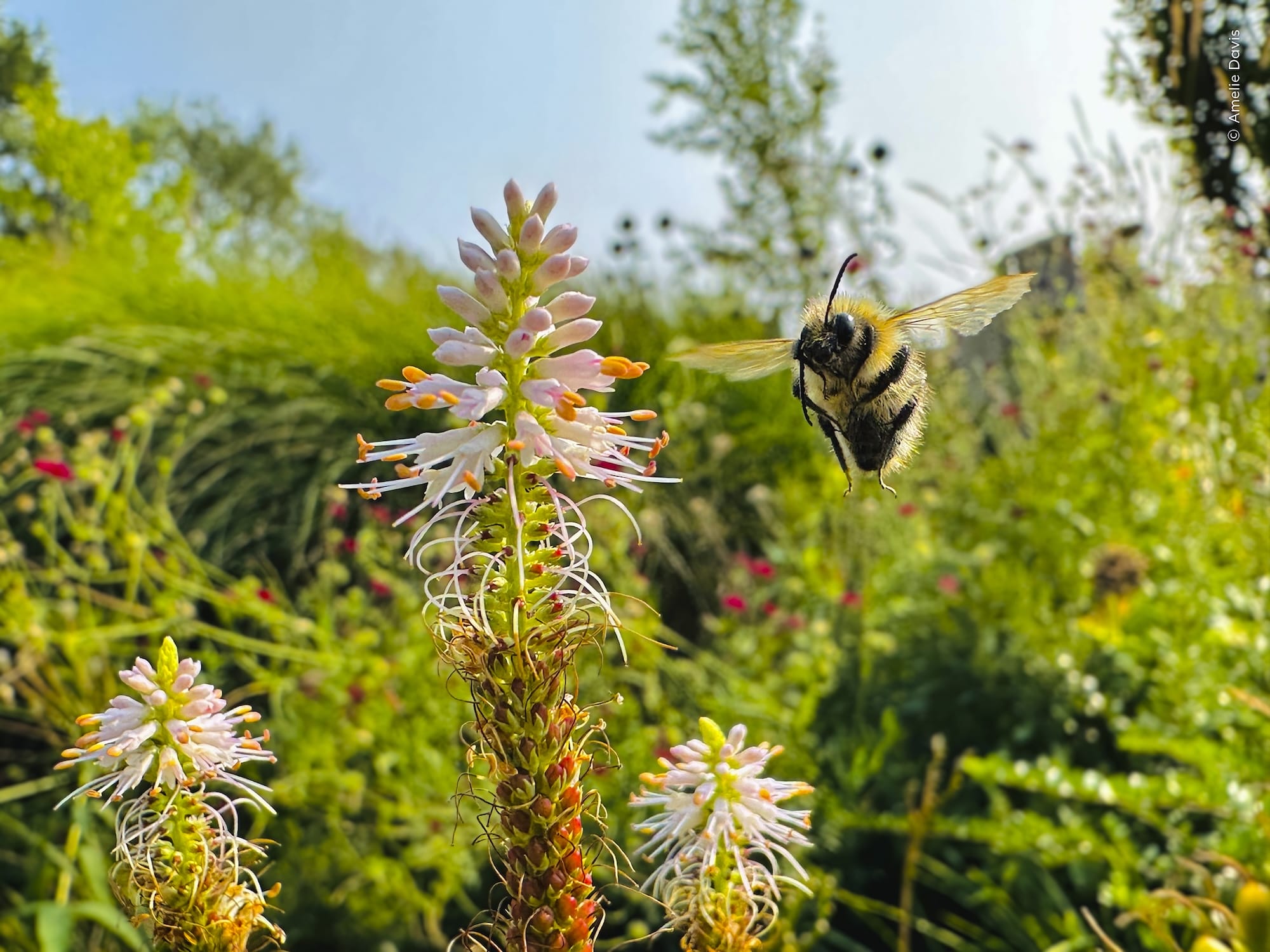
Amelie Davis (U.K.), Flight of the Bumblebee. Winner, 10 Years and Under. © Amelie Davis, courtesy of Wildlife Photographer of the Year.
The winning photographs in the 62nd Wildlife Photographer of the Year move from grief to delight, and from the broad sweep of a wetland to organisms barely visible without magnification. The Natural History Museum selected the 2026 field from a record 65,403 entries submitted across 121 countries and territories.
That range is embodied by Amelie Davis’s Flight of the Bumblebee, winner of the 10 Years and Under category. Made in southern England, the photograph freezes a common carder bee just before it lands on a flower. Its low viewpoint turns a familiar garden encounter into a bright, expansive landscape, while the bee’s extended wings and dangling legs preserve a split second the eye would otherwise miss.
A difficult grand-prize image
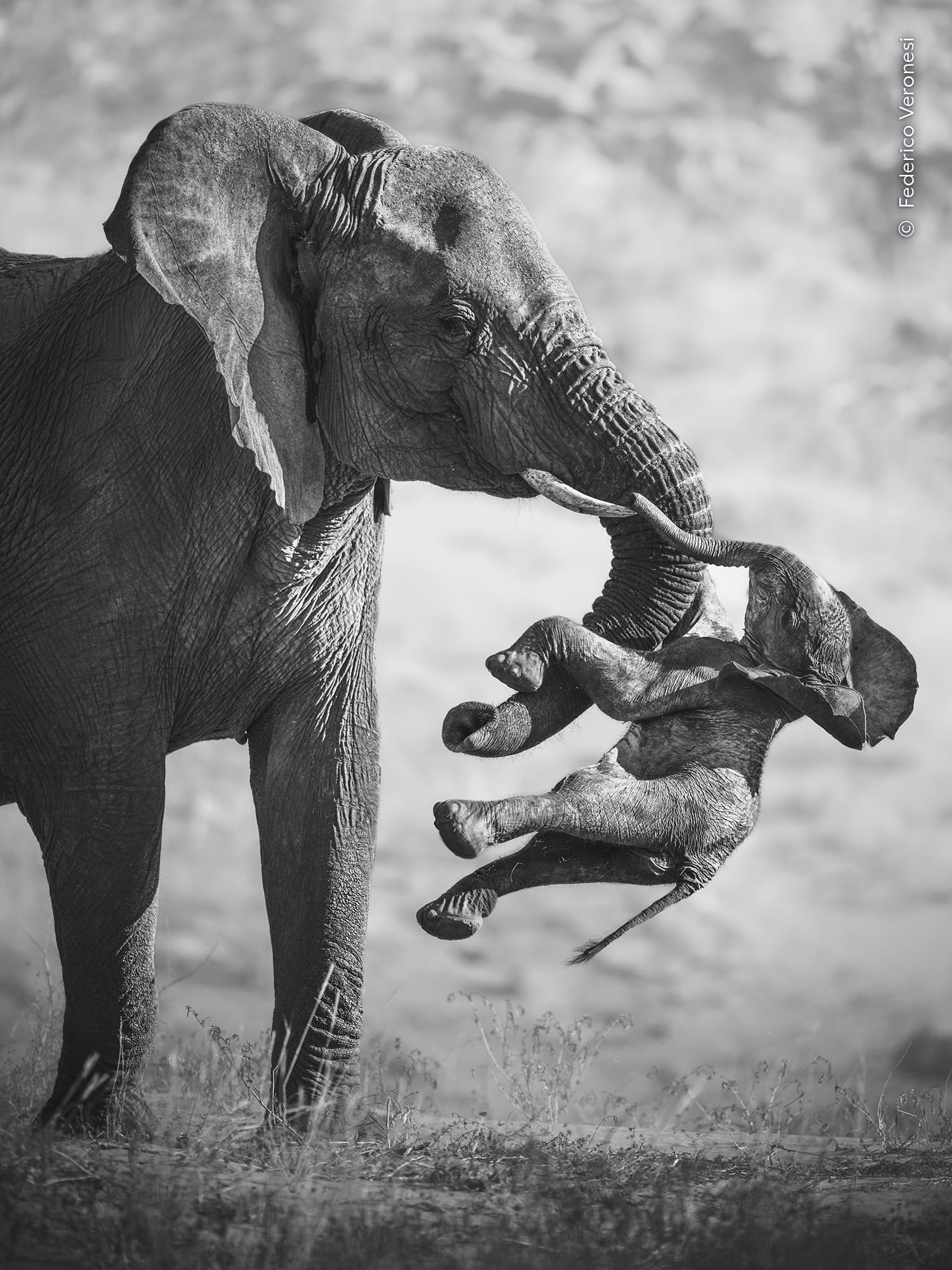
Italian photographer Federico Veronesi received the adult grand title for The Aftermath, a black-and-white photograph made in Namibia’s Huab River Valley. While tracking elephants, Veronesi noticed unusual drag marks across a dry riverbed. He later saw a female emerge from the family group carrying a dead calf, one leg held between her tusk and trunk.
The image resists an easy interpretation. Elephants in Africa and Asia have been observed vocalizing around bodies, guarding the dead, inspecting bones, and carrying deceased herd members. Researchers continue to debate whether those behaviors reflect grief, a developing recognition of death, or other forms of social response. Veronesi’s photograph does not resolve that question; its power comes from making the encounter impossible to dismiss.
Oscar Whitfield earned the Young Wildlife Photographer of the Year title with another monochrome image, Labour of Love. Photographed at ground level in Zimbabwe, it follows a dung beetle pushing its cargo through heat and dust. The subject is small, but its ecological role is not: by breaking up and burying dung, these beetles accelerate decomposition, suppress pests, and reduce conditions that produce methane.
Whole worlds at miniature scale
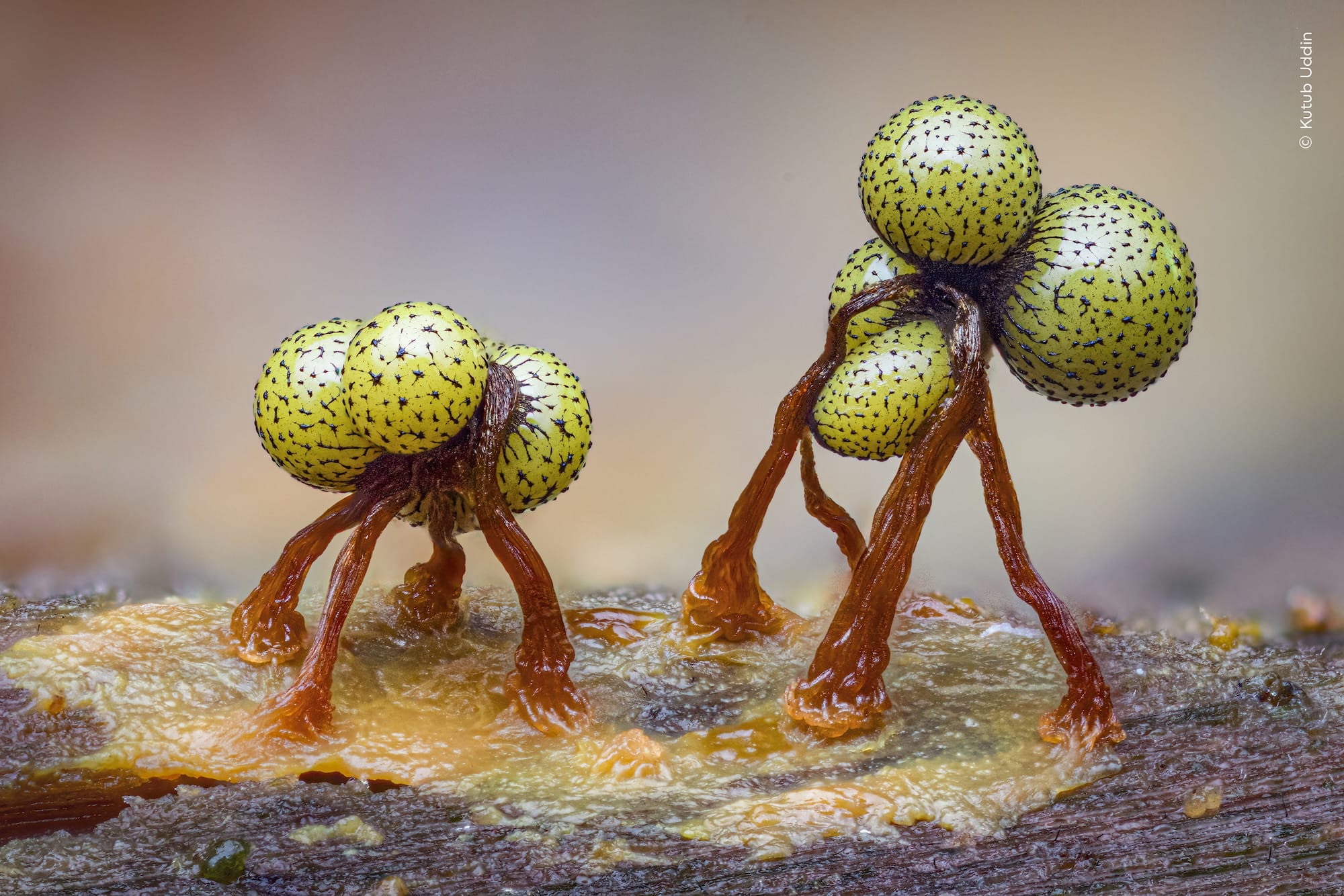
Kutub Uddin’s Portfolio Award shifts attention even closer. In Tiny Dancers, round yellow-green slime mold fruiting bodies balance on translucent stalks. Fine capillitium threads pattern their surfaces and will eventually help disperse spores. Enlarged through macro photography, structures that normally disappear into a decaying log begin to resemble carefully engineered sculptures.
Other category winners widen the visual field. James Lewin’s The Meeting Place catches a young elephant spraying zebra in Kenya’s Chyulu Hills. Agorastos Papatsanis uses ultraviolet light to reveal yellow stems beneath bonnet mushrooms. Loren Elliott’s Photojournalist Story Award follows coyotes adapting to San Francisco, while Alex Visbal’s aerial The Great Divide shows a single engineered line reorganizing an entire wetland.
Photography as evidence
Together, the winners show why the competition judges for more than spectacle. An international panel selected the photographs anonymously for originality, technical excellence, ethical practice, and creativity. Beauty remains central, but many of the strongest frames also work as evidence: of animal intelligence, habitat alteration, urban adaptation, and the intricate labor that sustains an ecosystem.
The 100 awarded images are on view at London’s Natural History Museum from October 16, 2026 through July 11, 2027 before traveling internationally. Explore the selection in Colossal’s original feature, read the Natural History Museum’s official winners announcement, and find visitor information on the exhibition page.
All images © their respective photographers, courtesy of Wildlife Photographer of the Year. Images sourced from Colossal, where they were published with permission.