Eternal Family Treats Movie Posters as Portals Into Cult Cinema
Eternal Family’s poster picks show how cult-film graphics can operate as both advertisements and compact acts of curation.
By Weston Deboer
October 27, 2026 · 3 min read
Sources, automated assistance and corrections · Report an error.
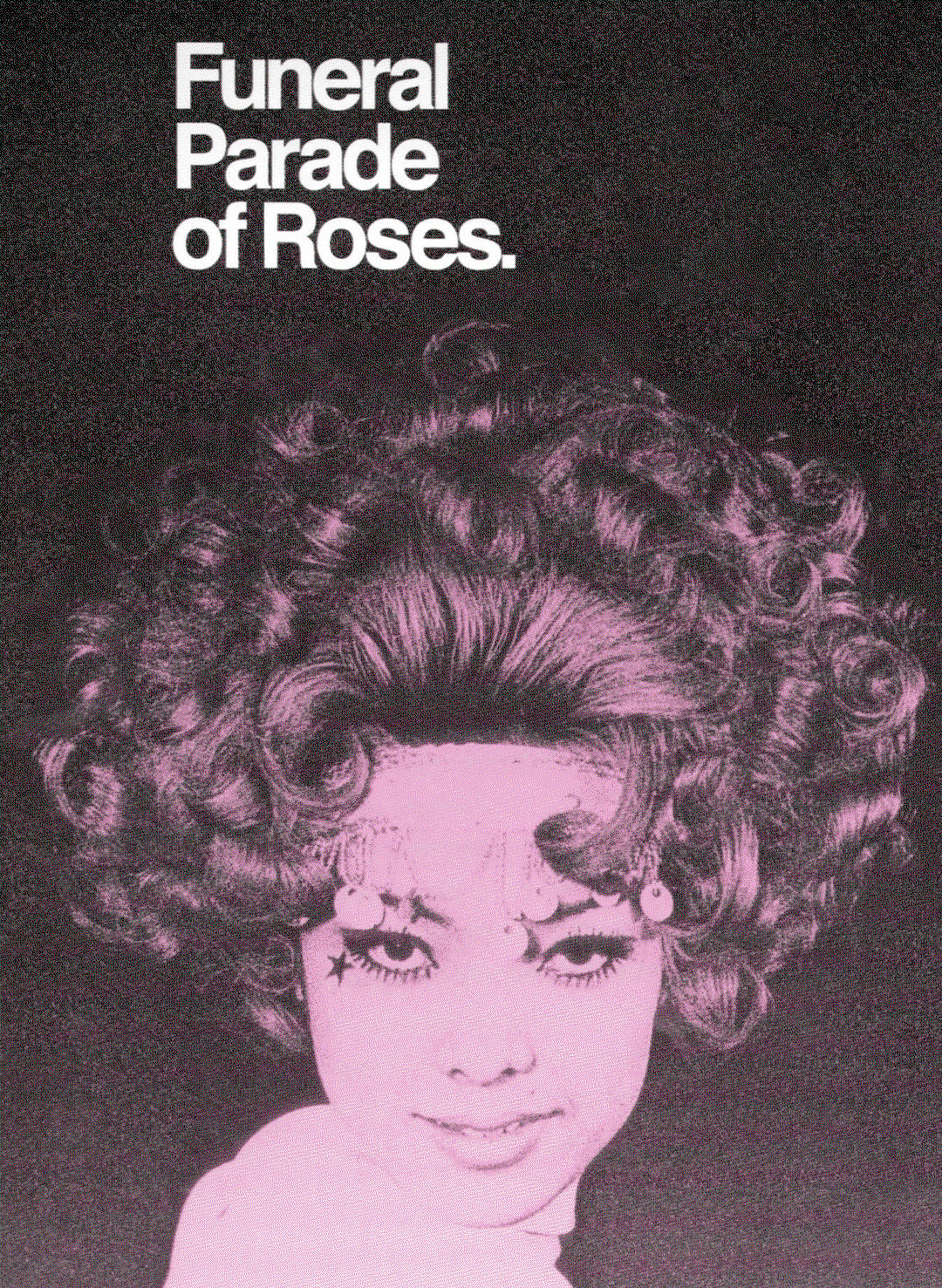
Poster for Toshio Matsumoto’s Funeral Parade of Roses. Courtesy of Eternal Family TV, 2026.
A great movie poster does more than identify a title. It proposes a mood, establishes a set of visual rules, and dares the viewer to imagine the film capable of producing it. That is the premise behind Eternal Family’s selection of ten strange films and their posters for It’s Nice That.
The list spans Soviet fantasy, Japanese avant-garde cinema, Polish surrealism, Filipino science fiction, Indian comedy-horror, Hong Kong martial arts, and American experimental filmmaking. Together, the posters make a case for graphic design as a particularly efficient form of film criticism: every composition identifies what its maker believes the audience should feel first.
The face as a complete campaign
The poster for Toshio Matsumoto’s Funeral Parade of Roses reduces the film to a grainy, high-contrast face printed in pink and black. The oversized sans-serif title gives it the energy of a punk handbill, while the image’s texture fits a film that moves among melodrama, documentary, performance, comedy, and Tokyo’s late-1960s queer counterculture.
It is a useful example of economy: rather than summarize a complex narrative, the poster delivers attitude. The face becomes star portrait, provocation, and visual identity at once.
Promising the impossible
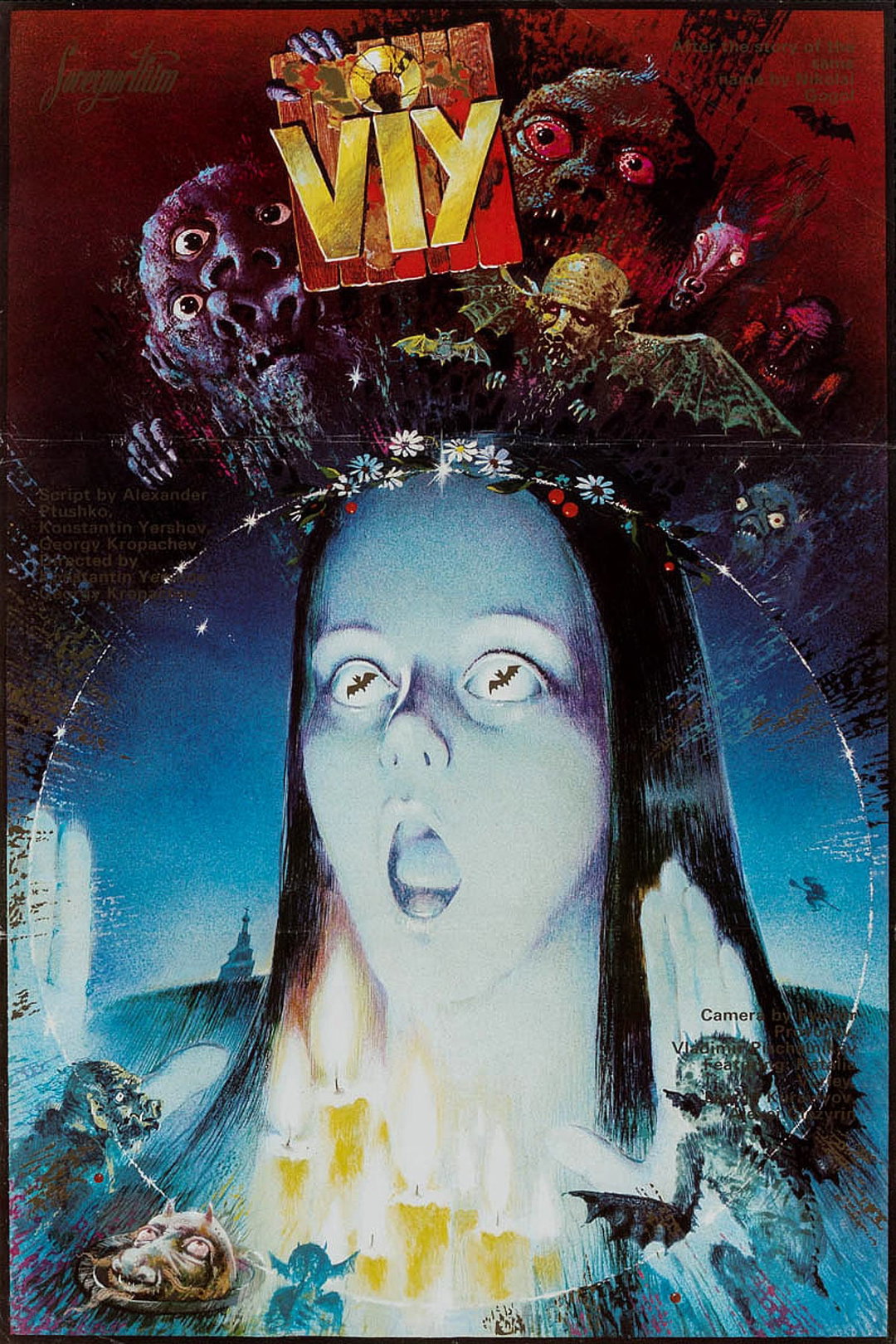
The poster for the 1967 film Viy takes the opposite route. Its surface is crowded with skulls, enormous hands, floating heads, spectral figures, and a woman whose pupils have become bats. The design does not invite orderly reading. It builds a supernatural pileup that mirrors the theatrical monsters and practical effects of the Nikolai Gogol adaptation.
This density is not false advertising so much as a contract: the viewer is promised spectacle, handmade illusion, and a world where too much is precisely enough.
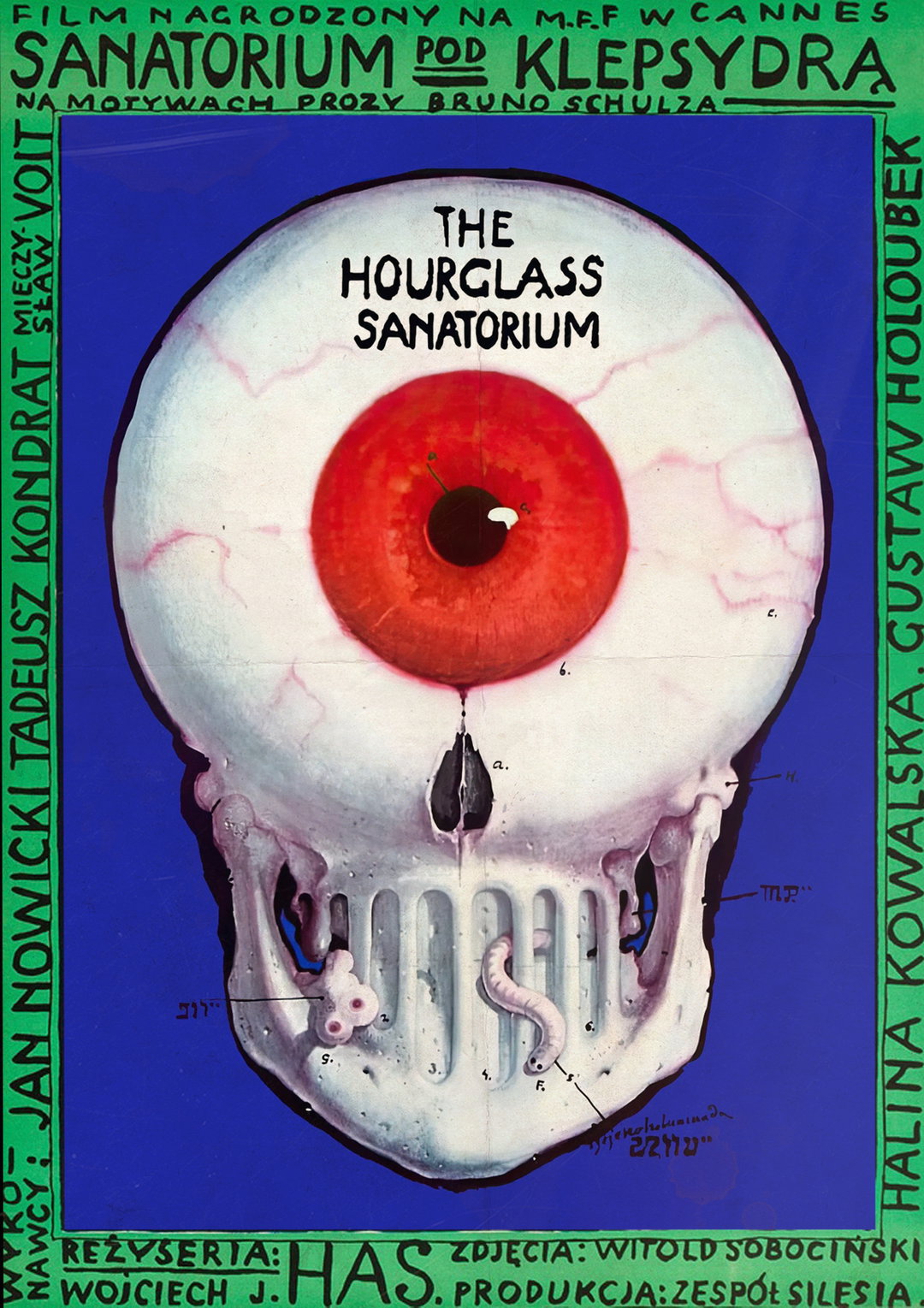
Surrealism without a synopsis
Franciszek Starowieyski’s poster for Wojciech Jerzy Has’s The Hourglass Sanatorium discards conventional narrative information almost entirely. A giant bloodshot eye sits on a skeletal jaw, surrounded by handwritten credits and anatomical notations. The image resembles an occult diagram, a medical illustration, and a theatrical broadside without settling into any one category.
That ambiguity is the point. The design translates the film’s dream logic into a self-contained object instead of explaining its plot.
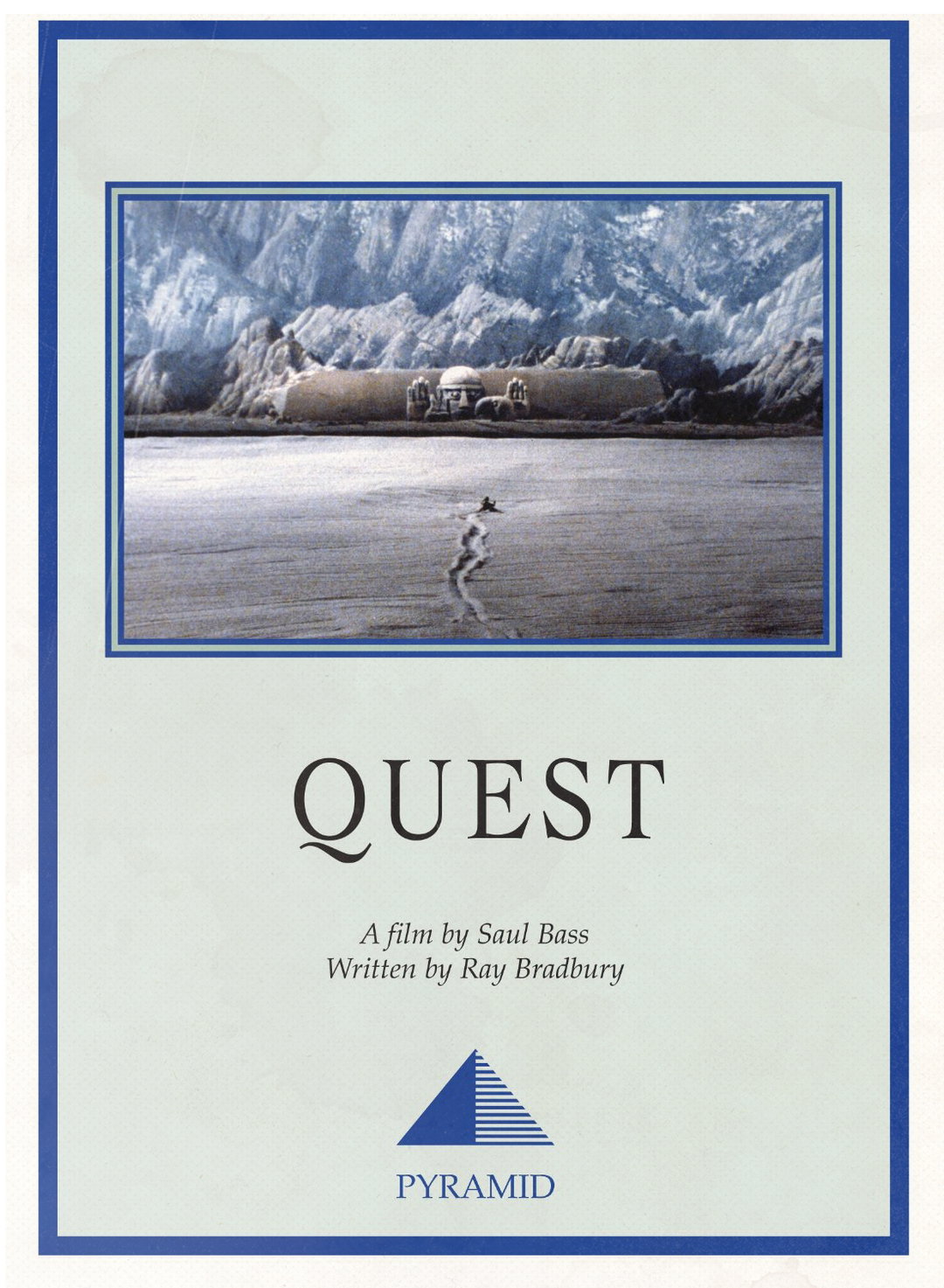
Curation as an invitation
The sparse poster for Saul and Elaine Bass’s Quest lands at the other extreme. A small otherworldly landscape is nested inside blue rules above a large serif title, giving the design the measured authority of an institutional publication. Its restraint sets it apart from the collection’s monsters, saturated colors, and comic excess.
That range reflects Eternal Family itself. The independent service says it has been assembling its hand-picked library since 2020, inspired by neighborhood video stores where unexpected discoveries mattered more than algorithmic familiarity. Its catalog spans vintage animation, science fiction, fantasy, horror, action, documentary, and found tapes, with new films added weekly. According to the service’s help center, most titles are available in the United States and Canada because of regional licensing.
The ten selections are less a ranked list than a set of doorways. Each poster demonstrates a different way design can make a film feel necessary before a single frame begins moving. Read the complete selection and commentary at It’s Nice That, or browse Eternal Family’s catalog.