JR Transforms Paris’s Pont-Neuf Into a Giant Cave
Paris’s oldest bridge has become the site of one of the city’s most striking public art interventions in years. French artist JR has unveiled La Caverne...
By Weston Deboer
May 29, 2026 · 3 min read
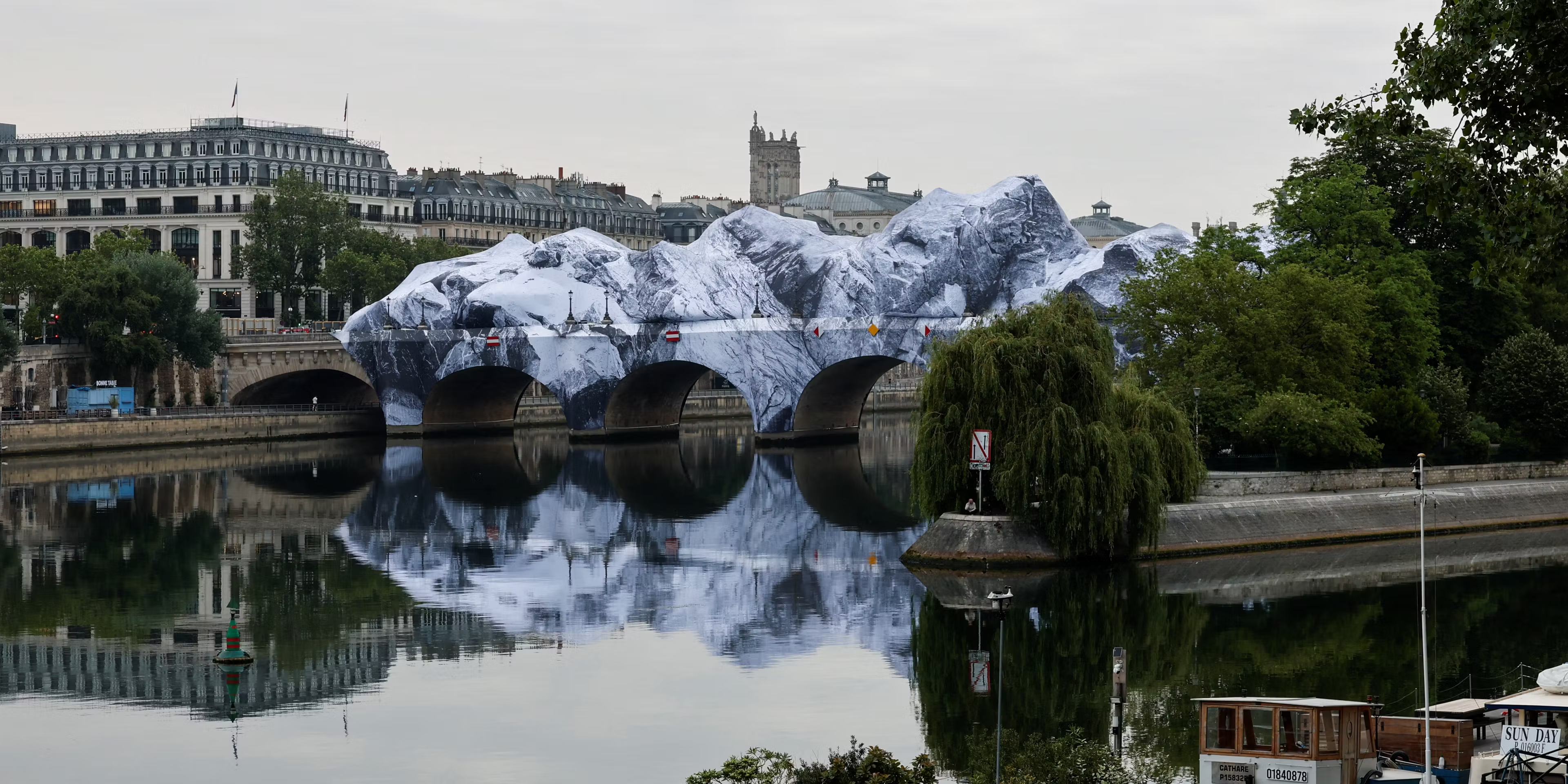
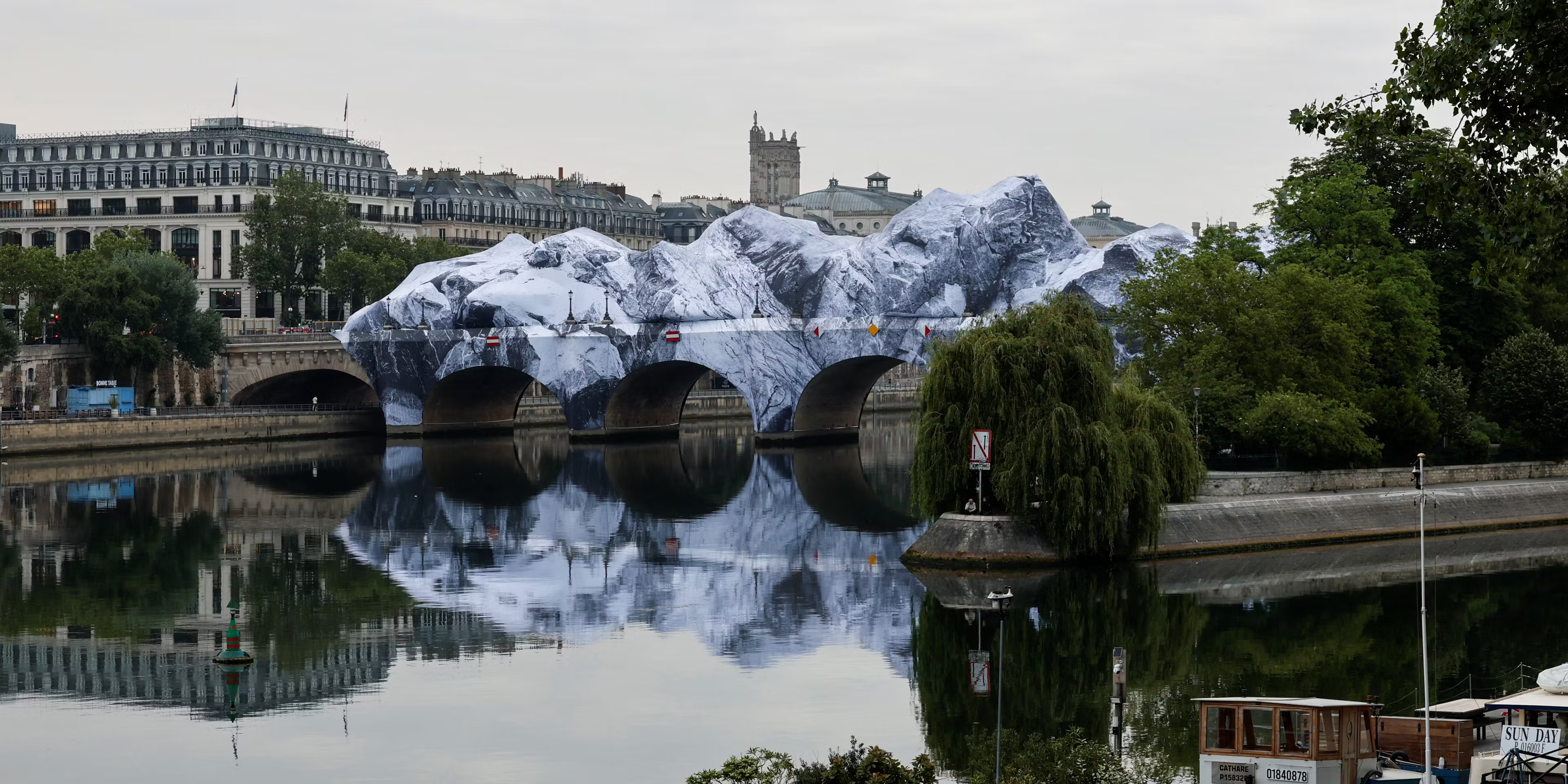
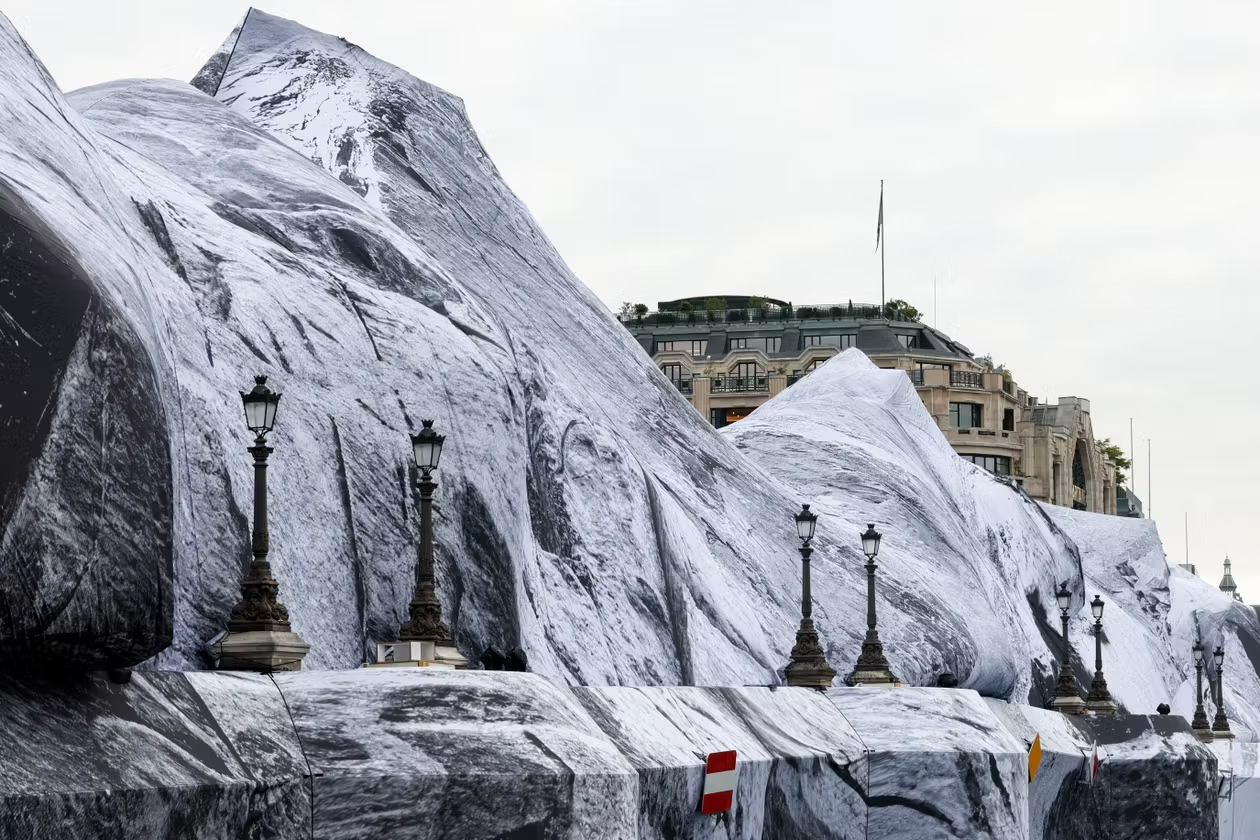
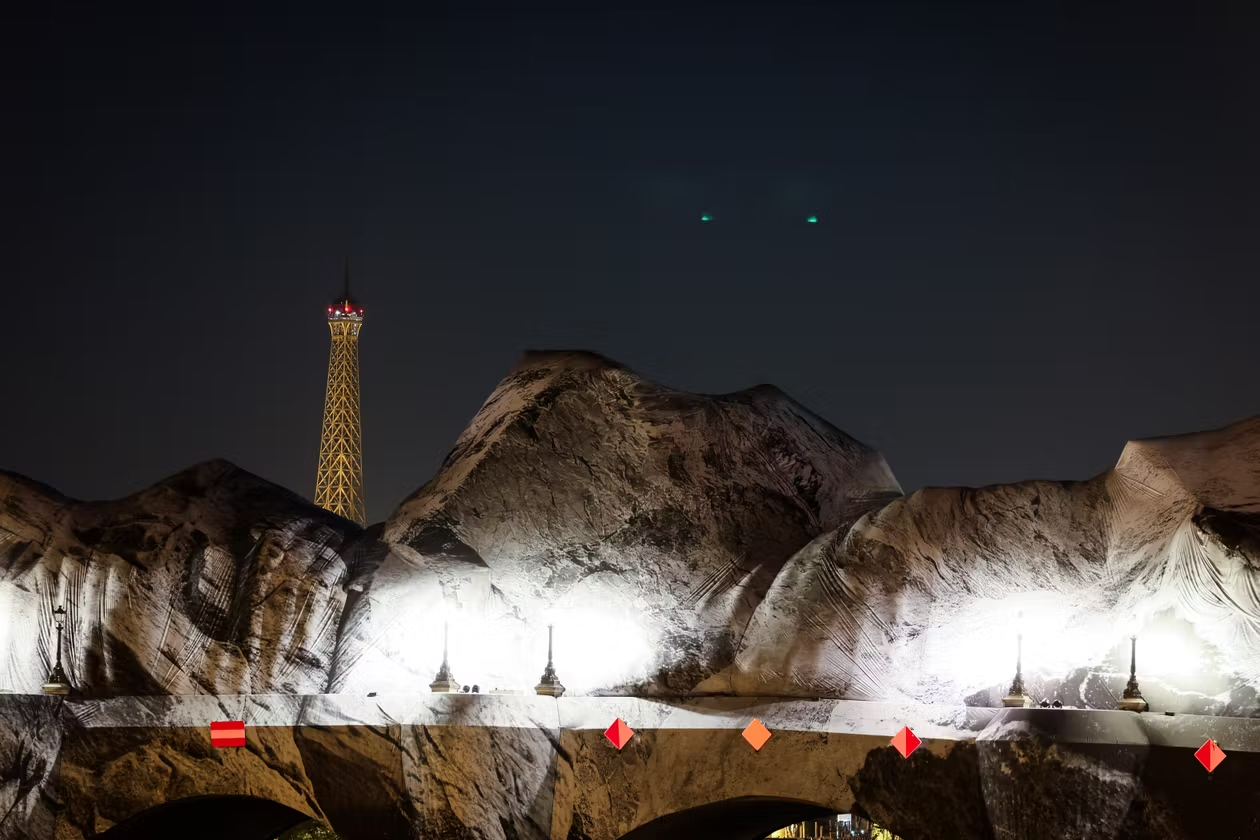
Paris’s oldest bridge has become the site of one of the city’s most striking public art interventions in years. French artist JR has unveiled La Caverne du Pont-Neuf, a monumental inflatable installation that wraps the historic Pont-Neuf bridge in the illusion of a massive rocky cave.
The work appeared on Thursday, May 21, 2026, after an overnight inflation transformed the bridge into a dramatic trompe-l’œil structure. Built from air-filled canvas arches, the installation surrounds the 17th-century bridge with a textured black, white, and gray surface designed to resemble stone. The piece measures roughly 120 meters long, 20 meters wide, and 18 meters high.
A Tribute to Christo and Jeanne-Claude
The installation also pays tribute to Christo and Jeanne-Claude’s famous The Pont Neuf Wrapped, which covered the same bridge in fabric in 1985. That landmark project celebrated its 40th anniversary in 2025, making JR’s new work feel like both a continuation and a reinvention of Paris’s history with temporary public art.
Like Christo and Jeanne-Claude before him, JR is using the city itself as the canvas. But instead of hiding the bridge, La Caverne du Pont-Neuf asks viewers to imagine what lies beneath it: the stone, the labor, the history, and the foundations of Paris.
Why a Cave?
JR’s concept is inspired by the quarries where the stones used to build the Pont-Neuf were originally extracted. By turning the bridge into a cave, he connects the finished monument back to its raw material origins. The result is an artwork that feels both ancient and temporary, monumental and fragile.
The bridge has stood for more than 400 years, carrying generations of Parisians across the Seine. JR’s installation briefly interrupts that familiarity, turning an everyday landmark into something strange, theatrical, and newly visible.
A Soundscape by Thomas Bangalter
The visual installation will also include a sound component created with Thomas Bangalter, formerly of Daft Punk. According to the project description cited by Le Monde, the goal is not to add traditional music, but to create a sonic environment that surrounds the work.
That collaboration gives the piece another layer. Visitors will not simply look at the transformed bridge; they will move through an immersive public artwork shaped by architecture, illusion, memory, and sound.
Free and Open to the Public
La Caverne du Pont-Neuf opens to the public on June 6 and will remain accessible 24 hours a day through June 28. Admission is free, making it one of those rare large-scale art events that belongs as much to passersby as to collectors, critics, and institutions.
Public art works best when it changes how people move through a city. JR’s cave does exactly that, turning a historic crossing into a temporary destination.
JR’s Ongoing Dialogue With Cities
JR has built his career on large-scale public works, from photographic murals in Rio and New York to architectural illusions in Paris. His previous Paris projects include a transformation of the Opéra Garnier façade in 2023 and a major optical illusion around the Louvre Pyramid in 2019.
With La Caverne du Pont-Neuf, JR continues that practice of making familiar places feel unfamiliar. The work does not permanently change the bridge, but for a few weeks, it changes the way people see it.
Why It Matters
At a time when much of art is experienced through screens, JR’s Pont-Neuf project is a reminder of the power of scale, place, and shared experience. It is temporary, public, and impossible to fully understand from a single image. You have to walk around it, under it, and through the city that surrounds it.
That may be the real strength of the piece. It turns a bridge into a question: What do we stop noticing when history becomes part of the background?