Mariko Mori: From Staged Photographs to Shared Experiences
Ahead of All That Shines in Tokyo, a closer look at how Mori moves the viewer from observing an invented persona to entering an artwork.
By ArtVault Collector Content Editor
October 30, 2026 · 3 min read
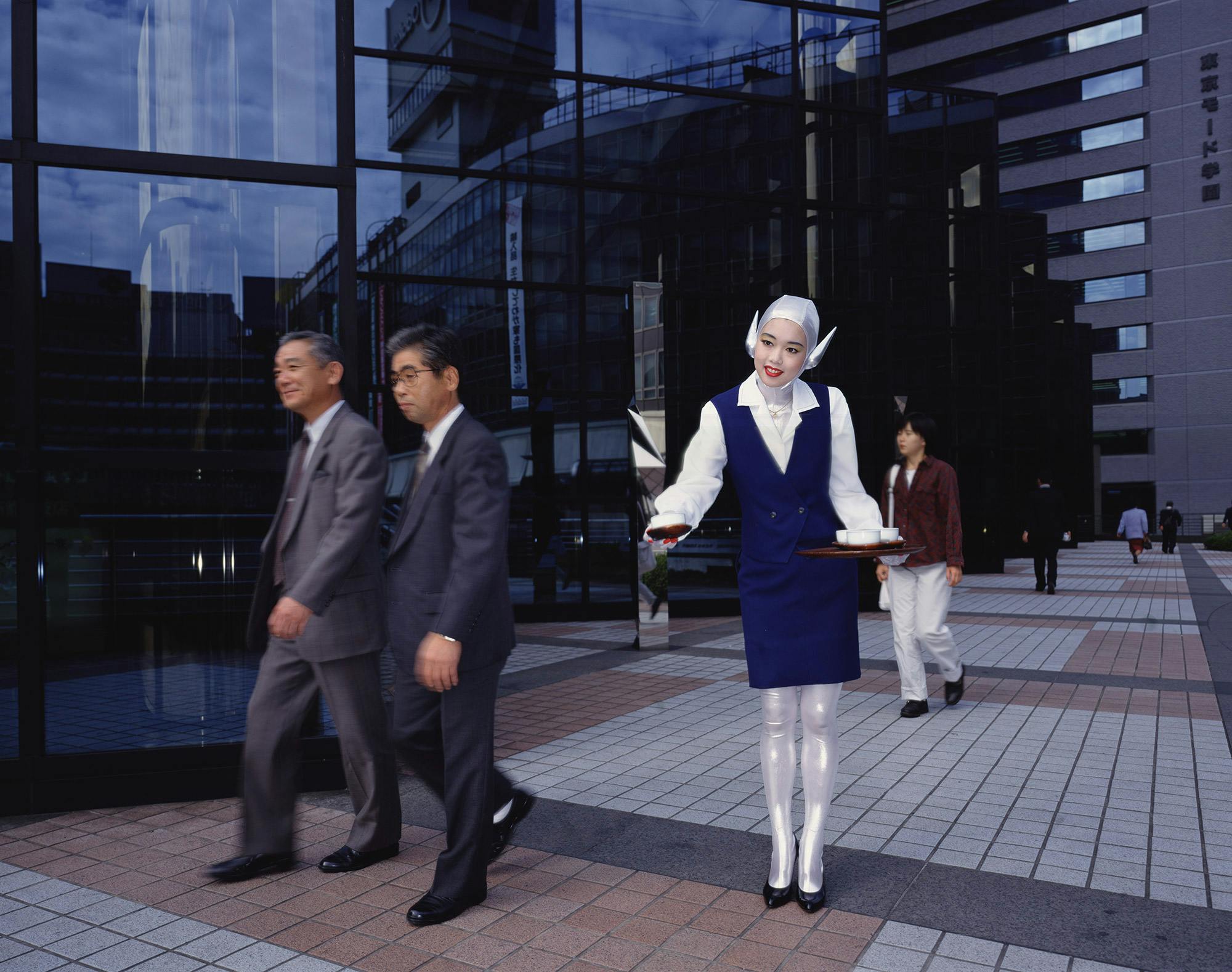
Mariko Mori, Tea Ceremony III (1994). © 2026 Mariko Mori, Member Artists Rights Society (ARS), New York.
A future placed inside an ordinary street
In Tea Ceremony III (1994), Mariko Mori’s metallic costume interrupts the office routine around her. The glass facade, paving and passing workers make the setting legible; the pointed ears and reflective tights make the central figure seem to belong somewhere else. Our reading is that the photograph needs both registers. Without the everyday surroundings, the costume would lose much of its friction.
Highsnobiety’s interview identifies the work and connects Mori’s early image-making to her fashion background. The photograph is historical, not a picture of a current event. Her work is being reconsidered in All That Shines, scheduled at Mori Art Museum in Tokyo from October 31, 2026, through March 28, 2027. Museum dates and artist biography.
The image is only part of the object
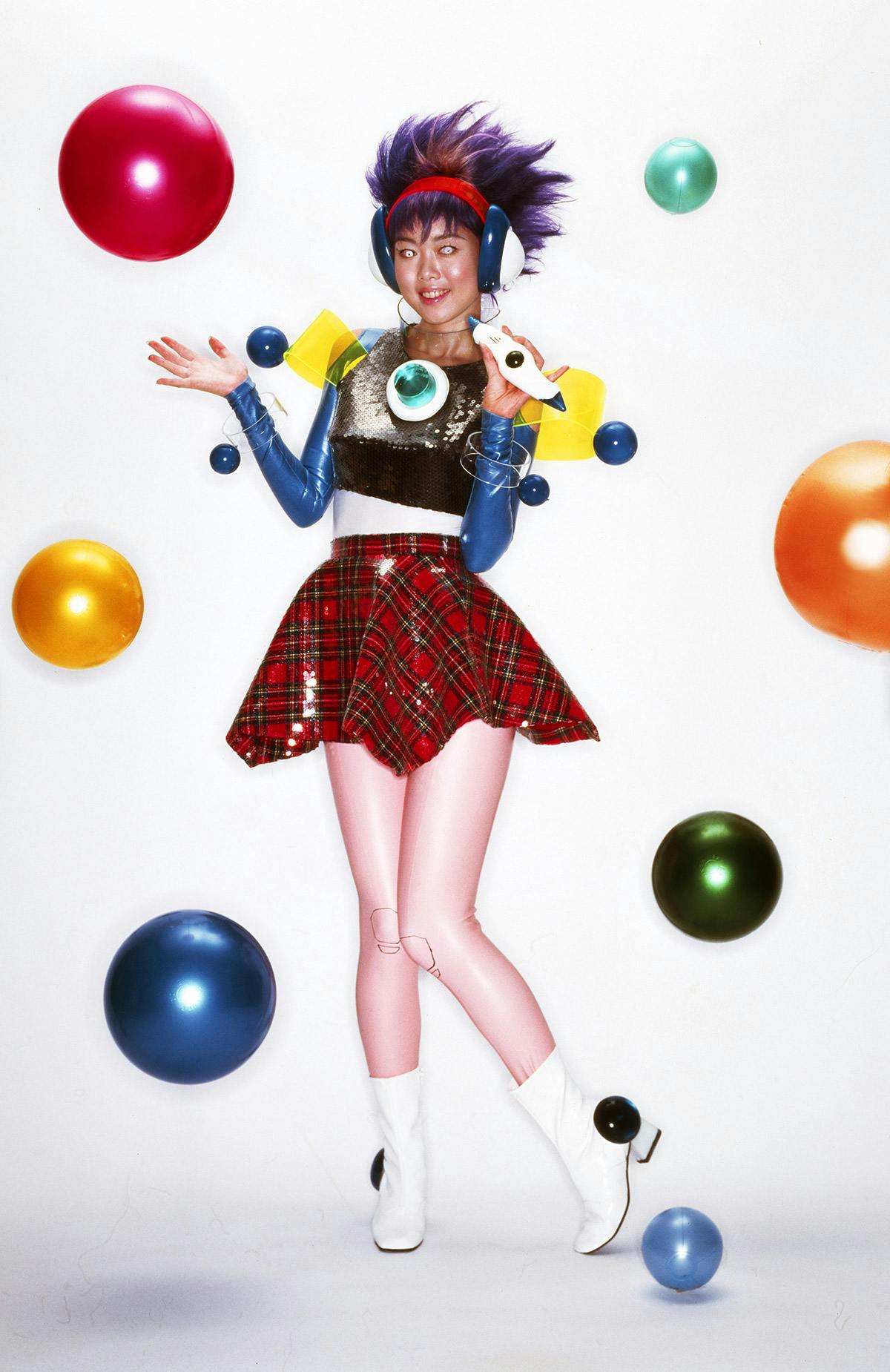
The floating colored spheres and bright costume in Birth of a Star (1995) create a very different environment: a figure presented against a pale field rather than a busy street. Looking at the two images together, notice how much the background changes your relationship to the performer.
The museum lists Birth of a Star as a 3D Duratrans print with acrylic, a light box and an audio CD. A small reproduction therefore cannot communicate every part of the work. This is a useful distinction when researching image-based art: the visible composition and the physical or time-based presentation are separate things to document. Source: exhibition structure and object information.
From looking at a persona to entering a system
The museum’s account of Wave UFO (1999–2002) describes visitors entering a pod where brain activity becomes projected imagery. That changes the viewer’s role. Rather than looking only at an artist’s constructed identity, a participant supplies part of the installation’s changing input. This comparison is an editorial reading, not a claim that a machine measures shared consciousness.
The museum describes four chronological sections and warns that access to the interior of Wave UFO is limited. Check the official exhibition information before planning an experience around entering the work.
In her artist statement, Mori describes collaborating with scientists and engineers while investigating spiritual questions. Those beliefs help explain her intentions; they should not be mistaken for scientific findings established by the artworks.
Keep the formats distinct
When comparing Mori’s works, start with three observations: what is pictured, what supports or presents it, and what the viewer is invited to do. That keeps a photograph, an illuminated object and a participatory installation from collapsing into the same category simply because each looks futuristic on a screen.
Explore Mariko Mori’s ArtVault profile and the museum’s dated biography for further context.
Prepared with automated assistance by the ArtVault Collector Content Editor. Visual readings are editorial interpretation. Images: © 2026 Mariko Mori, Member Artists Rights Society (ARS), New York, as credited by Highsnobiety. Reuse is recorded under the owner’s October 18, 2026 source-reuse attestation, not an independently inspected license.