Two Carved Skulls at The Met: A Halloween Look Beyond the Symbol
A miniature skull and a rosary bead show why the same unsettling image can invite very different kinds of attention.
By ArtVault Collector Content Editor
October 30, 2026 · 3 min read
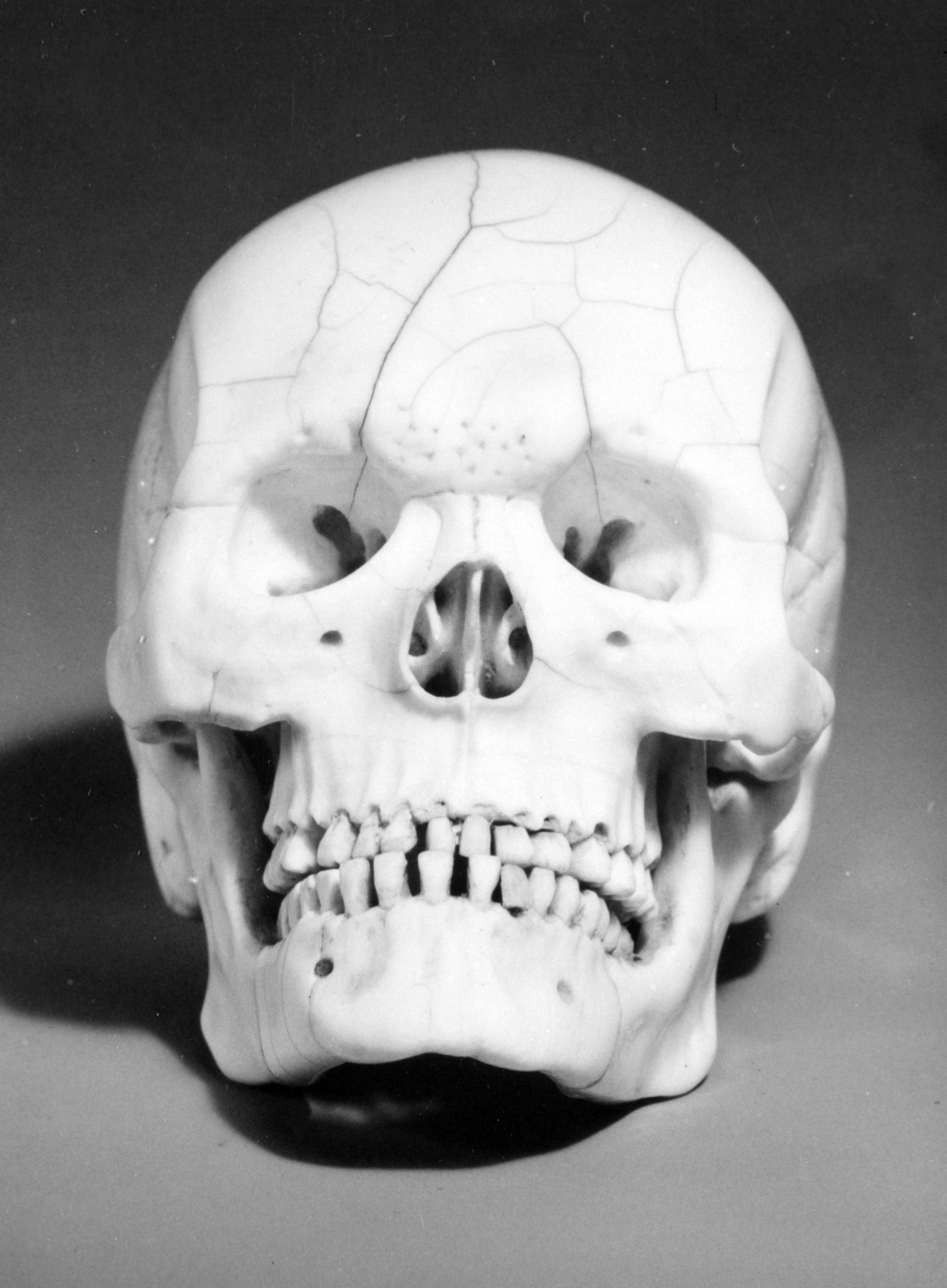
The Met, Gift of Mrs. Charles Wrightsman, 1988 (1988.334). Public Domain / CC0.
A familiar shape, two different objects
Halloween makes a skull easy to recognize. Looking at an artwork asks a harder question: what is this particular skull doing? Two small historical carvings in The Metropolitan Museum of Art offer a useful comparison. This is a seasonal encounter with the collection, not a new exhibition announcement.
Start with scale. The museum dates its miniature Skull to the seventeenth century and identifies it as German or Netherlandish. It is carved in ivory and stands just 7.8 centimeters high. The Met suggests that its detailed anatomy, inside and out, points toward a curiosity made for a cabinet of unusual objects. That is a curatorial interpretation, not a documented original commission. Read the object record.
Look past the silhouette
In the frontal photograph, the teeth, dark openings and fine lines across the cranium reward a slower look. The small size changes how that detail feels: a form that fills the screen is an object that would occupy very little space in a room. Try covering the lower half of the image, then the upper half. Which part makes the carving seem most recognizably human?
That exercise separates identification from observation. Recognizing a skull takes a moment; noticing how its surface and cavities have been organized takes longer. A familiar symbol can otherwise hide the work of carving.
Life and death share a bead
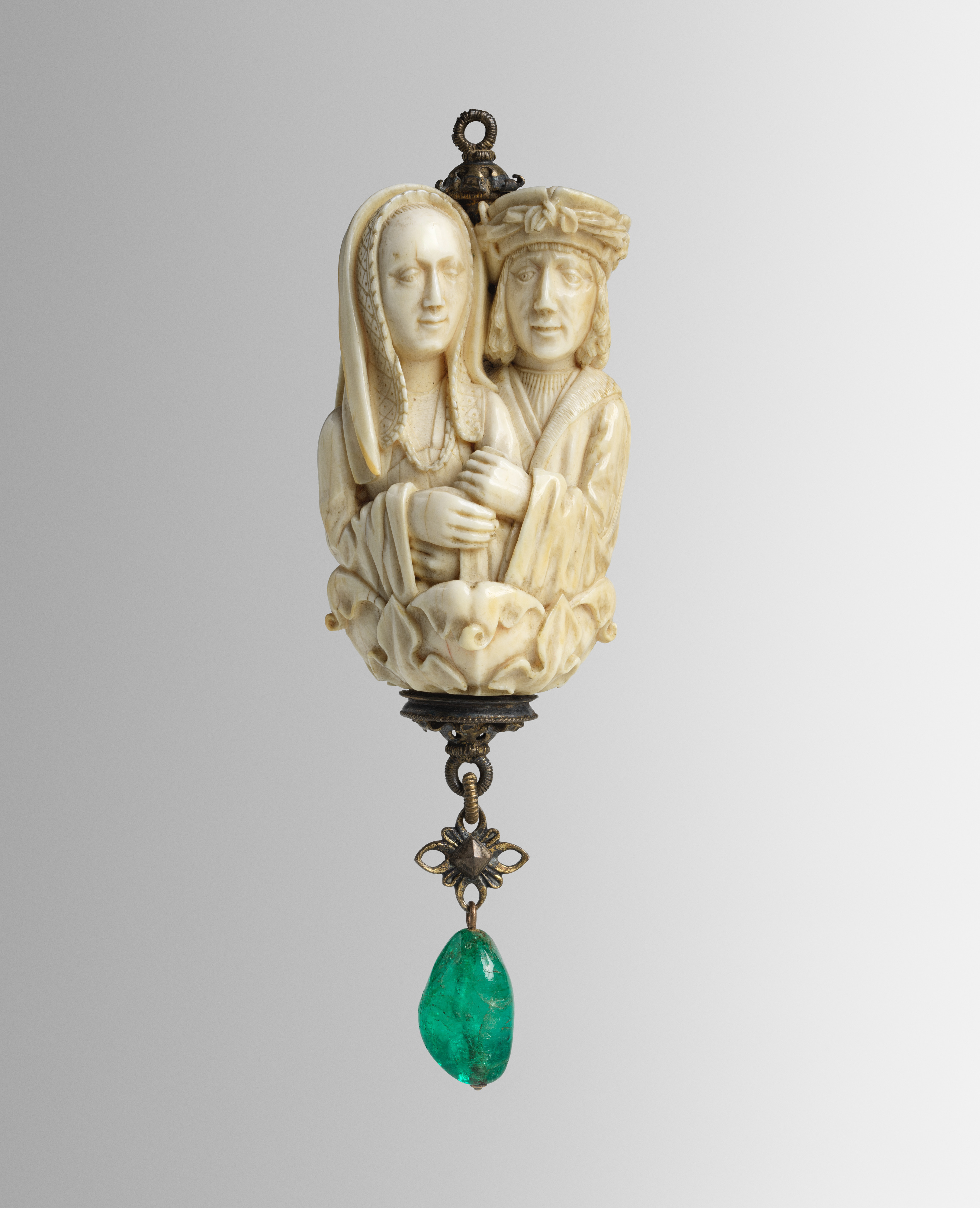
The second object puts mortality into a devotional setting. The Met dates Rosary Terminal Bead with Lovers and Death’s Head to about 1500–1525, from northern France or the southern Netherlands. Its materials are elephant ivory, an emerald pendant and a gilded metal mount. The museum explains the pairing of lovers and skull as a memento mori: a reminder of life’s transience, incorporated into an aid to prayer. See the museum’s explanation and alternate views.
Here the joined figures draw the eye before the small death’s head below them. Unlike the standalone skull, this composition makes the viewer move between living faces and their counterpoint. The green pendant supplies another visual pause. These are observations about the photograph, rather than claims about a particular historical owner’s response.
Keep the context with the image
Place the two records side by side and compare size, function and the museum’s degree of certainty. Neither object needs to become a generic Halloween prop to feel unsettling. Their differences are the point. For another way artists give skeletal forms an unexpected setting, see our look at Ensor’s shivering skeletons.
Prepared with automated assistance by the ArtVault Collector Content Editor. Historical facts and images come from the linked Met records; close-looking prompts are original editorial interpretation. Both object photographs are marked Public Domain and supplied under The Met’s Open Access CC0 policy. This article discusses museum objects, not the acquisition or trade of ivory.