Print Edition Numbers Explained: AP, PP and BAT
Read numbered-edition and proof markings, preserve source evidence, and separate confirmed edition details from unanswered questions.
By Art Vault Editorial
July 3, 2025 · 4 min read
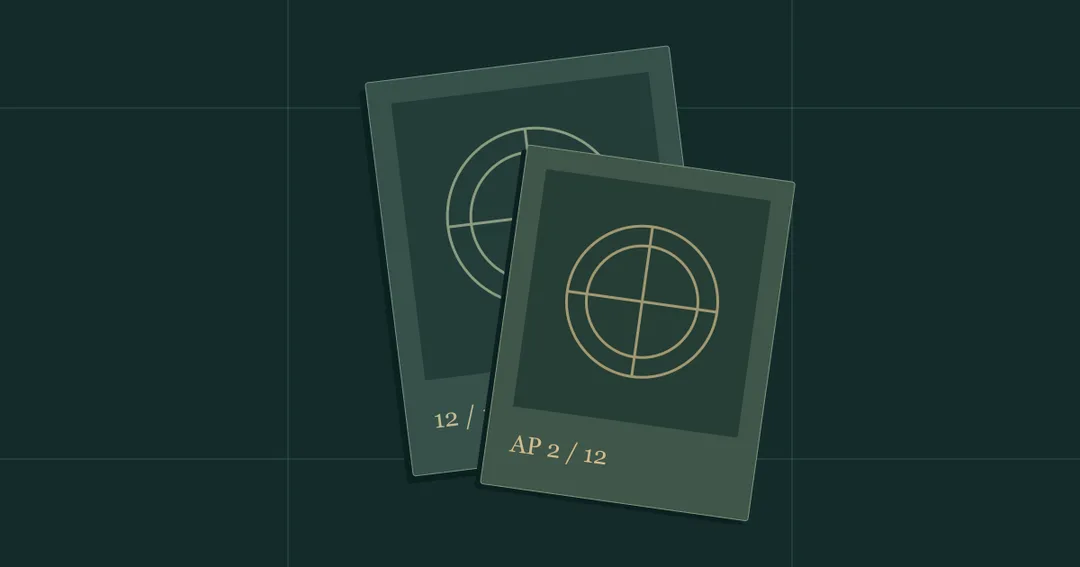
Original Art Vault Editorial illustration; fictional print examples.
Read the marking, then check the edition record
A print’s margin can help you describe the sheet in front of you. It cannot answer every question about how that sheet was made, how many related proofs exist, or what someone will pay for it. Start by recording the characters you can actually read, then compare them with documentation for that particular work.
This guide separates three things: the visible inscription, the publisher’s edition statement, and questions that still need an answer. The examples below are invented for explanation; they do not describe an ArtVault collection or certify an artwork.
What does a fraction such as 12/150 mean?
Getty’s edition cataloging guidance distinguishes the impression number from the edition size. In this simplified example, 12 identifies the impression within the numbered edition and 150 describes that numbered edition’s size. Do not use the fraction alone as a count of every related impression: separately documented proofs or other editions may exist.
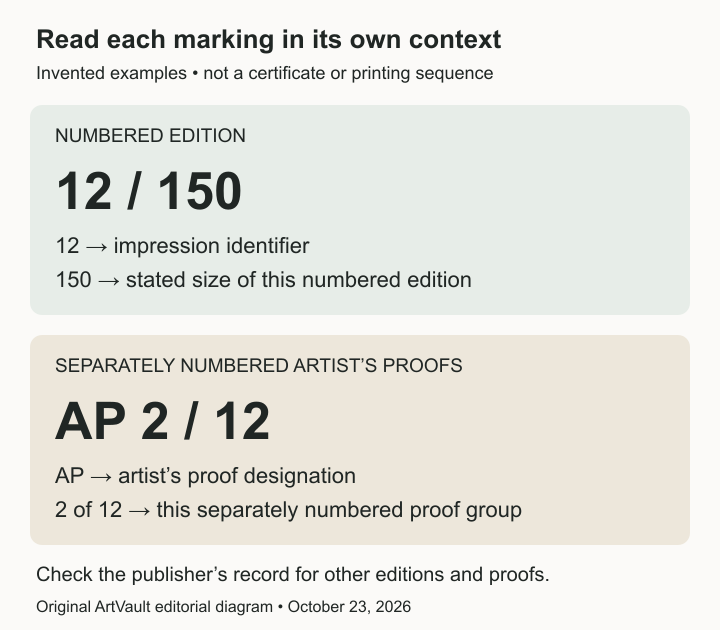
For “12/150,” record the complete inscription, not only “edition of 150.” For “AP 2/12,” keep the AP designation with its own numerator and denominator. Ask the publisher for the edition statement if you need to establish how the numbered edition and proofs relate. A number on its own does not establish printing order or authenticity.
AP, PP and BAT describe different roles
Getty’s cataloging guidance for states and proofs supplies these distinctions:
- AP — artist’s proof: an impression made for the artist, outside the edition’s numbering. APs can have their own numbering. Preserve the actual notation rather than assuming that every AP is unnumbered or that a fixed percentage applies to every edition.
- PP — printer’s proof: Getty uses this term for test impressions for the printer outside the edition’s numbering. Confirm how the printer or publisher uses the designation for the work you are recording.
- BAT — bon à tirer: the artist-approved proof that establishes the printing standard. It is not interchangeable with AP. Record the source supporting the designation.
The printer and publisher W Editions describes its BAT as the benchmark against which the edition is compared. That account explains a workshop practice; it does not establish the history of an unrelated print.
Do not turn a blank margin into an edition claim
If you cannot find or read a number, record “numbering not observed” and explain any limitation, such as a margin hidden by a frame. Do not label the work an open edition on that evidence alone. Look for an artist or publisher statement establishing whether the edition is limited. Keep an unresolved edition type unresolved.
How should you record an edition that lists proofs separately? For The Answer (AZ500), Add Fuel’s official edition statement lists 75 numbered impressions plus seven artist proofs. Keep those groups separate in your record rather than rewriting the statement as one numbered edition of 82. The publisher’s statement does not identify the inscription on a particular sheet; record the actual marking separately when you can inspect it.
Build a record that preserves the evidence
Use this original worksheet for one sheet. Keep purchase documents and identifying personal information private when sharing a public catalog example.
- Identify the work: artist, title, date and medium, with the source for each uncertain field.
- Transcribe the marking: preserve punctuation, proof letters and numbers. Attach a readable photograph if it can be obtained safely.
- Separate the counts: copy the stated numbered-edition size and any separately stated proof groups. If a count is missing, write “not established.”
- Locate the evidence: save the publisher or artist URL, access date and relevant document reference alongside your observation.
- Keep the open question: note a conflicting description, the question sent to the source and the dated answer. Do not silently replace the original observation.
If two descriptions disagree, use the print-listing discrepancy worksheet. To check whether another person can follow your finished record, use the artwork identification record test.
Edition terminology is not a valuation
This worksheet records what is known and how it is known. It does not establish a price, guarantee authenticity, or predict appreciation. An AP label alone is not enough to conclude that a sheet is better quality or worth more than a numbered impression. For a purchase decision that depends on unresolved attribution, condition or edition details, obtain advice tied to the particular work and evidence.
Originally published by Weston Deboer on July 3, 2025. Revised by Art Vault Editorial on October 23, 2026 to clarify edition terminology and add an evidence-recording worksheet and original illustrations.