Ann Toebbe’s Painted Rooms Ask Us to Look Beyond the Floor Plan
A close-looking exercise in how domestic details and shifting viewpoints turn an interior into a remembered place.
By Art Vault
October 19, 2026 · 2 min read
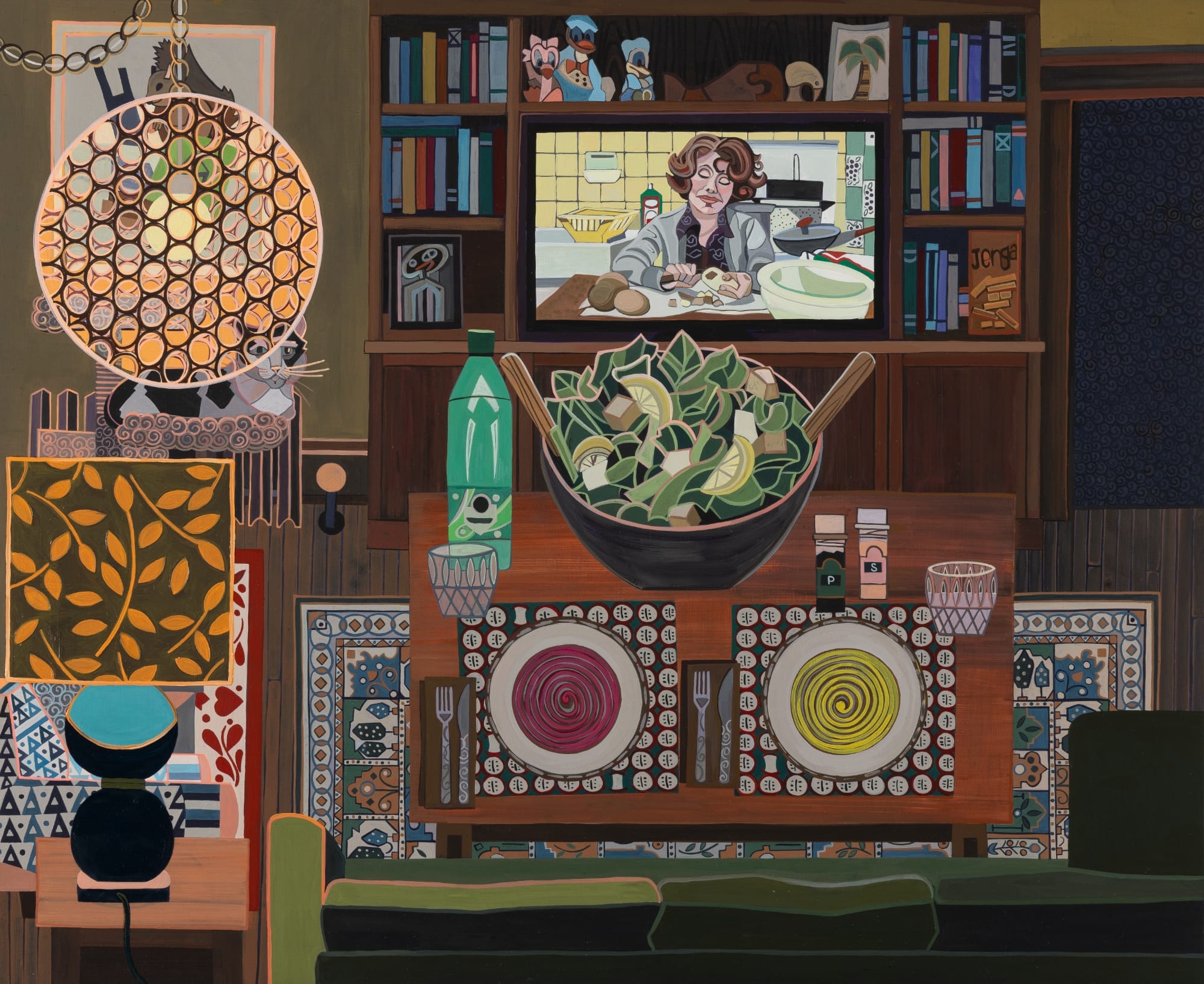
Artwork by Ann Toebbe. Courtesy of Ann Toebbe; via Colossal.
A room assembled for looking
In its October 14, 2026 feature, Colossal examines Ann Toebbe’s constructed interiors. The artist develops work through sketches and drawings, with reference photographs also playing a role. The finished compositions rearrange rooms rather than simply transcribing them. Her materials vary across works, including gouache, oil, paper collage and colored pencil.
Follow the edges
Try reading one of these rooms in two passes. First trace its boundaries: the floor, baseboards, doorways and furniture. Then return to the small objects. Does the arrangement make more sense as a route through a building, or as a way of gathering things that matter to someone? That question is a looking exercise, not a claim about the artist’s private memories.
Colossal identifies Jeanne Dielman (2024) as gouache and oil on panel, and Hardwood Floors (2020) as gouache and paper collage on panel. Those differences invite another look at how painted surfaces and assembled materials can describe an interior.
Keep observation separate from identification
For a personal viewing record, note the work’s exact title and stated medium before adding your interpretation. A screen image alone is a poor basis for deciding what a surface is made of. ArtVault’s collection cataloging introduction offers broader record-keeping context; the useful habit here is distinguishing the label’s information from what you see and feel.