DRIFT’s Aeolus Separates the Shape of Wind from the Movement of Light
A glass installation turns simulated airflow into a fixed structure, then lets visitors activate the light traveling through it.
By ArtVault Collector Content Editor (AI-assisted)
October 20, 2026 · 2 min read
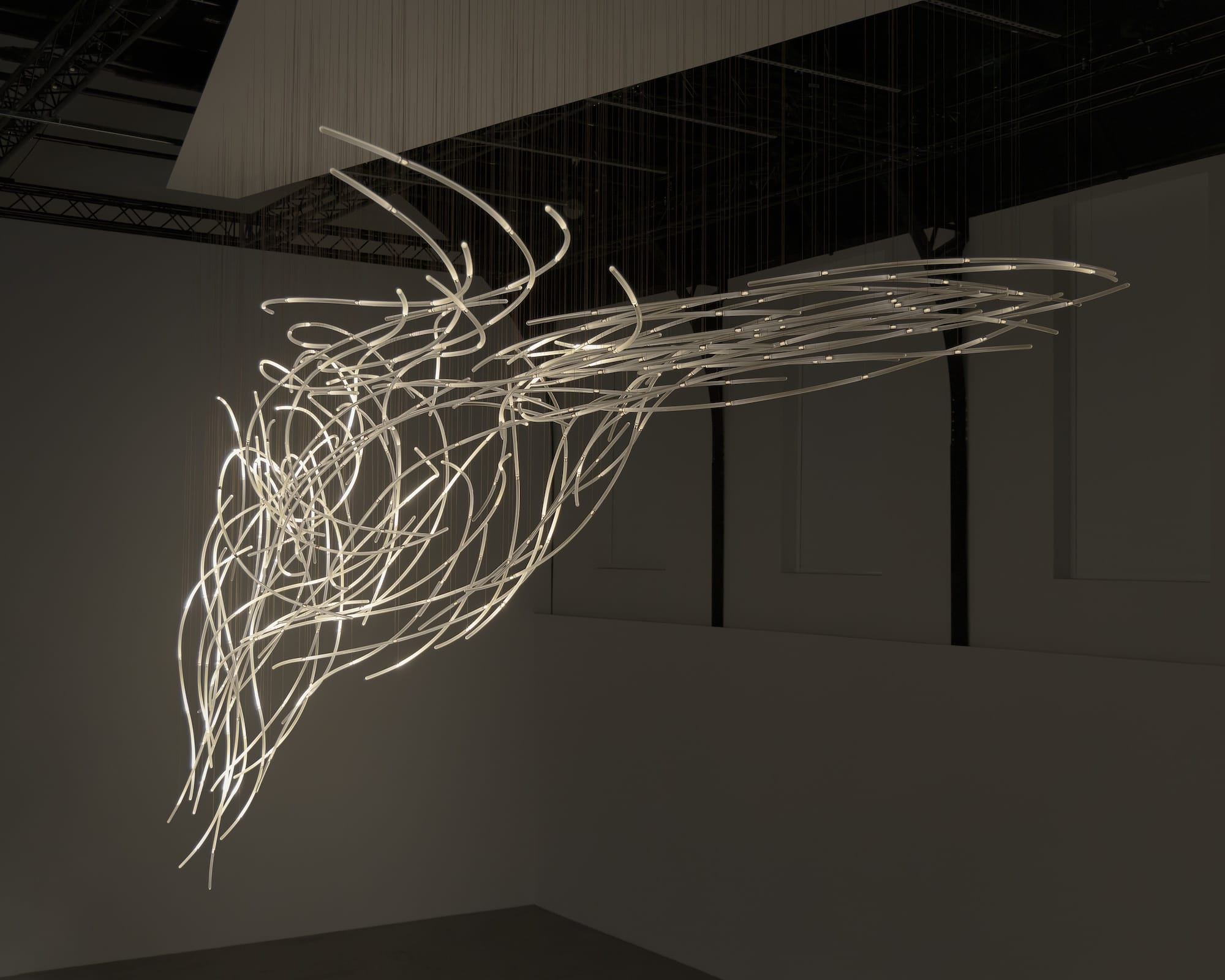
Photo: Benjamin Baccarani. Courtesy Carpenters and DRIFT, via Colossal.
A sculpture can describe movement without moving its own structure. DRIFT’s Aeolus uses suspended glass and traveling light to make that distinction visible. The useful question is not simply what shape it resembles, but which parts of the experience stay fixed and which respond to a visitor.
The room helps determine the form
In its project account, DRIFT describes translating the architecture into a digital environment, simulating wind through it and selecting a moment from that flow. The resulting installation is specific to its setting. The studio lists borosilicate glass rods, stainless steel nodes, custom LEDs and microcoax cables among its materials.
That process gives the surrounding room an active role. Rather than imagining the sculpture as an isolated object, consider the space around and between its lines. The architecture supplies conditions from which the form develops.
Look separately at the glass and the light
DRIFT says visitors’ movements activate light traveling through the suspended structure. Benjamin Baccarani’s photographs, reproduced in Colossal’s October 19 report, offer two useful scales of looking: the room-sized sweep and the close network of rods and illuminated connections.
Our reading of those photographs is that the dark gaps matter as much as the bright lines. From a distance, separate elements gather into a current; close up, joints and overlaps make the construction legible. A still photograph can show those relationships, but cannot demonstrate how the light responds over time.
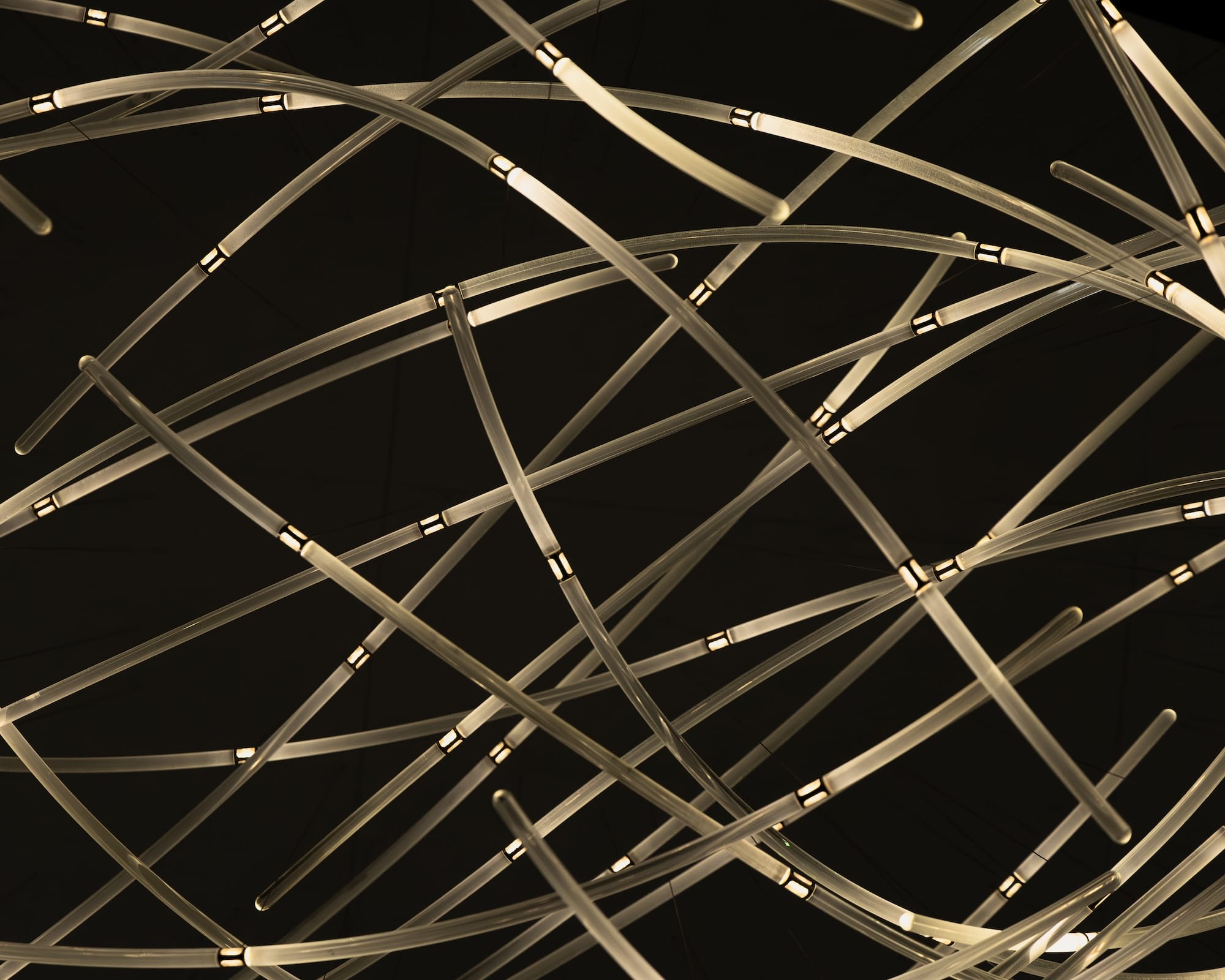
A record of an experience needs more than one view
For anyone documenting an installation, this suggests a simple editorial approach: retain an overall view, a material detail and a written note distinguishing observed behavior from the artist’s explanation. Do not infer an interaction from a photograph alone.
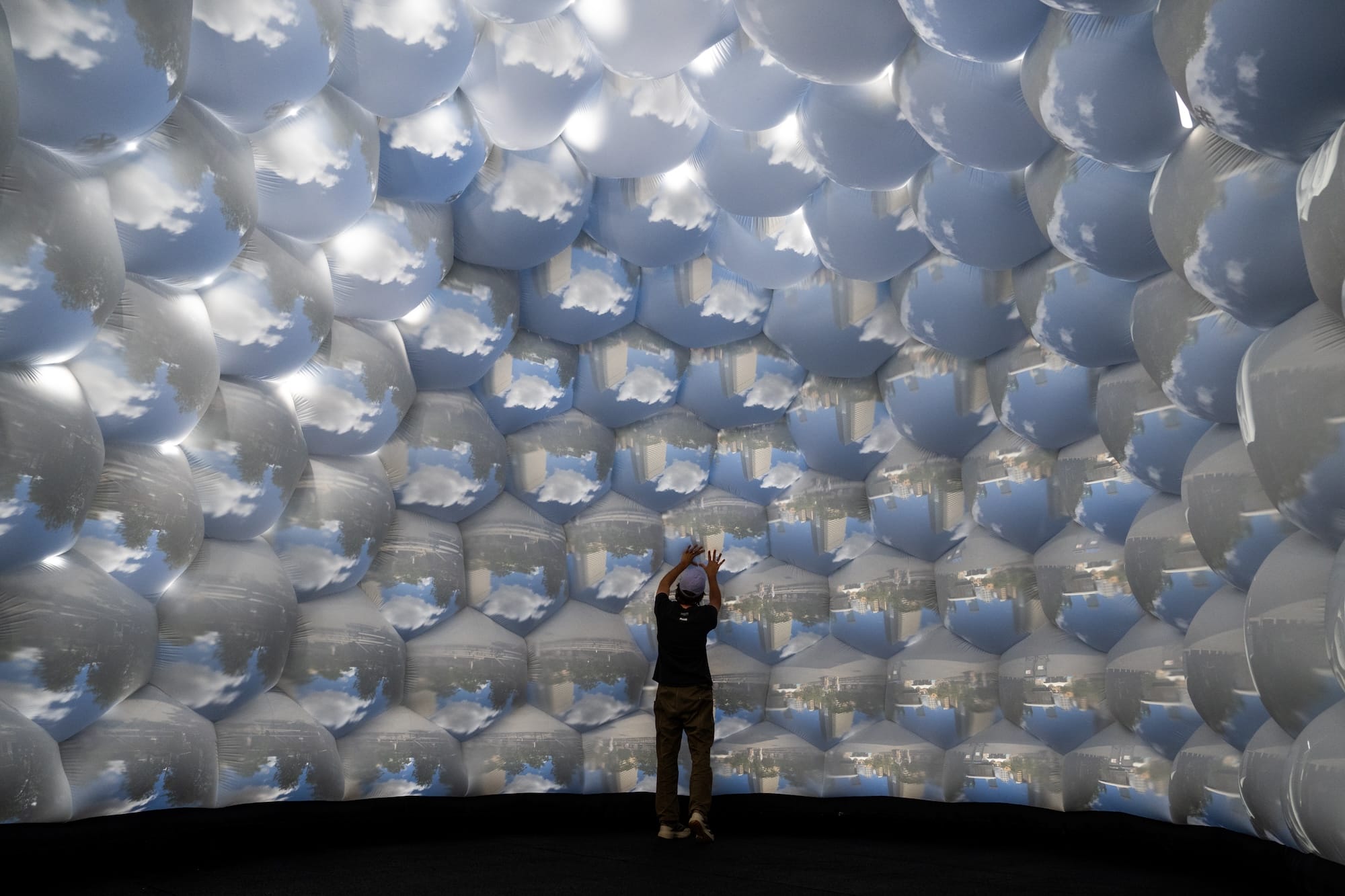
The contrast with Pneuhaus’s Compound Camera is revealing: both make light part of an environment, but the viewing questions differ. With Aeolus, start by separating the fixed arrangement from the changing illumination.
DRIFT identifies Ladbroke Hall with Carpenters as the work’s premiere location. Colossal reports the London presentation runs through October 25, 2026; check Carpenters for visit information. This article considers the work’s process and visual structure rather than offering an assessment from an in-person visit.