Inside Pneuhaus’s Compound Camera, the Image Becomes a Room
An inflatable installation offers a way to think about photographs as changing encounters with light, space and a viewer’s body.
By Art Vault
October 19, 2026 · 2 min read
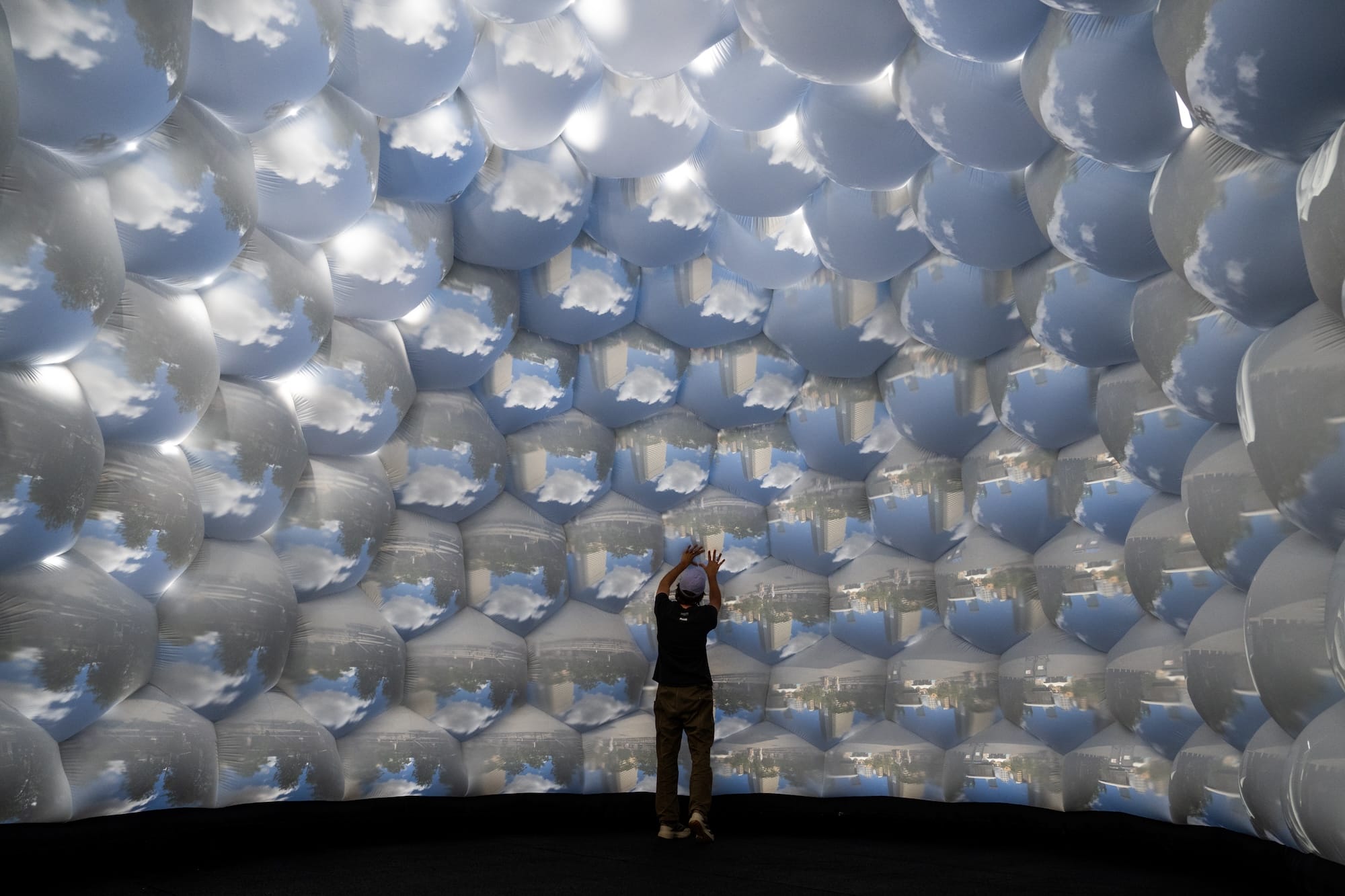
Photograph by Lachlan Turczan. Courtesy of Pneuhaus; via Colossal.
A camera you can enter
Colossal’s October 13, 2026 report describes Pneuhaus’s Compound Camera No.3 as an inflatable installation with 221 lenses. Sunlight projects the surroundings onto its interior surfaces; visitors can press the soft material to alter the images. The report places its premiere at MODE Festival in the preceding month. This is a report on that presentation, not a notice that it is currently open to visit.
Which version are you looking at?
The studio’s separate Compound Camera project page describes a dome with 109 inflatable pinhole cameras. That page does not identify itself as No.3. The two counts should therefore stay attached to their respective sources, rather than being combined into a single specification.
Notice what a still image leaves out
As a looking exercise, imagine making three records of this installation: a photograph of the exterior, a photograph from inside, and a written note about moving through it. Each would preserve something different. The exterior could explain the enclosure; an interior image could show the projected scene; the note could describe how your position changed the encounter.
For collectors interested in installation documentation, this suggests a useful question: what exactly does a photograph document, and what remains outside its frame? It does not establish that any photograph is an edition or that documentation conveys ownership of the installation. When organizing references, use the basic recording approach in ArtVault’s cataloging introduction and label your own notes separately from the artist’s specifications.