The Met Reframes Lee Krasner and Jackson Pollock as Artistic Peers
The Met’s new curator-led tour follows Lee Krasner and Jackson Pollock across more than 120 works, presenting their intertwined careers without flatteni...
By Weston Deboer
October 20, 2026 · 3 min read
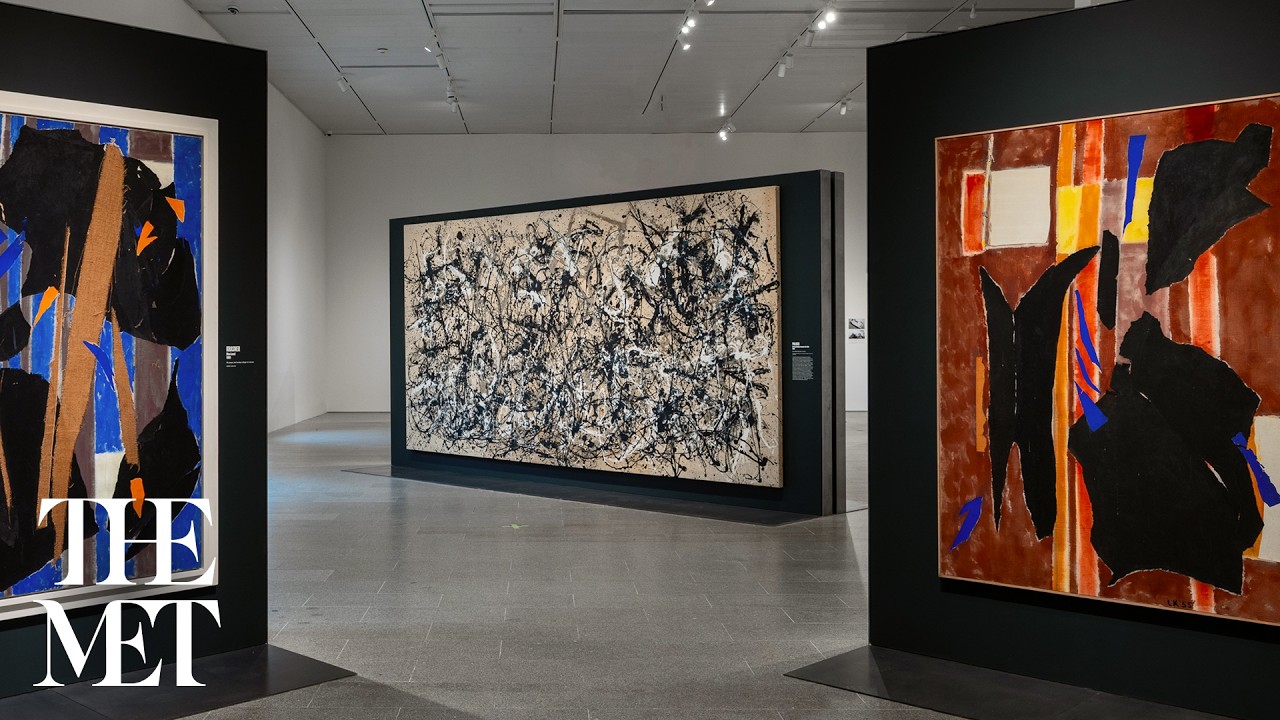
Installation view from The Met’s Krasner and Pollock: Past Continuous video. © 2026 The Metropolitan Museum of Art.
The Metropolitan Museum of Art has released a 23-minute curator-led tour of Krasner and Pollock: Past Continuous, its first exhibition devoted to Lee Krasner and Jackson Pollock and the first major New York presentation of either artist in more than two decades.
Led by curators David Breslin and Brinda Kumar, the tour moves through more than 120 paintings and works on paper. Its argument begins with a familiar imbalance: Pollock’s reputation long eclipsed Krasner’s, even though both practices were central to the transformations of mid-century American painting. Rather than treating one artist as context for the other, the exhibition tracks two distinct careers in sustained conversation.
Before they became a pair
Krasner and Pollock met as emerging artists in New York in the winter of 1941, married in 1945, and moved to Springs, Long Island. The exhibition reaches behind that shared history. Krasner brought rigorous training, close attention to modern European painting, and deep involvement in New York’s artist networks. Pollock’s early work absorbed the landscapes and visual cultures of the American West alongside the psychological and mythic vocabulary circulating among avant-garde artists.
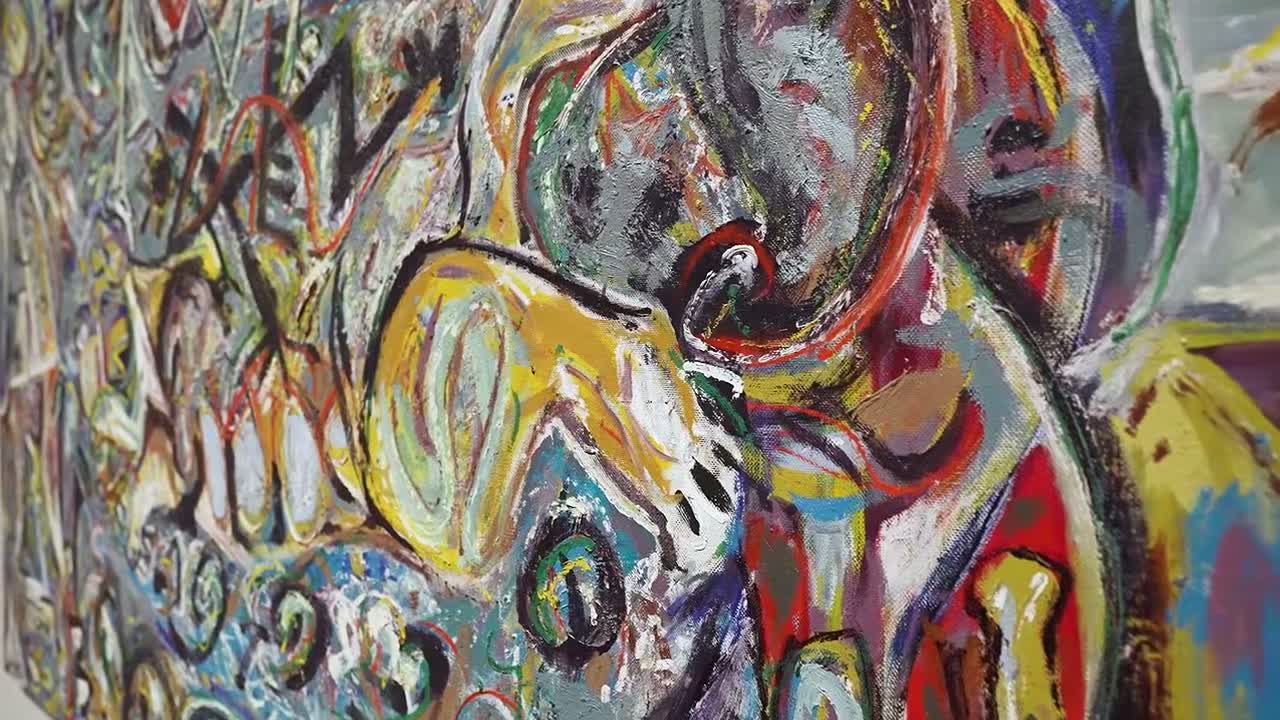
The “Image Surfacing” galleries show both painters negotiating the pressure between figure and abstraction. In the tour, Breslin and Kumar emphasize that their breakthroughs did not arrive as a tidy, simultaneous movement. Krasner recognized the scale of Pollock’s formal shift while confronting a period of uncertainty in her own practice. That doubt became productive: she repeatedly dismantled and rebuilt her visual language rather than settling into a signature style.
Convergence without sameness
The move to Springs placed both artists in adjoining working lives, but the exhibition resists turning influence into imitation. Pollock’s poured paintings reconceived gesture as an all-over field. Krasner’s paintings and collages approached continuity differently, cutting apart earlier drawings and canvases and recomposing them into new structures. Shared conditions produced points of convergence, but also sharper distinctions.
The exhibition’s title comes from Krasner’s 1976 painting Past Continuous, a fitting phrase for careers shaped first by lived proximity and later by memory. Pollock died in 1956. Krasner, left to manage his estate and her own work, moved into the larger barn studio and expanded the physical ambition of her painting.
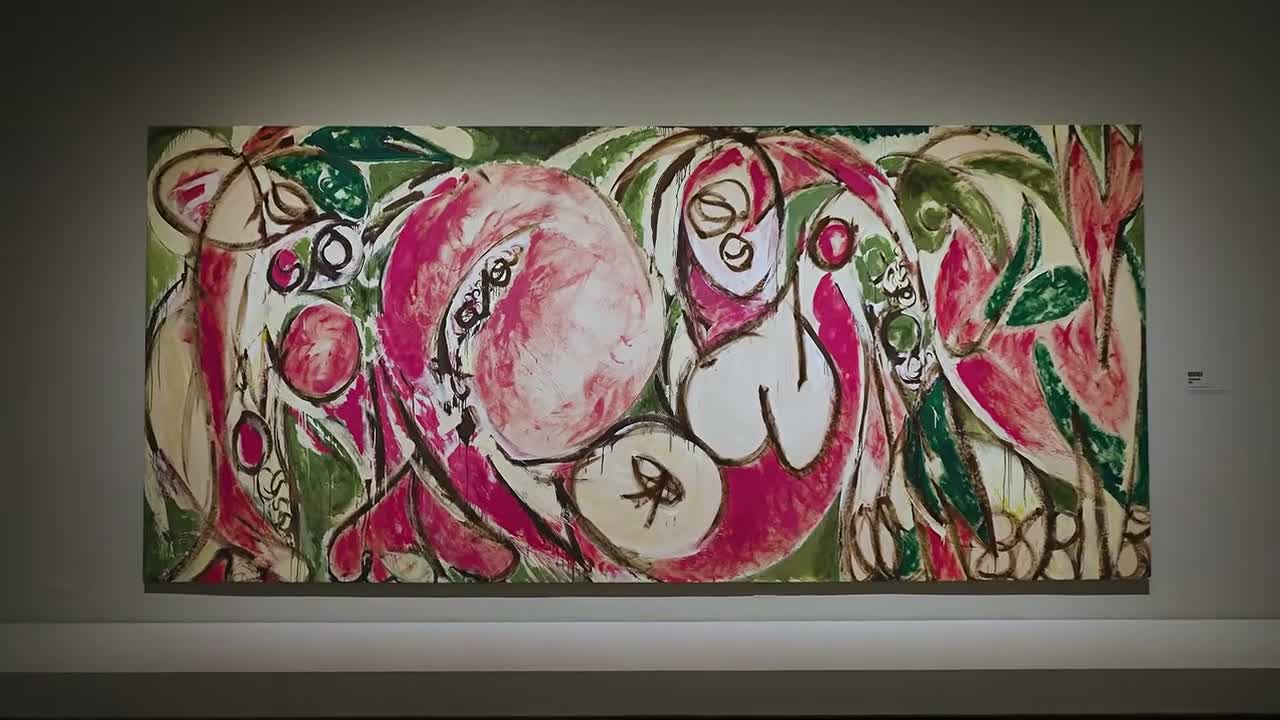
The Seasons (1957) makes that change visible. Its wide field of pink, green, and looping black forms matches the scale of Pollock’s largest canvases but turns monumentality toward growth, recurrence, and bodily movement. In the tour, the work arrives after the account of Pollock’s death; what follows is not an epilogue but the beginning of another major phase in Krasner’s career.
A fuller history of Abstract Expressionism
Seen together, the galleries make a broader historical correction. Krasner is not restored to view simply because she was Pollock’s wife, nor is Pollock reduced to the drip technique that made him famous. The exhibition treats both artists as restless, self-questioning makers whose practices changed through contact, conflict, place, and time.
Krasner and Pollock: Past Continuous is on view at The Met Fifth Avenue through January 31, 2027. Watch the full exhibition tour on YouTube, read The Met’s video introduction, and find visitor details on the official exhibition page.
Featured image and inline stills from Exhibition Tour—Krasner and Pollock: Past Continuous. Video © 2026 The Metropolitan Museum of Art; produced with Sanden/Wolff, Inc.