Wangari Mathenge’s Painted Rooms Put Memory to Work
A closer look at the objects and gestures that animate Wangari Mathenge’s Re-membering paintings.
By Art Vault
October 23, 2026 · 2 min read
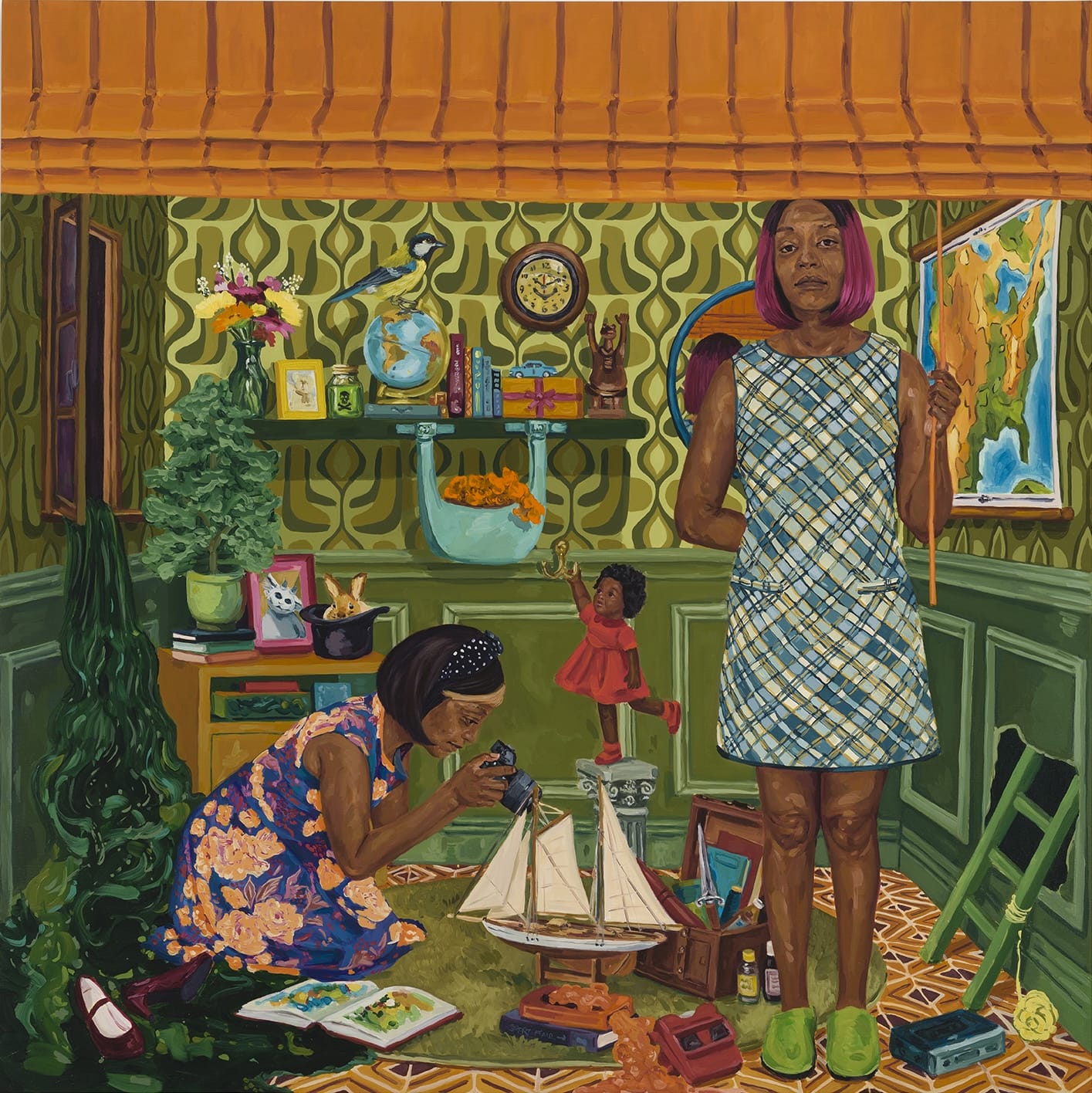
Wangari Mathenge, Re-membering XI, 2026. Courtesy of Lévy Gorvy Dayan, via Colossal.
A room can tell a story through what its occupants do with things. In Wangari Mathenge’s Re-membering XI (To Leave This Steady Unendurable Land), one woman aims a camera at a model sailing boat while another stands beside her. The patterned walls are busy, but the crouching figure’s concentrated gesture gives the eye a clear destination.
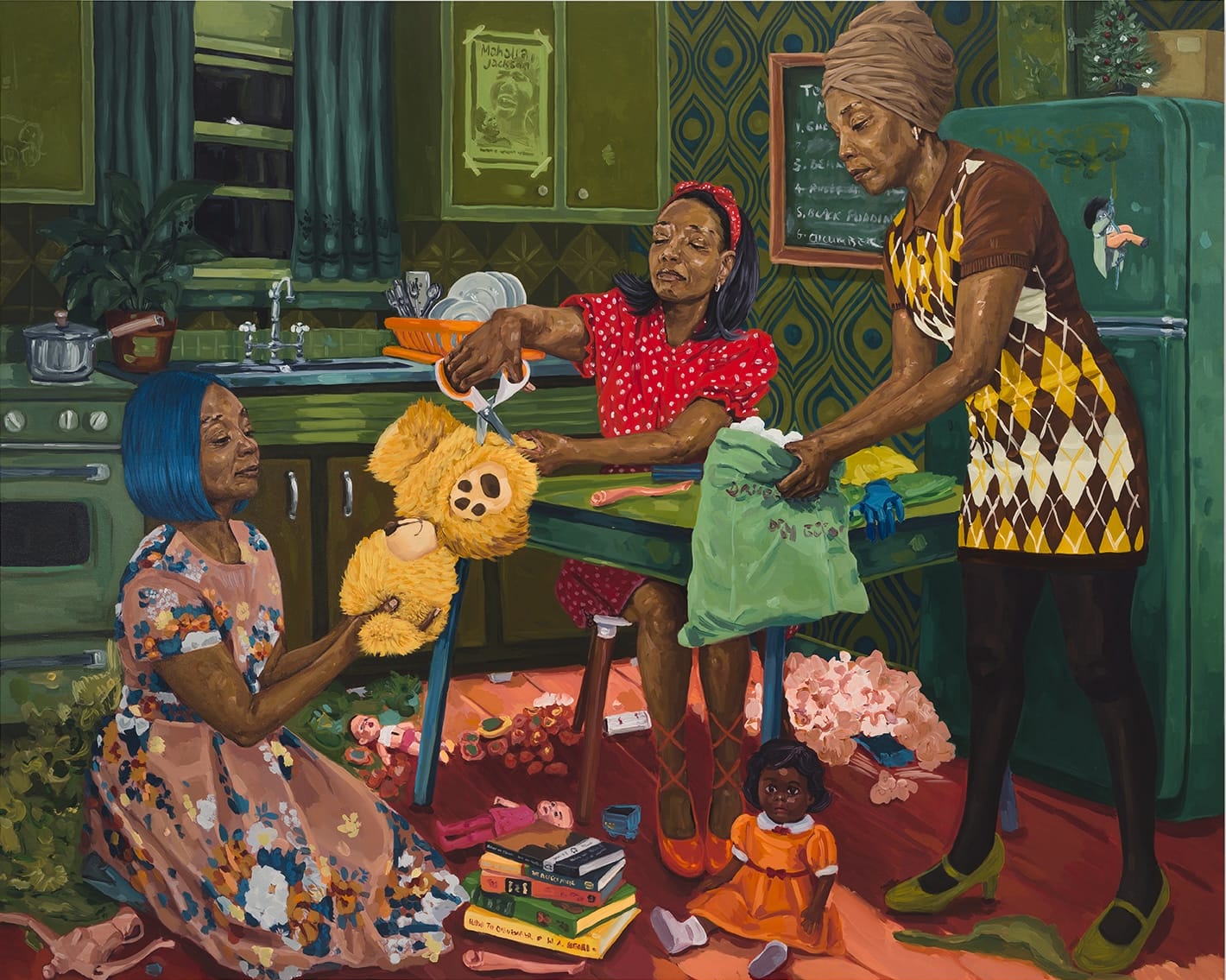
The 2026 oil painting appears in Colossal’s October 22 selection of Mathenge’s work, alongside Re-membering XII (The Wednesday Women’s Club). These two pictures reward a comparison of hands before a search for symbols.
Follow the action before the objects
In The Wednesday Women’s Club, a teddy bear passes between a supporting hand and an open pair of scissors. Another figure holds a green garment. The scene leaves a productive uncertainty: are we watching repair, dismantling, preparation, or several activities at once? That is a question raised by the image, rather than a definitive account of the artist’s intention.
Across the two canvases, intense greens hold the rooms together while orange, red and blue draw attention toward clothing and objects. Look away from the faces and follow the diagonals of the camera, scissors and extended arms. They give the rooms a sense of work in progress.
Memory as something people handle
The gallery’s exhibition statement, reproduced on Ocula, identifies the women as avatars of Mathenge and places these imagined interiors in the 1960s. It connects the series to her research into Kenyan colonial literature and cultural objects, and to Ngũgĩ wa Thiong’o’s Something Torn and New. That context makes the handling of objects especially significant: the rooms contain things to reconsider, not simply scenery to admire.
For another approach to the painted interior, compare Ann Toebbe’s rooms in Art Vault. Ask where each painter positions the viewer, then what kind of attention that viewpoint invites. Here, the figures’ actions give a densely furnished space its narrative focus.