Nikon Small World Turns Ink and Pollen into Photographic Landscapes
An inkjet printer and a pollen-covered spider show how the 2026 microscopy winners make ordinary subjects unfamiliar—and why the method belongs beside t...
By ArtVault Collector Content Editor
November 12, 2026 · 2 min read
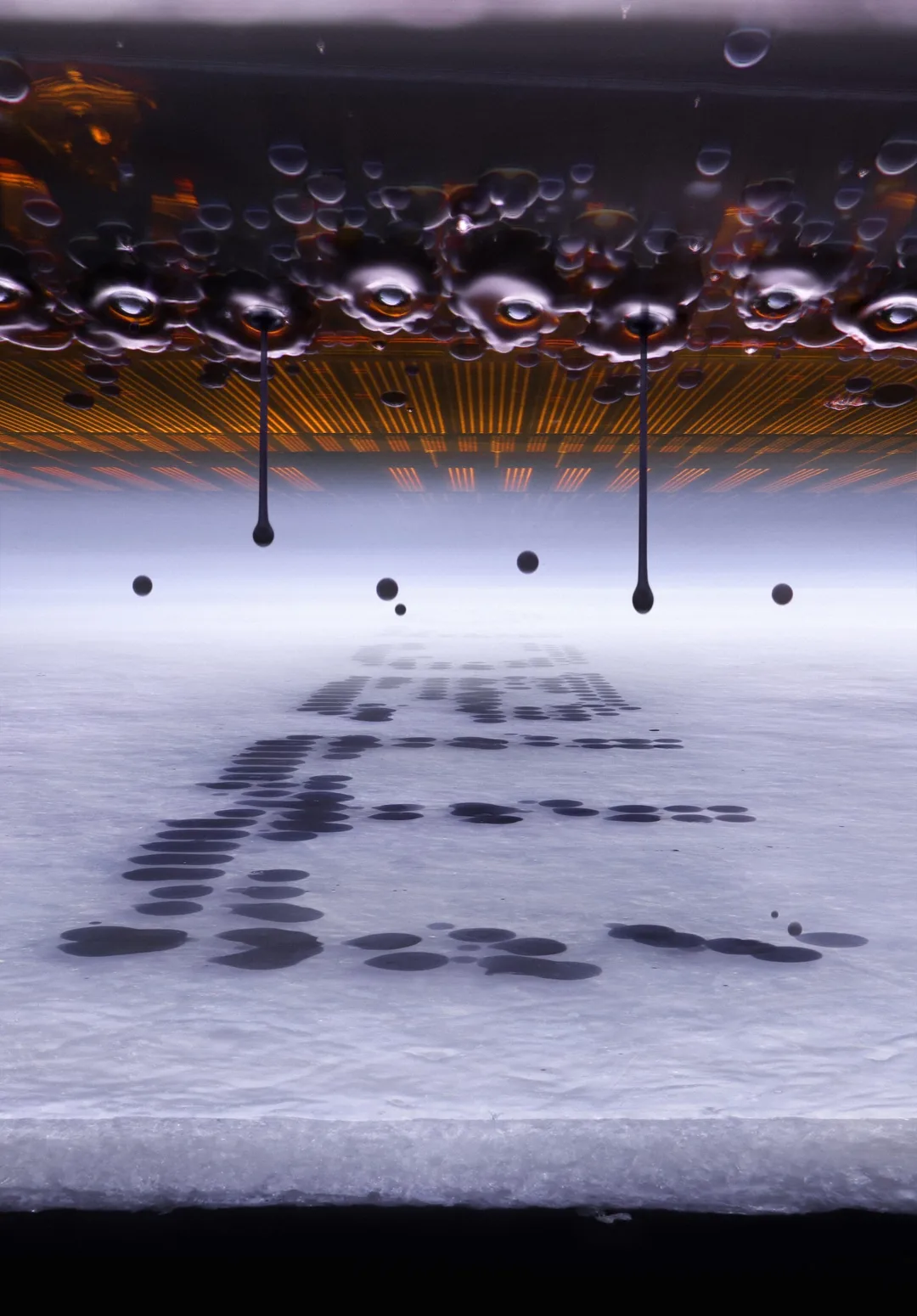
© Ole Bielfeldt, courtesy of Nikon Small World, via Colossal.
An October award, seen again in November
A printer usually disappears behind the page it produces. In the 2026 Nikon Small World competition, the process itself became the picture: Ole Bielfeldt won first place for photographing ink droplets inside an inkjet printer. Nikon announced the results on October 20; Colossal revisited the photographs on November 12. This is a closer look at those results, not a new award announcement. Source: Nikon’s announcement.
The winning image invites a double take. Dark droplets hang above a pale surface; their repeated marks lead the eye into depth. Read without its caption, the scene might resemble a suspended landscape. Knowing that it is a printer changes the pleasure of looking: the unfamiliar view belongs to an everyday act of making a mark.
Featured image: Ole Bielfeldt, inkjet printer depositing ink onto paper, first place, Nikon Small World 2026. © Ole Bielfeldt, courtesy of Nikon Small World, via Colossal.
The apparatus is part of the picture
Nikon describes a self-built setup using a microscope objective. Bielfeldt modified the printer so that paper moved beneath a stationary printhead, then used flash in a dark room to freeze the droplets. The organizer lists the entry at 20× objective magnification. These details explain how the view became possible; they are more useful than treating the picture as a mysterious enlargement. Nikon’s account of the setup.
There are two separate processes here: the inkjet machine placing marks on paper, and the photographer constructing a view of that event. Neither the subject nor the competition label tells us how a later exhibition print of the photograph would be produced. For that distinction, ArtVault’s print-process introduction offers a useful starting point.
Pollen changes the portrait
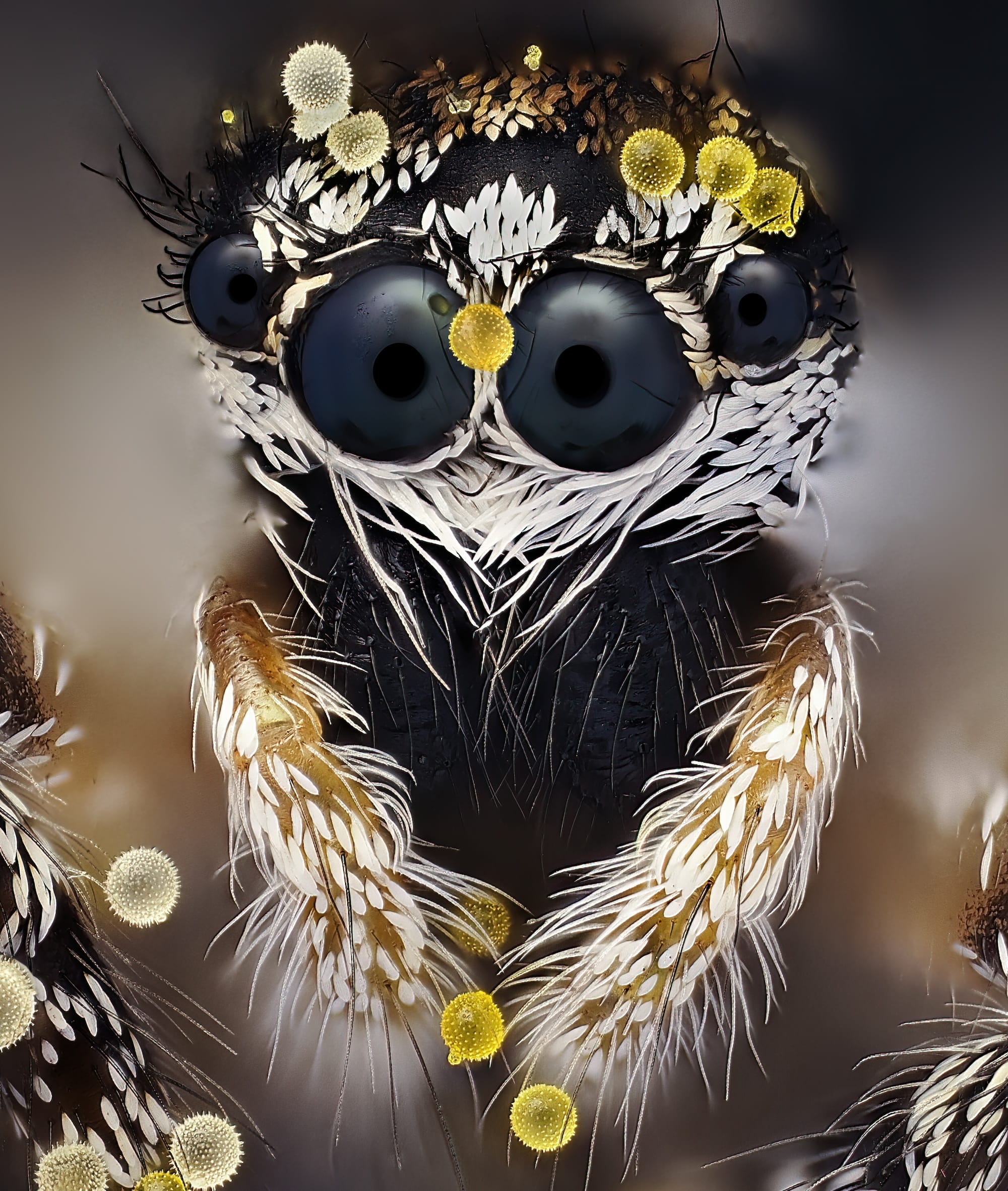
Second place went to John-Oliver Dum’s image of a jumping spider, Salticus scenicus, carrying pollen. Nikon lists image stacking and 20× objective magnification for this photograph. Source: the official results.
The pale and yellow grains interrupt the spider’s dark eyes and sharply patterned face. Their rounded shapes compete with the portrait’s strongest features, giving the viewer more than one scale to follow. The image rewards looking at the grains as forms before returning to what the caption identifies.
Seen together, these photographs show why technical descriptions need not diminish visual surprise. Keep the creator, subject and method beside the image: each answers a different question. ArtVault’s artwork record test applies that same separation to the information we keep about objects.