Susan Burgos Cataloged 13,201 Frog Objects Into a World Record
Susan Burgos turned four decades of frog objects into a carefully indexed archive, a Guinness record, and a possible future museum.
By Weston Deboer
October 26, 2026 · 3 min read
Sources, automated assistance and corrections · Report an error.
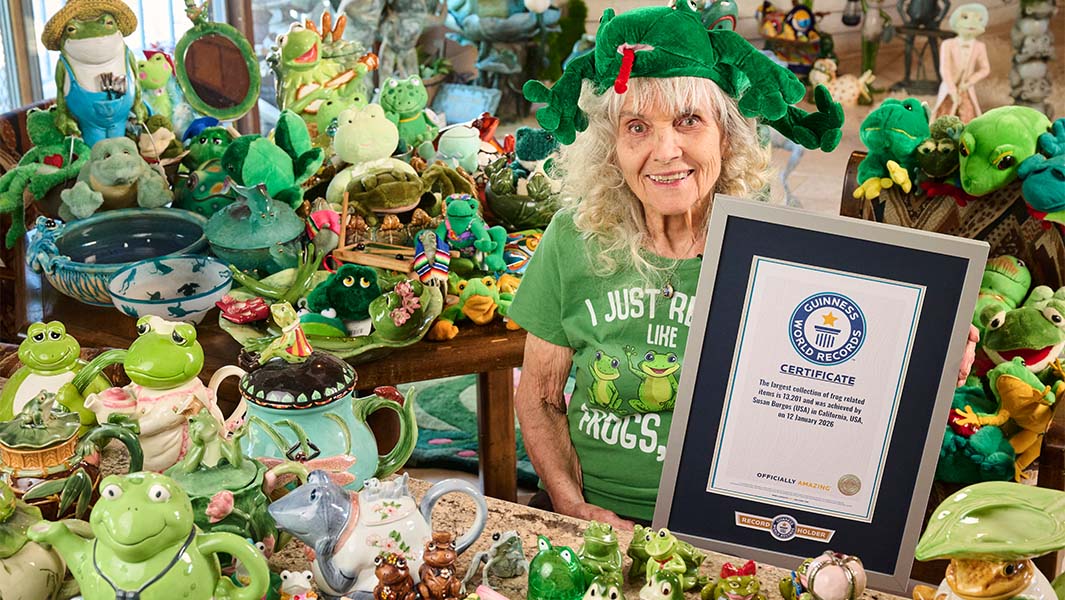
Image courtesy of Guinness World Records.
A tiny tree frog appeared in Susan Burgos's kitchen in 1983 and quietly changed the shape of her life. The encounter prompted her to buy a gold frog ring with emerald eyes. Travel finds, catalog orders, gifts from friends, and family contributions followed until a single object had become an archive measured in tens of thousands.
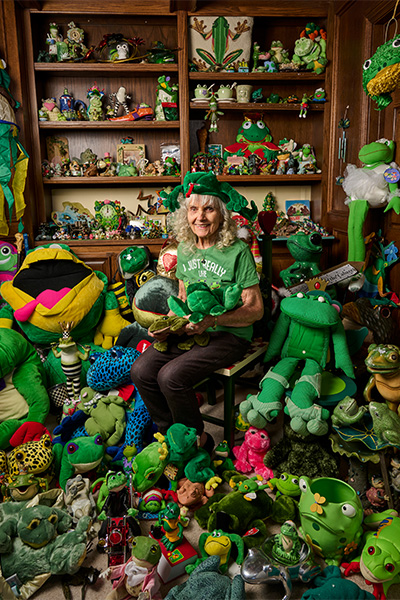
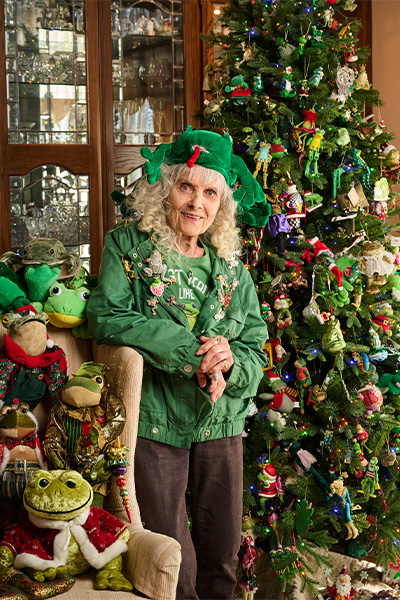
In January 2026, Guinness World Records certified 13,201 unique frog-related items in Burgos's Camarillo, California, collection. The verified count surpassed the previous record of 10,502. Burgos says the entire collection is now closer to 32,000 objects, ranging from jewelry, antiques, and clothing to toys, clocks, tableware, and enough ornaments to cover a Christmas tree.
The collection is a map of attention
The appeal of Burgos's collection is not simply its scale. Frog imagery moves easily between fine materials and throwaway novelty, between folklore, fashion, advertising, domestic design, and children's culture. Placed together, the objects reveal how one motif can travel through wildly different makers, places, prices, and purposes.
Burgos found pieces while traveling in China, Canada, Puerto Rico, Ukraine, and Russia, but she also discovered them in department stores and mail-order catalogs. A lapis lazuli frog might sit near a plush toy; a diamond piece can share a category with a singing biker frog. Her eye is democratic, and the subject supplies the connective tissue.
What holds her attention is often evidence of the maker. In the Guinness film, she studies an intricate object and wonders who made it, what their circumstances were, and whether anyone will ever make another like it. That curiosity turns a theme collection into a record of human invention.
A record requires a system
Once a collection becomes this large, memory alone cannot manage it. Burgos stores the holdings in more than 290 boxes, generally containing 50 to 65 objects each. Items are numbered and recorded with measurements, colors, and other identifying details so a particular frog can be retrieved when needed.
The system was essential during Guinness verification. Each counted object had to be locatable, and suspected duplicates were reviewed rather than accepted at a glance. Burgos even acquired a second home with a large garage to make room for the collection. The record may be the headline, but the unseen accomplishment is the inventory behind it.
What collectors can take from it
Burgos's archive offers a useful counterpoint to the idea that a meaningful collection needs an approved category or a predetermined market. A collection can begin with almost anything. Coherence comes from sustained attention, documented distinctions, and the personal relationships built around the objects.
Her practice also offers three practical lessons: establish an inventory before the collection becomes unmanageable, record enough descriptive information to distinguish close variants, and decide what the collection is ultimately for. Objects accumulate more quickly than stewardship plans.
Burgos now considers her collecting complete. She hopes the archive can eventually become a museum, with proceeds supporting charity, so that what began as a private pleasure can become a public experience and a legacy for her children. That final ambition reframes the record: the number proves scale, but sharing gives the collection its future.
Watch Largest Collection of Frog Memorabilia on the Guinness World Records YouTube channel, and read the organization's profile of Susan Burgos.
Featured image: Susan Burgos with her Guinness World Records certificate and part of her frog collection. Image courtesy of Guinness World Records.