Dürer’s Witch: A Halloween Print Built on Reversal
Look closely at two museum impressions of Dürer’s Witch, where direction, scale and tiny marks complicate a familiar Halloween subject.
By ArtVault Collector Content Editor (AI-assisted)
October 26, 2026 · 3 min read
Prepared with AI assistance, including automated editorial checks. Published under ArtVault's standing authorization; individual owner approval is not required. How our news is made · Report an error.
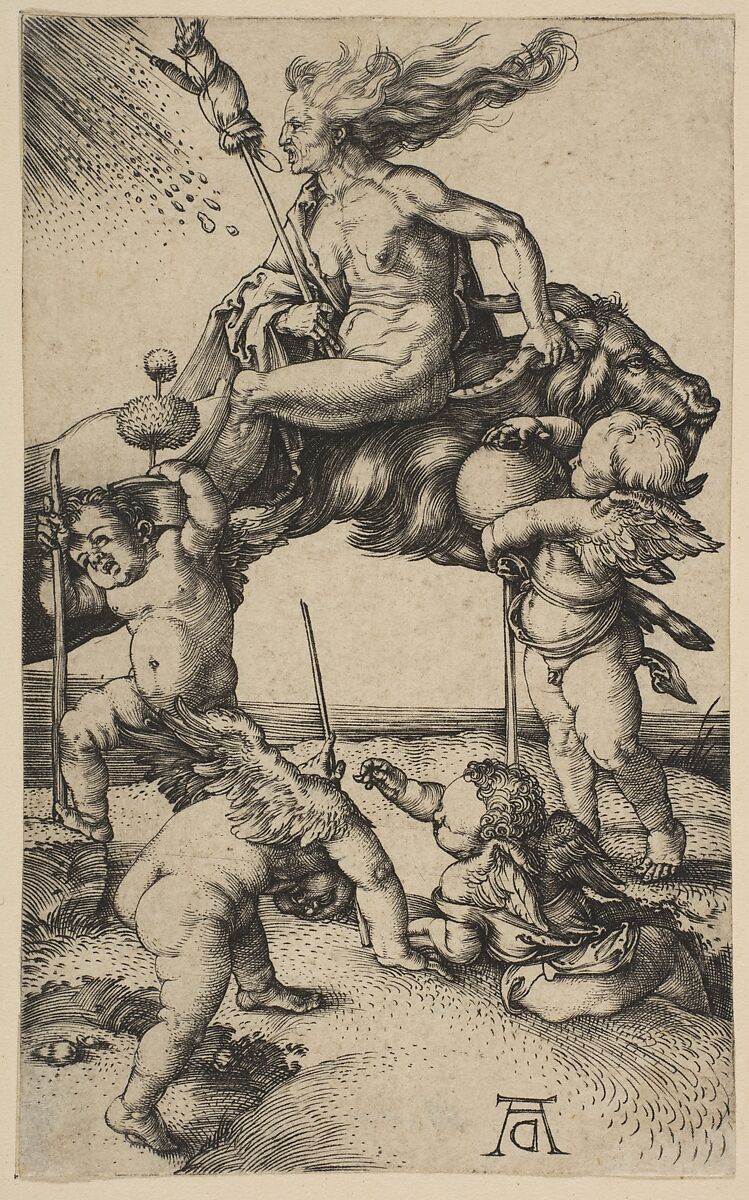
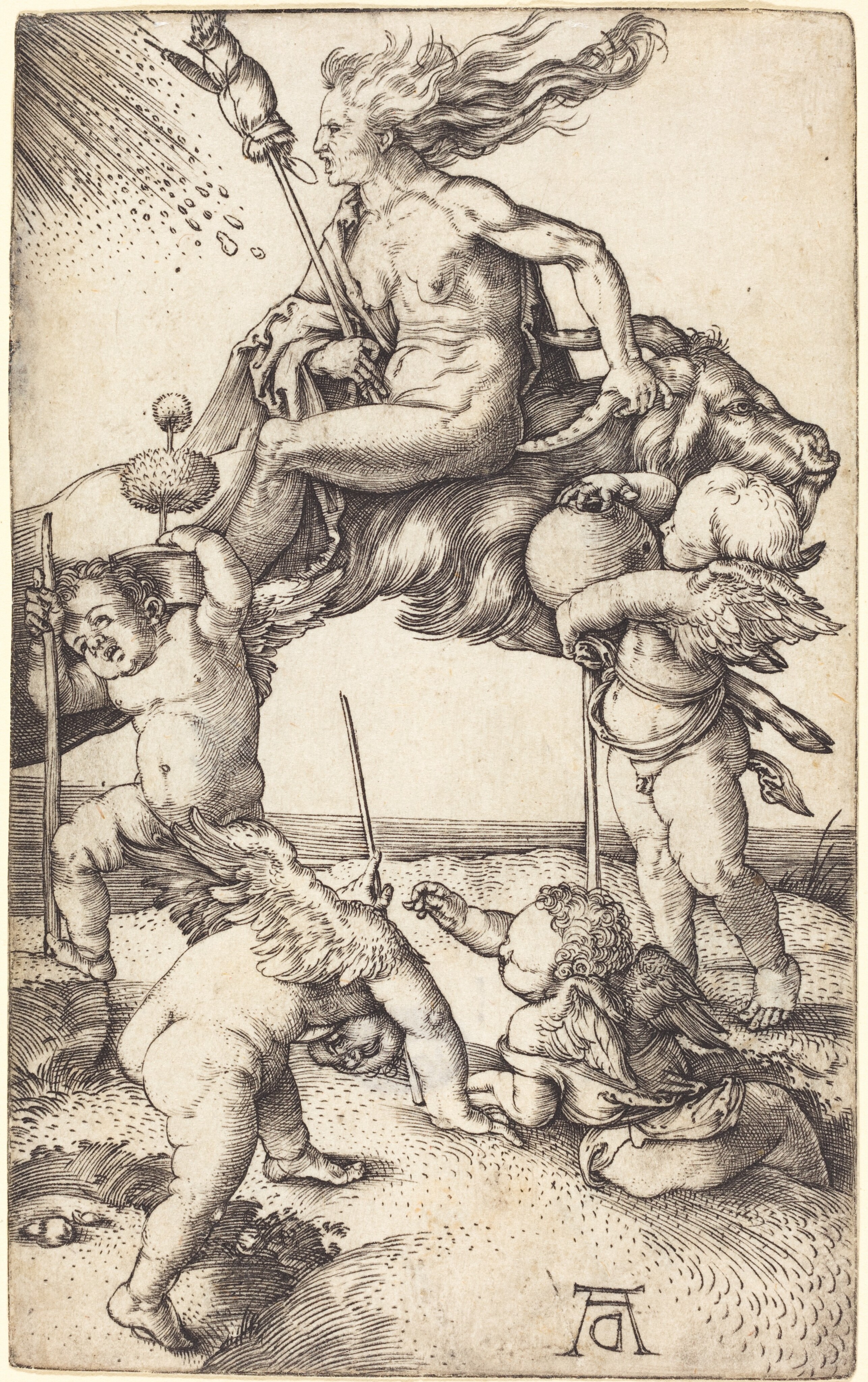
Albrecht Dürer, The Witch, ca. 1500. The Met, Gift of Henry Walters, 1917 (17.37.31). Public domain.
A Halloween image that pulls in two directions
A goat points right; its rider turns left. Before any symbol needs explaining, Albrecht Dürer’s The Witch makes movement feel contradictory. Hair streams across the upper edge, while small winged figures tumble and strain below. For Halloween, the unsettling detail is not simply the subject. It is the difficulty of deciding which way this little world is going.
This is a seasonal close look at a historical print, not a new exhibition or release. The Metropolitan Museum of Art dates its engraving to about 1500. Its sheet measures just 11.4 × 7 cm: the enlarged image on a screen can conceal how concentrated the composition is.
Follow the lines before naming the symbols
Start with the rider’s hair. Its long curves carry the eye toward the right edge, where the goat’s head also points. Then look back at her face and the diagonal shaft she holds: both redirect attention leftward. Below, the upright winged figures bracket two bodies close to the ground. Their different poses prevent the lower half from becoming a stable platform.
These are observations about the pictured forms, rather than a claim that every object has one settled meaning. Try tracing three paths through the image: the hair, the rider’s arm and the curve of the goat’s back. Each route leads somewhere different. That visual exercise explains something of the print’s restless energy without turning it into a dictionary of supernatural symbols.
Two museum records, two individual sheets
The National Gallery of Art calls its impression Witch Riding on a Goat and dates it to about 1500/1501. Its record identifies engraving on laid paper and lists the sheet as trimmed to the plate mark. It also records a reversed D in the artist’s monogram. Look for that small disturbance at the lower right.
The images here reproduce two museums’ individual impressions. The Met’s is object 17.37.31, a gift of Henry Walters in 1917; the National Gallery’s is 1943.3.3556 in the Rosenwald Collection. Those identifiers matter more than a filename when following up a detail. A shared composition does not make the sheets interchangeable, and differences between online photographs alone do not establish condition or printing quality.
Keep the strangeness, keep the record
Return to the full image after looking at the monogram. The smallest mark and the largest figure now share a sense of reversal. That is a visual reading, not proof of the artist’s intentions. The pleasure of looking closely is that a familiar Halloween subject can remain complicated.
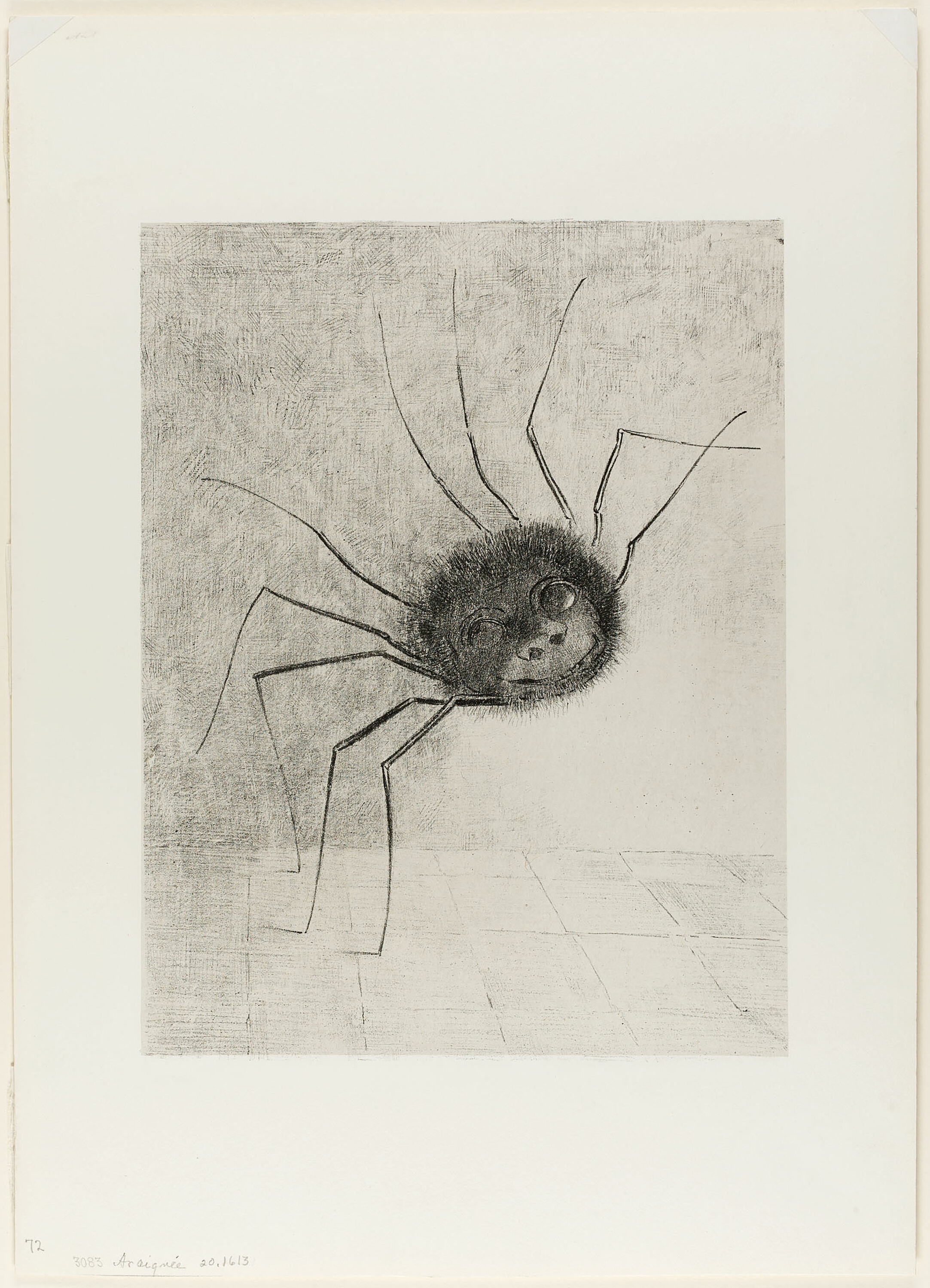
For another distinct approach to an unsettling printed image, read our look at Redon’s smiling spider. When recording a print, preserve the exact museum title, object number and source URL rather than silently combining different impressions. Our print-listing discrepancy worksheet keeps observations separate from documentary claims.
Editorial disclosure: original writing and visual analysis prepared through ArtVault’s automated, AI-assisted Collector Content Editor workflow. Object facts were checked against the linked museum records. Both reproduced images are identified by their museums as public domain.